
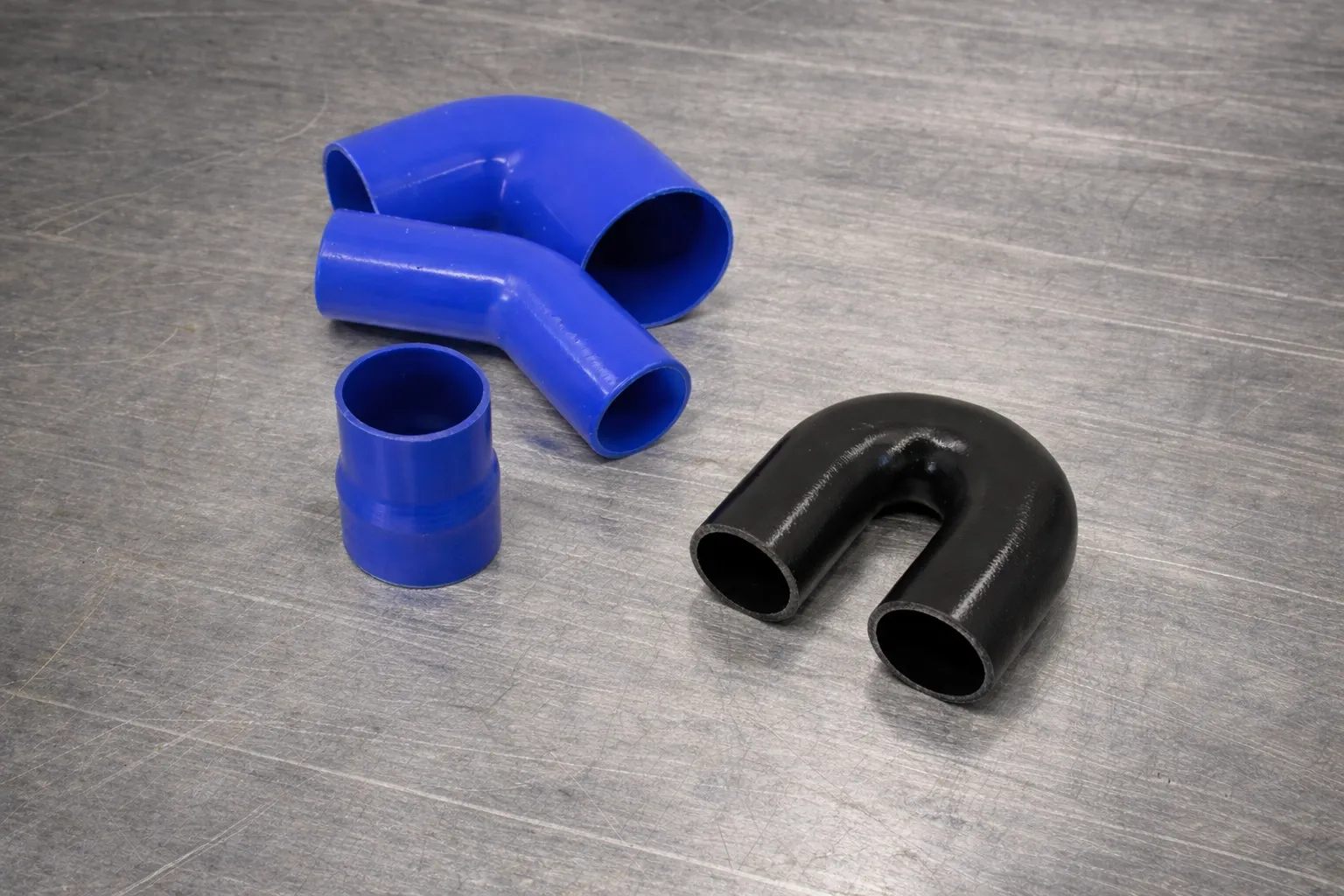
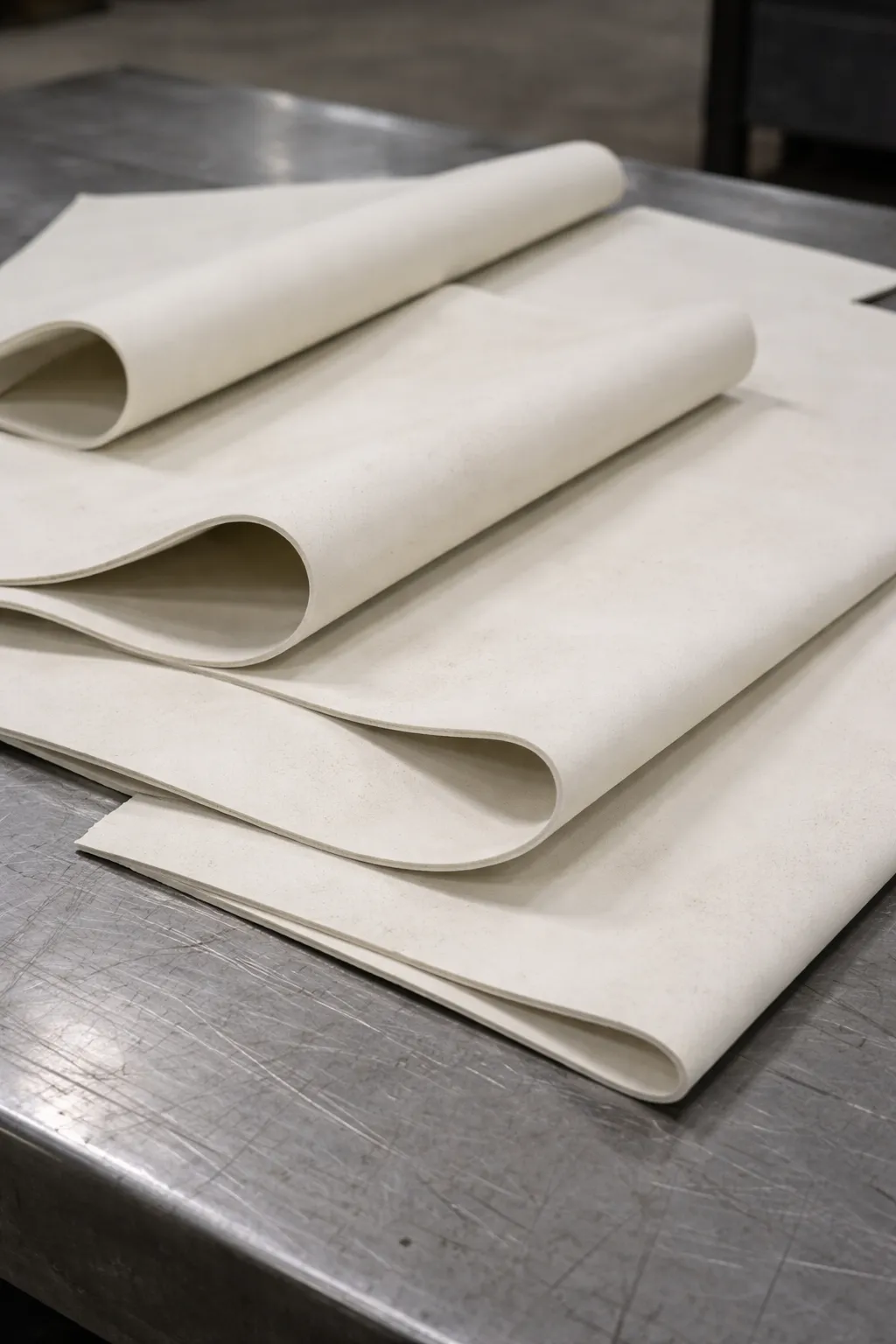
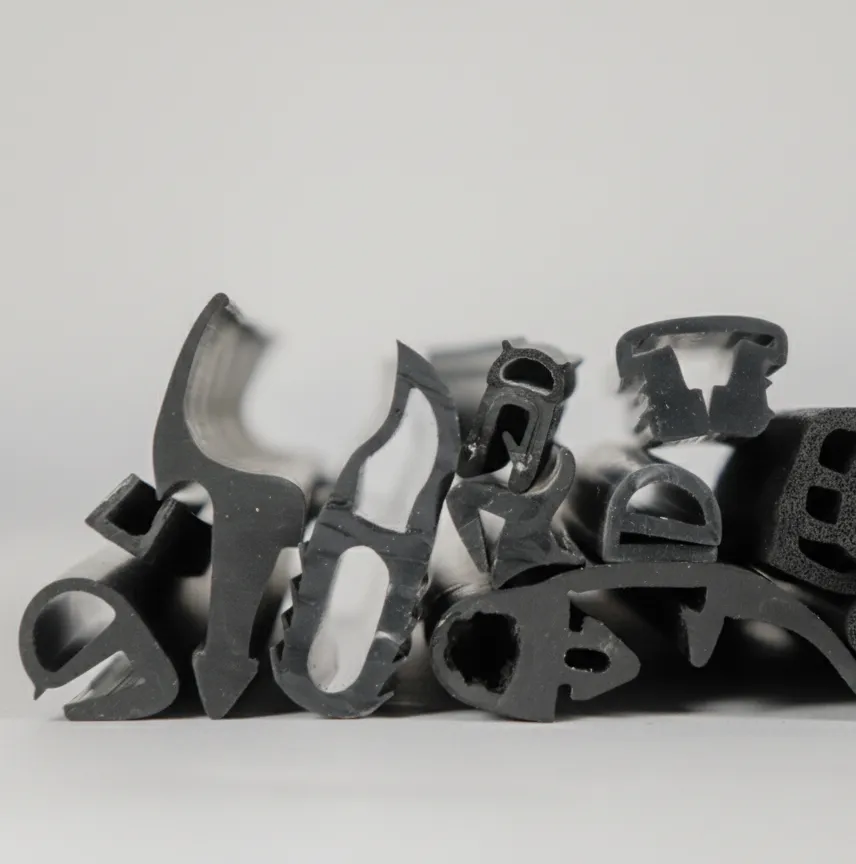
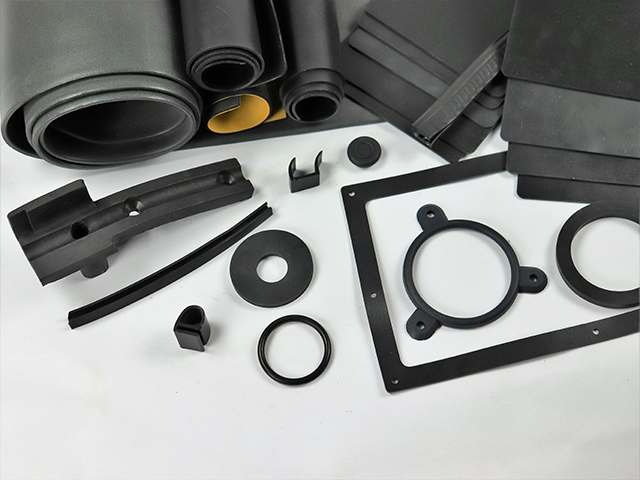
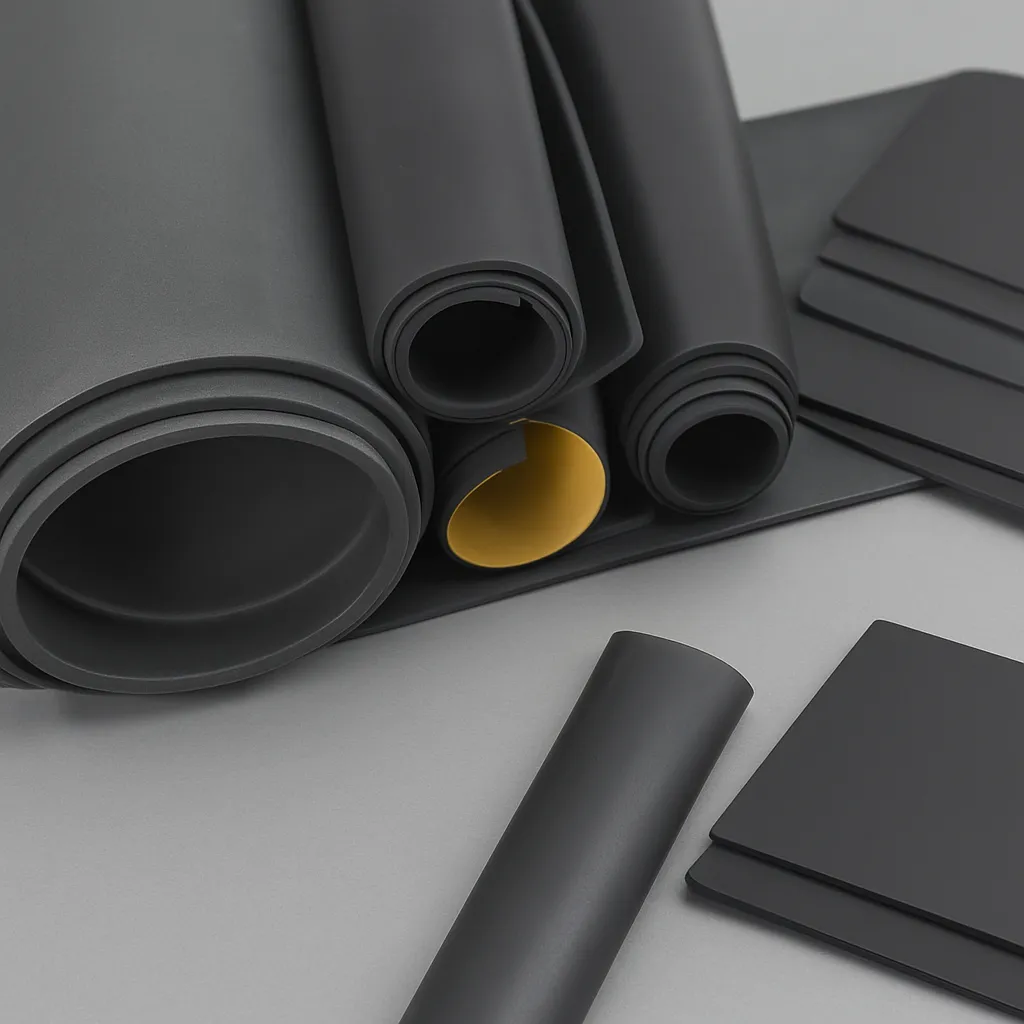




Before deciding how to manufacture a silicone part—moulding, extrusion, LSR—there is a prior decision that conditions everything else: which silicone to use.
"Silicone" is not a single material. It is a family of elastomers with radically different formulations depending on the problem they must solve. A general-purpose silicone and an implantable silicone share a chemical base, but their properties, certifications and cost have little in common.
Choosing the wrong formulation has more serious consequences than choosing the wrong process. A process error may mean parts with excessive flash or long cycles. A material error means parts that fail in service: seals that do not seal at temperature, certifications that are not met, premature degradation due to chemical incompatibility.
This article explains how to select the correct formulation according to the actual requirements of the application. It is not a product catalogue. It is a technical decision guide.
1. Fundamental selection criteria
Every silicone selection should answer these questions in order:
1.1 What is the actual service temperature?
Not the theoretical maximum temperature that appears on a datasheet. The temperature at which the part will work continuously, with the peaks it may experience.
A standard silicone (VMQ) operates between -60°C and +200°C in continuous service. But if the application requires +250°C on a sustained basis, that silicone will degrade prematurely. And if it requires -80°C, it will stiffen and lose sealing capability.
Extreme temperatures require specific formulations:
- High temperature: Stabilised formulations for continuous service up to +300°C (peaks of +315°C)
- Low temperature: Phenylated silicones (PVMQ) that maintain flexibility down to -110°C
1.2 What mechanical stresses will it withstand?
Tear resistance is critical in parts subjected to:
- Frequent assembly and disassembly
- Cyclic flexing (membranes, bellows)
- Stress concentrators (geometries with sharp angles)
- Risk of crack propagation
A standard silicone has tear resistance of 10-23 kN/m. A high-tear silicone reaches 26-55 kN/m. The difference between them may be whether a seal withstands 10,000 cycles or 100,000.
Compression set matters in long-duration static seals. If the seal loses its ability to recover elastically, it loses sealing capability. Optimised formulations achieve compression set of 11-18% (70h/150°C) compared to 20-25% for standard formulations.
1.3 What certifications are mandatory?
Certifications are not interchangeable or cumulative. Each standard has specific requirements:
Food contact:
- FDA 21 CFR §177.2600 (United States)
- BfR XV (Germany)
- EC 1935/2004 (Europe)
- Arrêté du 25/11/92 (France)
A part destined for Europe needs EC 1935/2004. Having FDA does not make it valid for the European market.
Medical use:
- USP Class VI (basic biocompatibility)
- ISO 10993 (complete biological evaluation)
- Validation for CE marking of medical devices
Implantable grades require specific validation for tissue contact. Not just any "medical" silicone is suitable for a catheter.
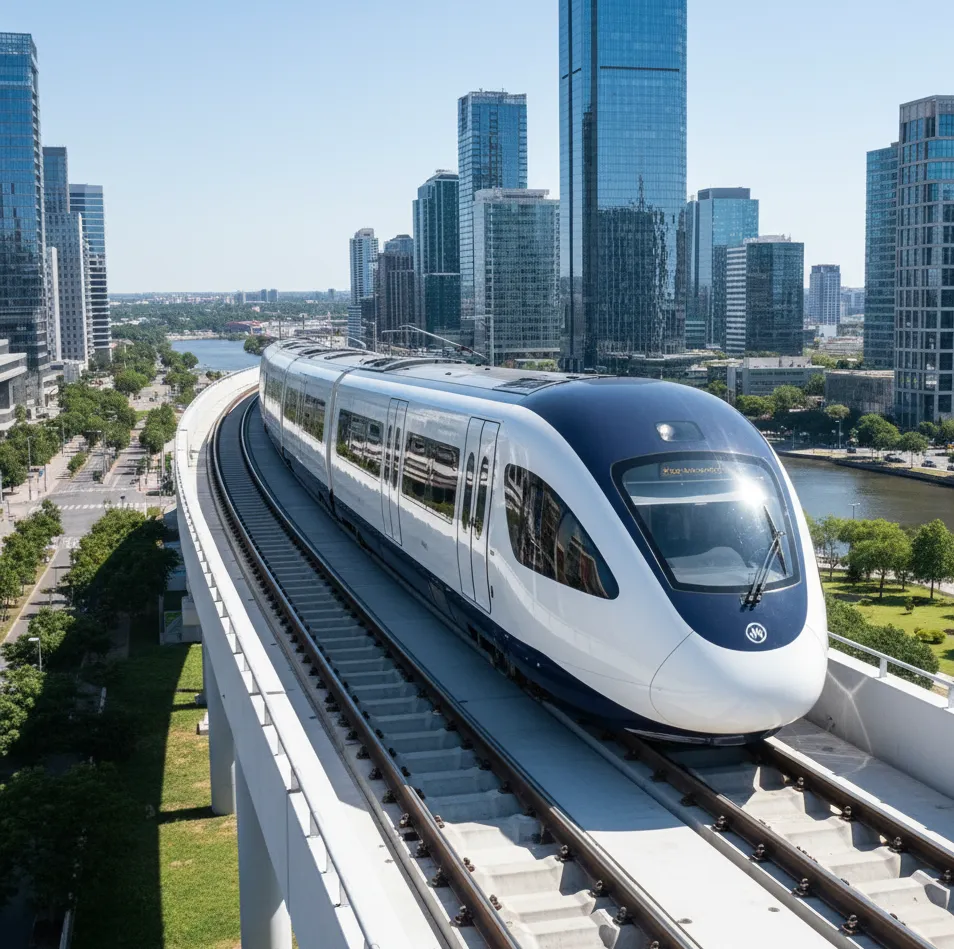
Railway sector:
- EN 45545-2 (fire behaviour)
- Requirement sets R22, R23
- Hazard levels HL1, HL2, HL3
The hazard level (HL) depends on the operation category and vehicle design. A driverless metro without service personnel requires HL3. A conventional train may only require HL2.
1.4 Is there specific chemical exposure?
Standard silicone (VMQ) withstands extreme temperatures, ozone, UV and many chemicals well. But it swells and degrades in contact with hydrocarbons, fuels and organic solvents.
For chemically aggressive environments:
- Fluorosilicone (FVMQ): Resistance to fuels, mineral oils, aliphatic solvents
- Steam-resistant formulations: Optimised for autoclave cycles and saturated steam
1.5 What cost level is acceptable?
Special formulations cost more. A platinum-catalysed silicone with medical certification can cost 3-5 times more than a standard peroxide-catalysed silicone.
If the application does not require the additional performance, paying for it adds no value. An industrial seal without special requirements does not need implantable silicone.
2. Catalysis: peroxide vs platinum
Catalysis determines how silicone vulcanises and affects properties, available certifications and cost.
Peroxide catalysis
The most widespread system. Peroxide decomposes with heat and generates free radicals that crosslink polymer chains.
Advantages:
- Optimised cost
- Wide hardness range (10-90 Shore A)
- Compatible with most processes (extrusion, compression, injection)
- Good general chemical resistance
Limitations:
- Generates volatile by-products during vulcanisation
- May require post-cure in applications sensitive to odour or taste
- Mechanical properties inferior to platinum in tear and elongation
Typical applications: Industrial seals, sealing profiles, technical parts without special purity requirements.
Platinum catalysis
Addition vulcanisation catalysed by platinum complexes. Generates no by-products.
Advantages:
- No volatile by-products (odourless, tasteless)
- Superior mechanical properties, especially tear resistance
- Mandatory for demanding medical and high-purity food applications
- Better transparency in translucent formulations
Limitations:
- Significantly higher cost
- Sensitive to contaminants (sulphur, amines, tin, certain metals)
- Requires stricter process control
Typical applications: Medical devices, high-purity food components, parts requiring maximum tear resistance.
The myth that "platinum is always better"
Platinum catalysis offers better mechanical properties and purity, but it is not always the right choice.
If the application is a standard industrial seal without food contact or purity requirements, peroxide catalysis offers adequate performance at lower cost. Paying the platinum premium adds no functional value.
3. Silicone families by problem solved
3.1 General-purpose silicone
Problem solved: Standard applications without special requirements, where a balance between performance and cost is sought.
| Property | Range |
|---|---|
| Hardness | 10-90 Shore A |
| Temperature | -60°C to +200°C |
| Tensile strength | 3.5-9.5 MPa |
| Elongation | 125%-950% |
| Tear resistance | 10-23 kN/m |
Available certifications: FDA, BfR, EC 1935/2004, USP Class VI, ISO 10993 (depending on specific formulation).
Processes: Extrusion, compression moulding, injection moulding.
Applications: Industrial seals, conveying tubes, sealing profiles, general-purpose technical parts.
Selection considerations:
- First choice when there are no special requirements that justify more costly formulations
- Hardness determines stiffness and sealing force: low hardnesses (20-40 Shore A) for seals with low closing force, high hardnesses (70-90 Shore A) for extrusion resistance under pressure
- Verify specific certifications according to formulation and colour: some pigments may void food certifications
3.2 High-tear silicone
Problem solved: Parts subjected to repeated mechanical stresses, risk of crack propagation, fatigue cycles.
| Property | Peroxide catalysis | Platinum catalysis |
|---|---|---|
| Hardness | 40-70 Shore A | 40-80 Shore A |
| Temperature | -60°C to +200°C* | -60°C to +200°C |
| Tear resistance | 26-40 kN/m | 33-55 kN/m |
| Elongation | 400%-600% | 320%-760% |
*Specific formulations reach +270°C with additional thermal stabilisation.
Available certifications: FDA, BfR, EC 1935/2004 (peroxide); FDA, BfR, EC 1935/2004, USP Class VI, ISO 10993 (platinum).
Applications: Inflatable seals, bellows, membranes, pump diaphragms, parts with geometries that concentrate stresses, components subjected to pressure cycles.
Selection considerations:
- Platinum catalysis offers significantly superior tear (up to 55 kN/m vs 40 kN/m in peroxide)
- For temperatures above +230°C, select formulations with specific thermal stabilisation
- In applications with frequent assembly/disassembly, prioritise maximum tear resistance
3.3 Food-grade silicone
Problem solved: Direct or indirect contact with food and beverages, regulatory compliance according to target market.
| Property | Range |
|---|---|
| Hardness | 10-90 Shore A |
| Temperature | -60°C to +200°C |
| Tensile strength | 3.5-9.5 MPa |
| Tear resistance | 10-30 kN/m |
| Market | Regulation |
|---|---|
| United States | FDA 21 CFR §177.2600 |
| Germany | BfR XV |
| Europe | EC 1935/2004 |
| France | Arrêté du 25/11/92 |
Additional characteristics: Odourless, tasteless, no migration of components to food.
Applications: Seals for food processing equipment, tubes for food liquid transfer, components for packaging machines, seals for household appliances.
Selection considerations:
- Verify that the specific formulation complies with the regulation of the target market
- FDA compliance does not imply EC 1935/2004 compliance or vice versa
- Certain pigments void food certifications: validate compatibility according to required colour
- For applications that also require high tear or autoclave resistance, combined formulations exist
3.4 Medical-grade silicone
Problem solved: Medical devices, healthcare components, applications with contact with tissues or body fluids.
| Property | Range |
|---|---|
| Hardness | 25-80 Shore A |
| Temperature | -60°C to +200°C |
| Tensile strength | 7.9-10.8 MPa |
| Elongation | 700%-1200% |
| Tear resistance | 33-47 kN/m |
Certifications: USP Class VI (biocompatibility), ISO 10993 (biological evaluation of medical devices), validation for CE marking of medical devices.
Implantable grades: Formulations validated for tissue contact up to 29 days (short-term implantation) available.
Additional options: Radio-opaque additive for visibility in medical imaging.
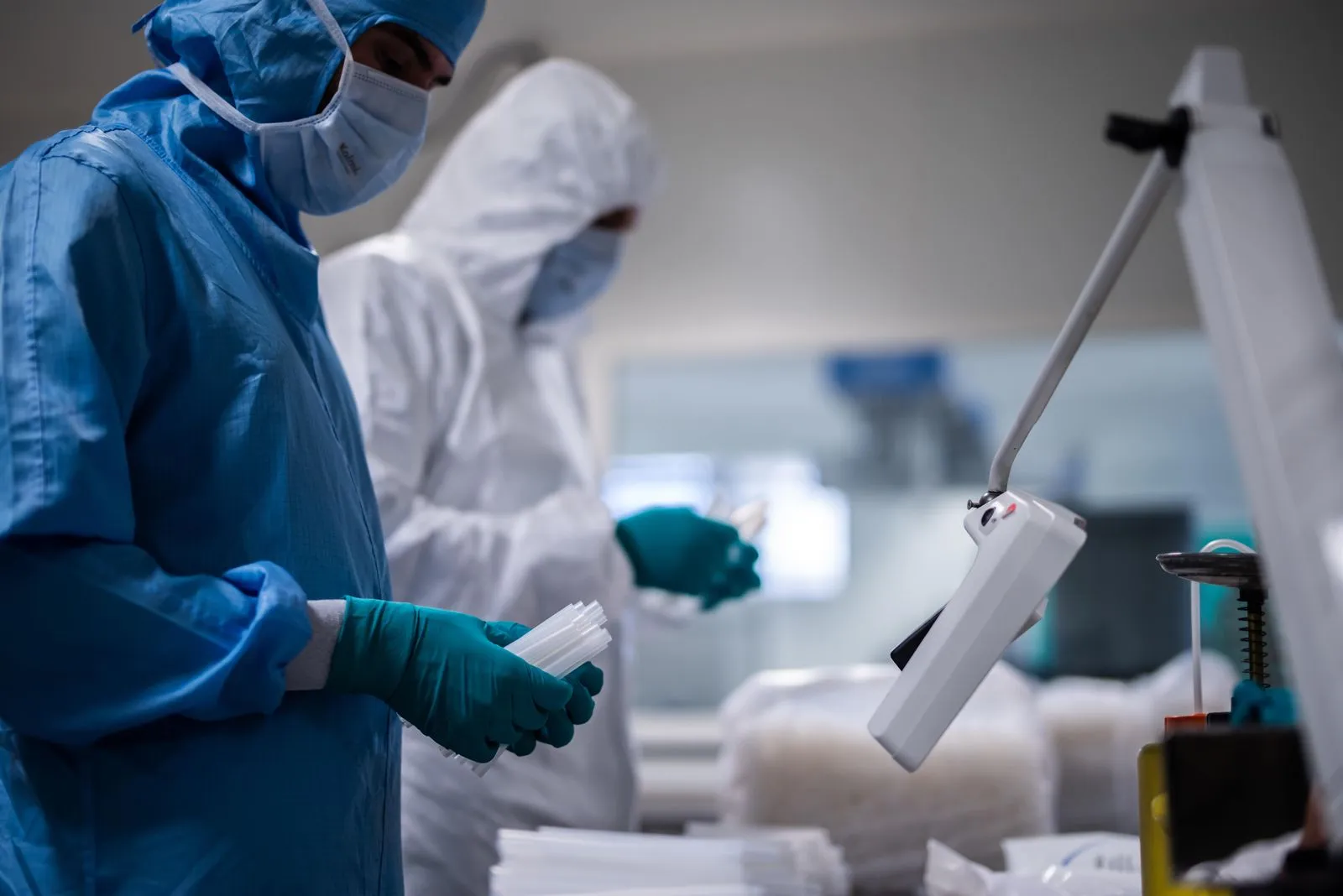
Processes: Extrusion in ISO 8 cleanroom, compression moulding, injection moulding, LSR moulding.
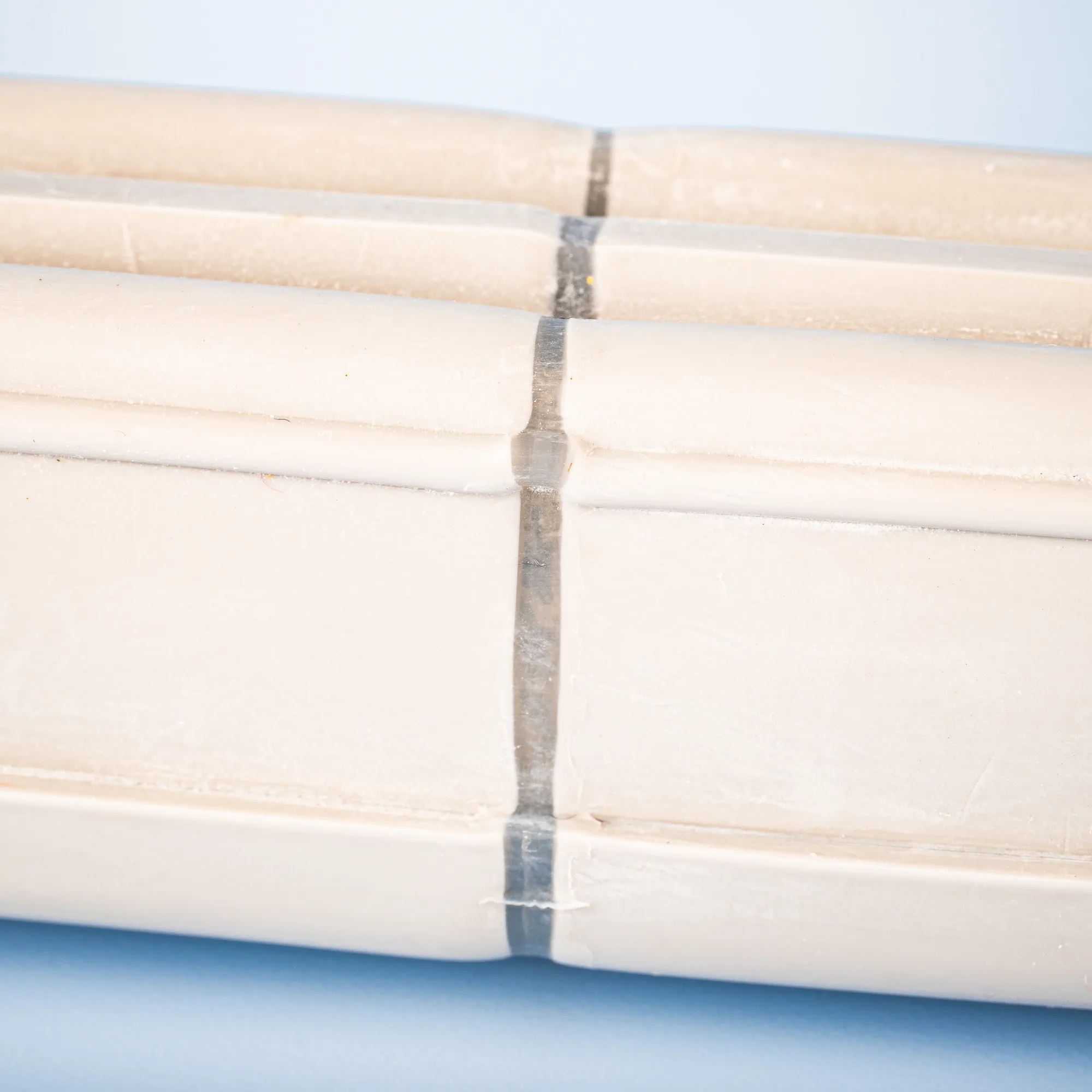
Applications: Medical suction tubes, catheters, components for diagnostic equipment, seals for temporary implantable devices, tubes with identification stripe.
Selection considerations:
- ISO 10993 requirements vary according to application: applicable clauses depend on type of contact and duration
- For implantable devices, verify specific validation for tissue contact and maximum duration
- Cleanroom manufacturing (ISO 8) is standard for medical components
- The manufacturer's ISO 13485 quality system is a common requirement for sector suppliers
3.5 Railway silicone EN 45545-2
Problem solved: Compliance with European fire behaviour standard for railway rolling stock.
| Property | Solid silicone | Cellular silicone |
|---|---|---|
| Hardness | 30-85 Shore A | N/A (sponge) |
| Temperature | -60°C to +200°C | -60°C to +200°C |
| Tear resistance | 17-25 kN/m | 15 kN/m min. |
| Parameter | Extrusion (PEQ) | Moulding (PMQ) |
|---|---|---|
| Oxygen index (LOI) | 32.7% | 35.1% |
| Smoke optical density (Ds max) | 84.7 | 45 |
| Toxicity index (CIT) | 0.06 | 0.06 |
| Requirement sets | R22, R23 | R22, R23 |
| Hazard levels | HL1, HL2, HL3 | HL1, HL2, HL3 |
Railway cellular silicone: Available with EN 45545-2 certification, but achieves only HL1 and HL2 (not HL3). Verify specific project requirements.
Applications: Train door and window seals, sealing profiles in cabs, cable gland seals, components in passenger areas, fabricated gaskets.
Available colours: Black (RAL 9017), Blue black (RAL 5004), Grey, Cream. Colour limitations depending on formulation.
Selection considerations:
- The required hazard level depends on the operation category and vehicle design
- Verify applicable requirement set according to component location (R22 for internal unlisted products, R23 for external unlisted products)
- For applications requiring HL3 with cellular silicone, no formulation is currently available
3.6 High-temperature silicone
Problem solved: Prolonged thermal exposure where standard silicones would degrade prematurely.
| Property | Range |
|---|---|
| Hardness | 40-70 Shore A |
| Continuous service temperature | -60°C to +300°C |
| Temperature peaks | +315°C |
| Tensile strength | 6-8 MPa |
| Tear resistance | 12-17 kN/m |
Available certifications: FDA.
Applications: Industrial oven seals, seals in engines and generator sets, components near heat sources, profiles for dry sterilisation equipment.
Selection considerations:
- Distinguish between continuous service temperature (+300°C) and short-term peaks (+315°C)
- Prolonged exposure to maximum temperature accelerates ageing: design with margin where possible
- For applications combining high temperature with high tear, specific formulations exist (-60°C to +270°C, 30-36 kN/m)
3.7 Low-temperature silicone (PVMQ)
Problem solved: Maintaining flexibility and sealing capability in cryogenic conditions where standard silicones would stiffen.
| Property | Value |
|---|---|
| Hardness | 50 Shore A |
| Temperature | -110°C to +200°C |
| Tensile strength | 8 MPa |
| Elongation | 550% |
| Tear resistance | 28 kN/m |
Chemical base: PVMQ (phenylated silicone). Phenyl groups in the polymer chain prevent crystallisation at low temperature.
Applications: Cryogenic equipment, liquefied gas systems (LNG, liquid nitrogen), seals for climatic chambers, components exposed to extreme thermal cycles, parts subject to vibration in cold conditions.
Selection considerations:
- Currently available in a single hardness (50 Shore A)
- For temperatures between -60°C and -80°C, evaluate whether standard silicone with appropriate hardness selection may be sufficient
- Cost is higher than standard silicone: use only when the temperature range requires it
3.8 Fluorosilicone (FVMQ)
Problem solved: Resistance to hydrocarbons, fuels and solvents where standard silicone (VMQ) would swell or degrade.
| Property | Range |
|---|---|
| Hardness | 40-70 Shore A |
| Temperature | -60°C to +170°C |
| Temperature with additive | Up to +220°C |
| Tensile strength | 6-7 MPa |
| Tear resistance | 10-21 kN/m |
Chemical resistance: Fuels, mineral oils, aliphatic solvents, hydraulic fluids.
Applications: Seals in fuel systems, seals for hydraulic circuits with aggressive oils, components in contact with solvents, parts for aerospace and automotive industries.
Selection considerations:
- Temperature range is lower than standard silicone: maximum +170°C (or +220°C with additive) versus +200°C
- Not all FVMQ formulations are suitable for extrusion: verify available process according to hardness
- Cost is significantly higher than standard VMQ
- For moderate chemical resistance without extreme requirements, evaluate whether steam-resistant silicone may be a more economical alternative
3.9 Steam-resistant silicone
Problem solved: Repeated autoclave cycles and prolonged exposure to saturated steam, with dimensional stability and hydrolysis resistance.
| Property | Range |
|---|---|
| Hardness | 40-80 Shore A |
| Temperature | -60°C to +200°C |
| Tensile strength | 6.4-8 MPa |
| Tear resistance | 9.5-14 kN/m |
Additional resistance: Good resistance to coolants and oils in moderate dosage.
Applications: Autoclave seals, seals for sterilisation equipment, O-rings in steam circuits, components for pharmaceutical and hospital industries.
Selection considerations:
- Standard silicone also withstands steam, but degrades faster with repeated cycles
- For applications with hundreds or thousands of autoclave cycles, the specific formulation is justifiable
- Verify compatibility with the specific cycles of the equipment (temperature, duration, frequency)
3.10 Low compression set silicone
Problem solved: Prolonged static sealing where the seal must maintain its elastic recovery capability during years of compressed service.
| Property | Range |
|---|---|
| Hardness | 40-80 Shore A |
| Temperature | -60°C to +200°C |
| Compression set | 11-18% (70h/150°C) |
| Tensile strength | 6-7.5 MPa |
| Tear resistance | 10-15 kN/m |
Applications: O-rings in long-duration static applications, lid and flange seals, damping systems, components that work permanently compressed.
Selection considerations:
- Standard compression set of conventional silicones is in the range 20-25% (70h/150°C)
- A compression set of 11-18% represents significant improvement in static sealing applications
- For dynamic sealing (relative movement between surfaces), compression set is less critical than wear resistance
- Evaluate whether the application really requires low compression set or whether the problem is seal design (insufficient cross-section, excessive compression)
3.11 Electroconductive silicone
Problem solved: Dissipation of static charges (ESD) or electromagnetic shielding (EMI/RFI) in applications where standard insulating silicone is not permissible.
| Property | Range |
|---|---|
| Hardness | 50-70 Shore A |
| Temperature | -50°C to +210°C |
| Volume resistivity | 4-12 Ω·cm |
| Tensile strength | 5 MPa |
| Tear resistance | 5-10 kN/m |
Available colour: Black only (the conductive filler determines the colour).
Processes: Compression moulding, injection moulding. Extrusion possible subject to study.
Applications: Conductive seals for EMI/RFI shielding, components for sensitive electronic equipment, ESD dissipative seals, connectors and glands with electrical continuity requirements.
Selection considerations:
- Mechanical properties are inferior to standard silicone (lower tensile, lower tear)
- Resistivity varies according to formulation: 4 Ω·cm for high conductivity, 12 Ω·cm for moderate conductivity
- Verify specific EMI attenuation or ESD dissipation time requirements
- The lower temperature range (-50°C vs -60°C) may be limiting in some applications
3.12 Cellular silicone (sponge)
Problem solved: Sealing with low closing force, thermal insulation, cushioning, where solid silicone would require excessive compression forces.
| Property | Range |
|---|---|
| Density | 0.5-0.8 g/cm³ |
| Temperature | -60°C to +200°C |
| Tensile strength | 3 MPa min. |
| Elongation | 600% min. |
| Tear resistance | 15 kN/m |
Structure: Closed cell (does not absorb liquids).
Available certifications: FDA, BfR, EC 1935/2004 (food); EN 45545-2 HL1-HL2 (railway).
Applications: Sealing profiles with low compression force, door and lid seals, flexible thermal insulation, vibration damping, fabricated gaskets.
Selection considerations:
- Density affects compressibility and closing force: lower density = lower force required
- For railway applications, the EN 45545-2 version achieves HL1 and HL2 but not HL3
- Dimensional tolerances are less tight than for solid silicone (class E3 vs E1 per ISO 3302)
- Does not replace solid silicone in applications with fluid pressure: cellular structure has lower extrusion resistance
4. Comparative table of families
| Family | Hardness (Shore A) | Temperature | Typical tear | Key certifications | Main application |
|---|---|---|---|---|---|
| General-purpose | 10-90 | -60/+200°C | 10-23 kN/m | FDA, BfR, EC 1935/2004 | Standard industrial seals |
| High-tear | 40-80 | -60/+200°C* | 26-55 kN/m | FDA, BfR, USP VI** | Membranes, bellows, inflatable seals |
| Food-grade | 10-90 | -60/+200°C | 10-30 kN/m | FDA, BfR, EC 1935/2004 | Food processing equipment |
| Medical-grade | 25-80 | -60/+200°C | 33-47 kN/m | USP VI, ISO 10993 | Medical devices, implantables |
| Railway EN 45545 | 30-85 | -60/+200°C | 17-25 kN/m | EN 45545-2 HL1-HL3 | Rolling stock |
| High-temperature | 40-70 | -60/+300°C | 12-17 kN/m | FDA | Ovens, engines |
| Low-temperature | 50 | -110/+200°C | 28 kN/m | — | Cryogenics, LNG |
| Fluorosilicone | 40-70 | -60/+170°C | 10-21 kN/m | — | Fuels, oils |
| Steam-resistant | 40-80 | -60/+200°C | 9.5-14 kN/m | FDA | Autoclave, sterilisation |
| Low compression set | 40-80 | -60/+200°C | 10-15 kN/m | FDA | Prolonged static sealing |
| Electroconductive | 50-70 | -50/+210°C | 5-10 kN/m | — | EMI shielding, ESD |
| Cellular (sponge) | — | -60/+200°C | 15 kN/m | FDA, EN 45545-2*** | Low closing force |
*Up to +270°C with specific formulation. **Platinum catalysis. ***HL1-HL2 only.
Custom Silicone Profiles
VMQ silicone profiles custom-designed according to drawing or sample. Personalized sections, specific formulations, and RAL colors. Compliance with FD...
View product →5. Cross-requirements: when you need two properties
Some applications require a combination of properties that not all formulations offer.
High tear + high temperature
Solution: Specific formulations with thermal stabilisation and mechanical reinforcement.
Achievable specifications: -60°C to +270°C, 30-36 kN/m tear.
Typical application: Bellows in engine areas, membranes in thermal process equipment.
Food-grade + cellular
Solution: Cellular silicone with FDA/BfR/EC 1935/2004 certification.
Limitation: Less tight tolerances than food-grade solid silicone.
Typical application: Domestic oven door seals, household appliance seals.
Railway + cellular
Solution: EN 45545-2 cellular silicone.
Limitation: Achieves HL1 and HL2 but not HL3.
Typical application: Sealing profiles on train doors, window seals.
Medical + high tear
Solution: Platinum catalysis formulations with USP VI/ISO 10993 certification and optimised tear resistance.
Achievable specifications: 33-55 kN/m tear with full biocompatibility.
Typical application: Infusion pump diaphragms, membranes for implantable devices.
High temperature + low cost
Reality: Does not exist. High-temperature formulations require stabilisers and specific raw materials that increase cost.
Alternative: If the actual service temperature is below +200°C, use standard silicone. Only specify high temperature when genuinely necessary.
6. Common errors in material selection
6.1 Confusing raw material certification with final product certification
Datasheets indicate certifications of the raw materials that make up the formulation. This does not mean the final product is automatically certified.
For medical devices with CE marking, the device manufacturer must validate the final part according to its intended use. Material certification is a necessary but not sufficient condition.
For food contact, conformity may depend on specific conditions of use (temperature, contact time, type of food). Validate according to actual application.
6.2 Specifying theoretical maximum temperature
Datasheets show the maximum exposure temperature. But short-term exposure is not the same as continuous service.
A standard silicone withstands +200°C, but its service life is significantly reduced if it works continuously at that temperature. Design with margin: if the service temperature is +180°C, a +200°C silicone may be sufficient. If it is +195°C in continuous service, consider high-temperature silicone.
6.3 Ignoring the effect of colour on certifications
Many food and medical certifications are obtained with the base formulation (translucent or specific colours). The addition of pigments may void the certification.
Before specifying colour, verify that the formulation + pigment combination maintains the required certifications. When in doubt, prioritise validated standard colours (black, white, translucent) over special colours.
6.4 Asking for "food-grade silicone" without specifying the standard
"Food-grade" is not a specification. Standards vary by region:
- FDA for the United States
- BfR for Germany
- EC 1935/2004 for Europe
A part may comply with FDA but not EC 1935/2004. Specify the required standard according to target market.
6.5 Over-specifying for safety
Requesting medical silicone for an industrial seal, or platinum catalysis silicone for an application without purity requirements, increases product cost without adding functional value.
6.6 Not considering the manufacturing process
Not all formulations are compatible with all processes:
- Some extreme hardnesses (10 Shore A, 90 Shore A) may have process limitations
- Electroconductive silicone is optimised for moulding; extrusion requires study
- Cellular silicone is manufactured by extrusion, not by moulding
Verify availability of the formulation for the required process before specifying.
7. Selection process: decision diagram
Step 1: Define actual service temperature
- Above +200°C continuous → High temperature
- Below -60°C → Low temperature (PVMQ)
- Within -60°C to +200°C → Continue
Step 2: Identify mandatory regulatory requirements
- Food contact → Food-grade (specify FDA/BfR/EC)
- Medical device → Medical-grade (specify USP VI/ISO 10993/implantable)
- Railway rolling stock → EN 45545-2 (specify required HL)
- No regulatory requirements → Continue
Step 3: Evaluate chemical environment
- Hydrocarbons, fuels, solvents → Fluorosilicone
- Repeated autoclave cycles → Steam-resistant
- No special chemical exposure → Continue
Step 4: Evaluate mechanical requirements
- Critical high tear → High-tear
- Prolonged static sealing → Low compression set
- Low closing force → Cellular
- Electrical conductivity → Electroconductive
- No special mechanical requirements → General-purpose
Step 5: Verify availability
- Confirm that the selected formulation is available in the required hardness
- Confirm compatibility with the intended manufacturing process
- Confirm that the required colours maintain the necessary certifications
Explore all available formulations
Browse our complete library of silicone series with detailed technical specifications, certifications and hardness ranges.
View formulations →Conclusion
Silicone selection is not trivial. "Silicone" encompasses formulations with radically different properties, certifications and costs. Choosing correctly requires precisely defining the actual requirements of the application: temperature, mechanical stresses, regulations, chemical environment.
The most expensive formulation is not automatically the best. The best formulation is one that meets requirements at the right cost. A correctly specified general-purpose silicone is a better choice than an over-specified medical silicone for an industrial application.
When requirements do not fit clearly into a standard family, or when unusual combinations of properties are needed, technical validation with the manufacturer is the next step before committing to production.