












Antes de especificar un componente de silicona, hay una decisión técnica que condiciona todo lo demás: ¿extrusión o moldeo? Esta elección no es intercambiable. Cada proceso tiene ventajas estructurales, limitaciones geométricas y rangos de coste que lo hacen adecuado para aplicaciones específicas. Elegir mal implica sobrecostes, plazos alargados o componentes que no cumplen su función.
Este artículo no explica qué es la extrusión. Explica cuándo usarla, qué se puede fabricar con ella y qué errores evitar en la especificación. Si necesitas un perfil continuo, un tubo o una junta de geometría constante, probablemente la extrusión sea tu proceso. Si necesitas una pieza con geometría tridimensional compleja, no lo es.
1. Extrusión vs. moldeo: criterios de decisión técnica
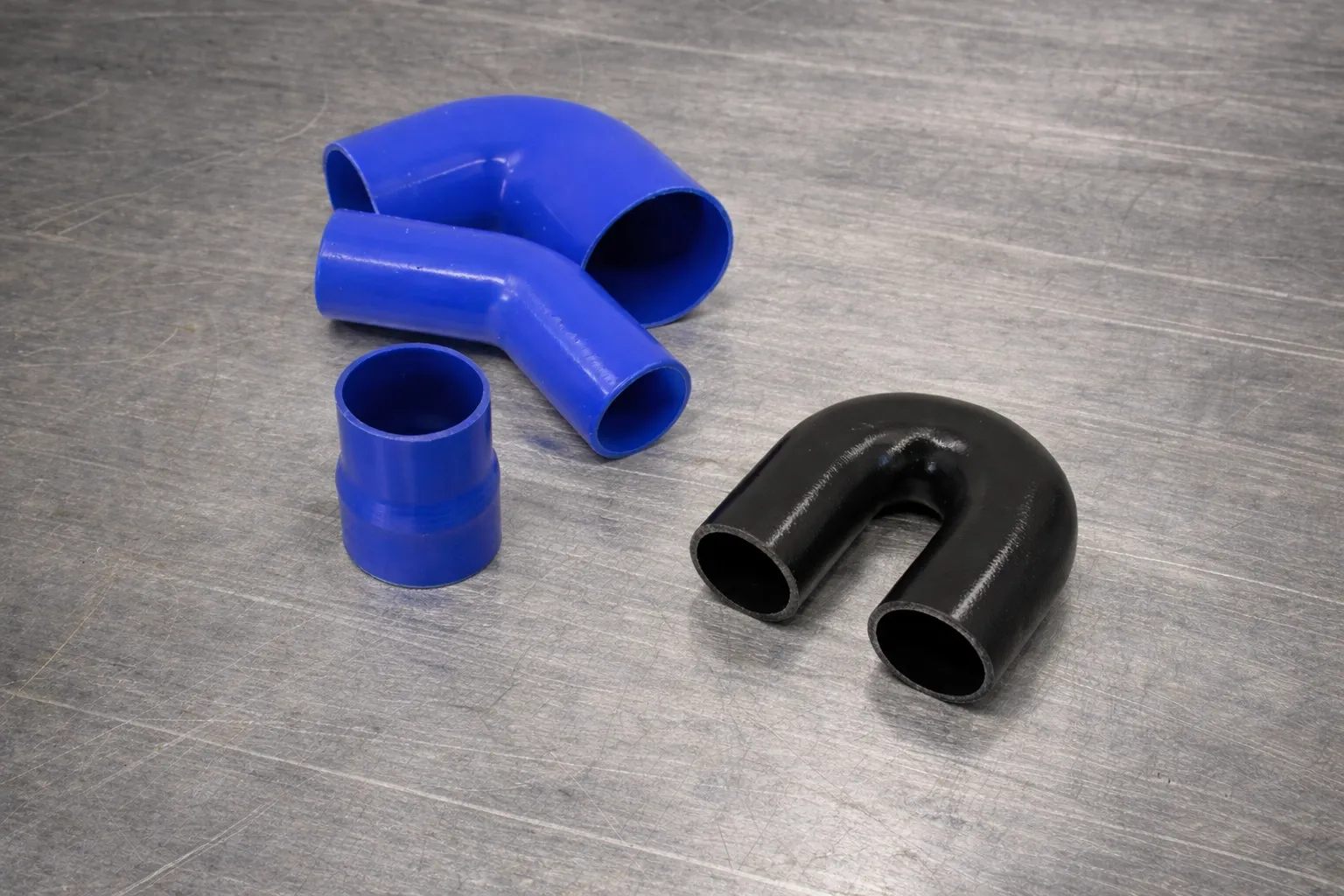
La extrusión produce secciones transversales constantes en longitudes continuas. El moldeo produce geometrías tridimensionales definidas por un molde cerrado. Esta diferencia fundamental determina cuándo usar cada proceso.
Cuándo elegir extrusión
- La pieza tiene sección transversal constante a lo largo de su longitud
- Se requieren longitudes superiores a 500 mm (aunque se fabrican piezas más cortas)
- El volumen de producción justifica la amortización del utillaje de extrusión
- La geometría es un perfil, tubo, cordón o junta lineal
- Se necesita flexibilidad para cortar a medida según pedido
Cuándo NO elegir extrusión
- La pieza tiene variaciones de sección a lo largo de su longitud
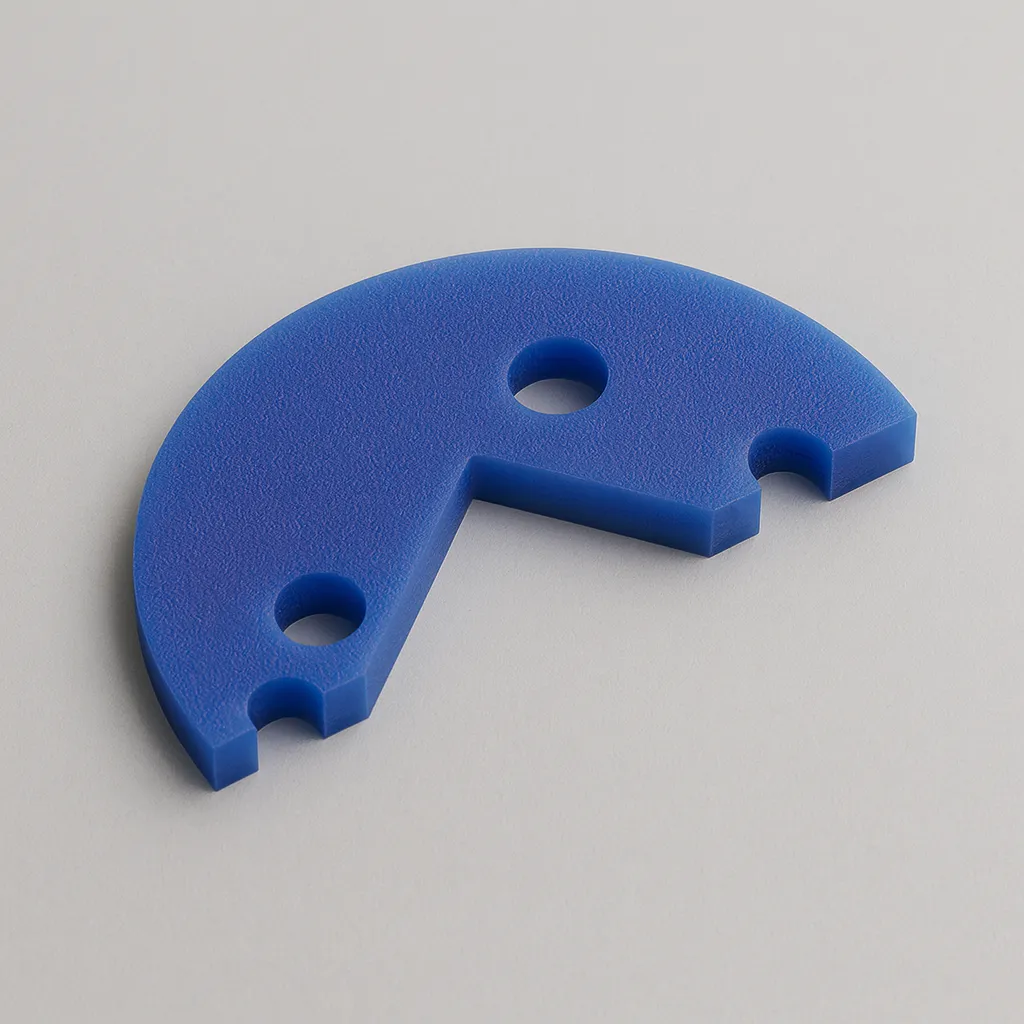
- Se requieren formas cerradas tipo junta tórica o membrana
- La geometría incluye cavidades internas complejas o refuerzos localizados
- El componente necesita insertos metálicos integrados
- La aplicación exige tolerancias dimensionales muy ajustadas en todas las direcciones
2. Qué problemas resuelve la extrusión frente al moldeo
La extrusión no es simplemente una alternativa al moldeo. Resuelve problemas específicos que el moldeo no puede abordar de forma eficiente:
Longitudes continuas
Un perfil extruido puede fabricarse en bobinas de decenas de metros y cortarse a la longitud exacta requerida. Un moldeo requeriría un molde específico para cada longitud, multiplicando costes de utillaje.
Flexibilidad dimensional
El mismo perfil extruido puede suministrarse en longitudes de 100 mm o 10 metros sin cambio de utillaje. Esto permite gestionar inventarios con mayor eficiencia y responder a variaciones de demanda.
Coste de utillaje reducido
Una hilera de extrusión tiene un coste significativamente inferior a un molde de inyección o compresión para geometrías equivalentes. Para series medias o aplicaciones donde el diseño puede evolucionar, esto reduce el riesgo de inversión.
Plazos de desarrollo
El tiempo de fabricación de una hilera de extrusión es típicamente inferior al de un molde complejo. Esto acelera los ciclos de prototipado y las primeras series de producción.
3. El proceso de extrusión de silicona: fundamentos técnicos
La extrusión de silicona es un proceso continuo donde el material sin vulcanizar se fuerza a través de una hilera que define la sección transversal del perfil. El material sale de la hilera en estado crudo y pasa inmediatamente a un horno de vulcanización donde adquiere sus propiedades mecánicas definitivas.
Etapas del proceso
- Alimentación: El compound de silicona se introduce en la extrusora
- Plastificación: El husillo transporta y homogeneiza el material
- Conformado: El material pasa a través de la hilera adoptando la sección definida
- Vulcanización: El perfil crudo atraviesa un horno de aire caliente o infrarrojos
- Enfriamiento: El perfil vulcanizado se enfría de forma controlada
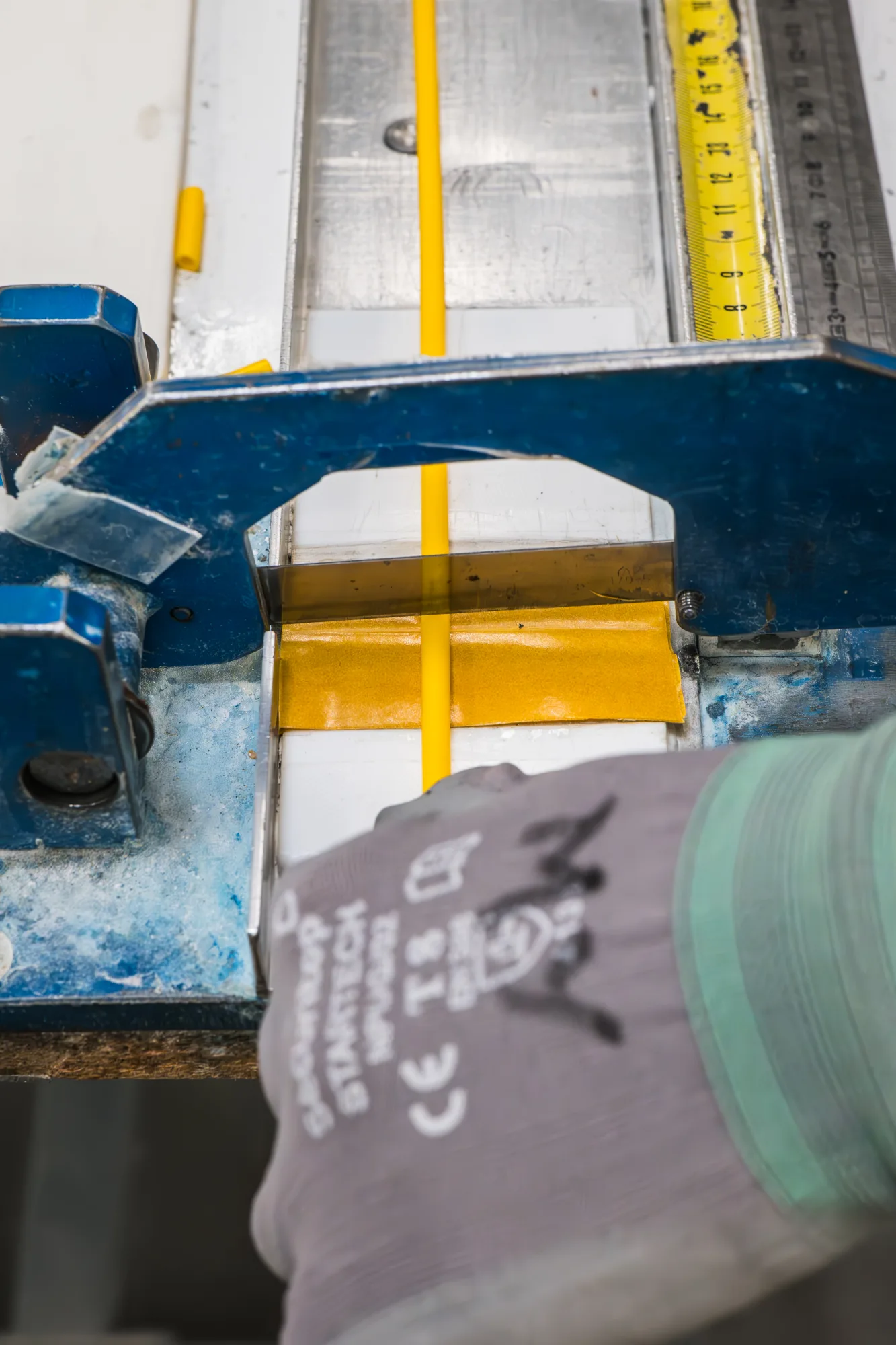
- Corte/Bobinado: El producto final se corta a medida o se bobina en continuo
Variables críticas de proceso
La estabilidad dimensional del perfil extruido depende del control preciso de múltiples variables:
- Temperatura de extrusión: Afecta la viscosidad y el comportamiento de flujo
- Velocidad de línea: Determina el tiempo de residencia en el horno
- Temperatura de vulcanización: Controla el grado de reticulación
- Tensión de arrastre: Influye en las dimensiones finales y la orientación molecular
- Diseño de hilera: Compensa la hinchazón del extruido (die swell)
Un proceso de extrusión bien controlado produce perfiles con variaciones dimensionales mínimas a lo largo de toda la producción. Las tolerancias estándar según ISO 3302-1 para productos extruidos son clase E1 o E2, dependiendo de la complejidad del perfil.
4. Tipologías de productos fabricables por extrusión
La extrusión de silicona permite fabricar una amplia gama de productos con geometrías muy diversas. A continuación se detallan las principales familias de productos y sus características técnicas.
4.1 Perfiles extruidos de silicona
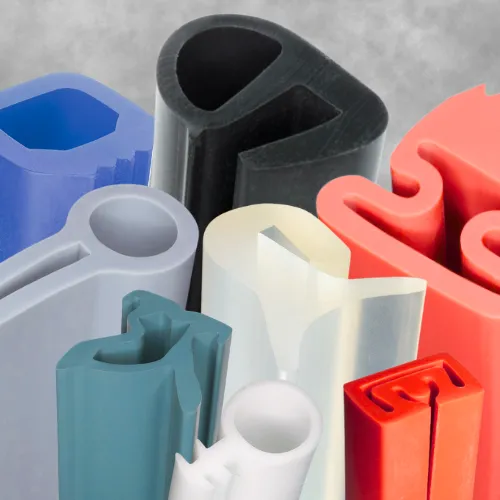
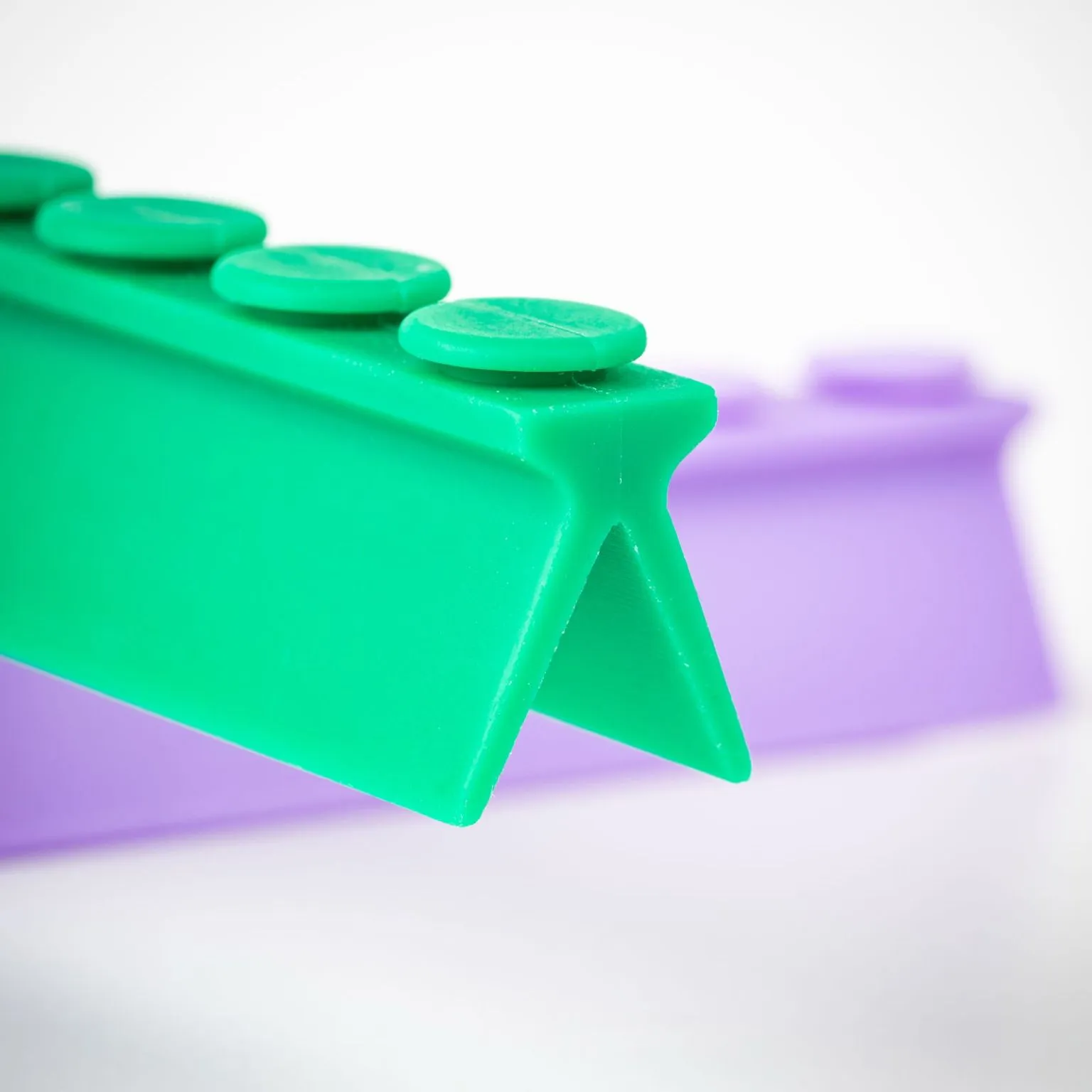
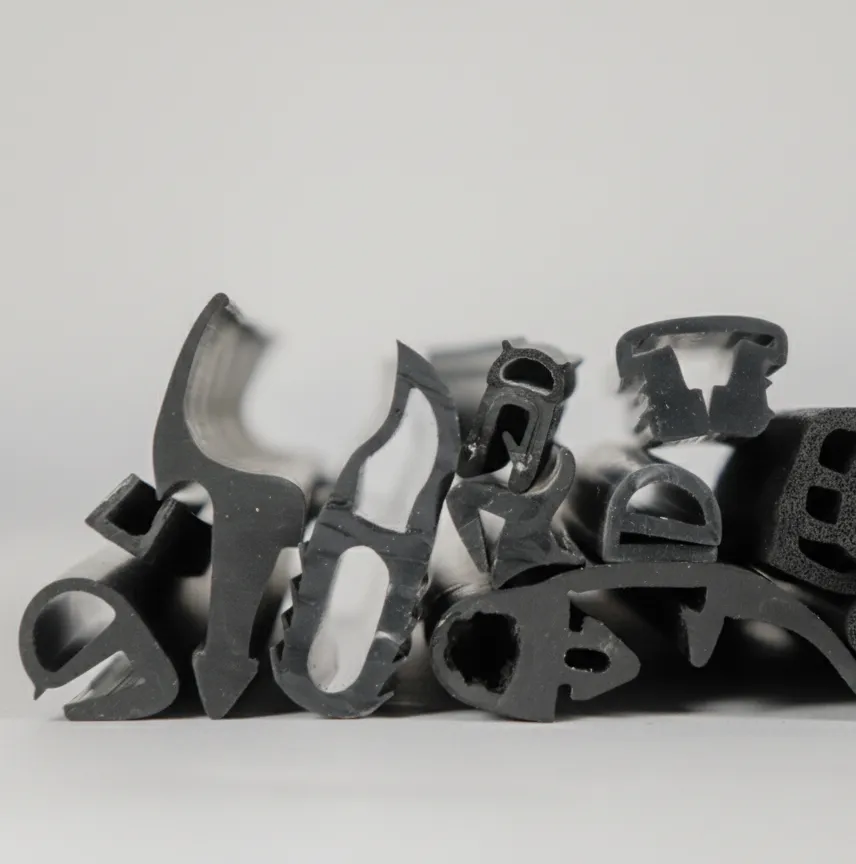
Los perfiles extruidos constituyen la categoría más amplia de productos de extrusión. Pueden fabricarse en sección compacta (sólida) o celular (esponjosa), y admiten geometrías desde simples cordones hasta secciones complejas con múltiples cavidades.
Perfiles compactos
Fabricados en silicona sólida VMQ, los perfiles compactos se utilizan en aplicaciones que requieren resistencia mecánica, estanqueidad bajo presión o contacto con fluidos. Las durezas disponibles van de 10 a 90 Shore A, aunque el rango más común en extrusión es de 40 a 80 Shore A.
- Perfiles de estanqueidad para puertas y ventanas industriales
- Juntas de cierre para equipos y armarios
- Perfiles de protección de aristas y cantos
- Guías y carriles de deslizamiento
- Perfiles decorativos y de acabado
Perfiles celulares (esponja)
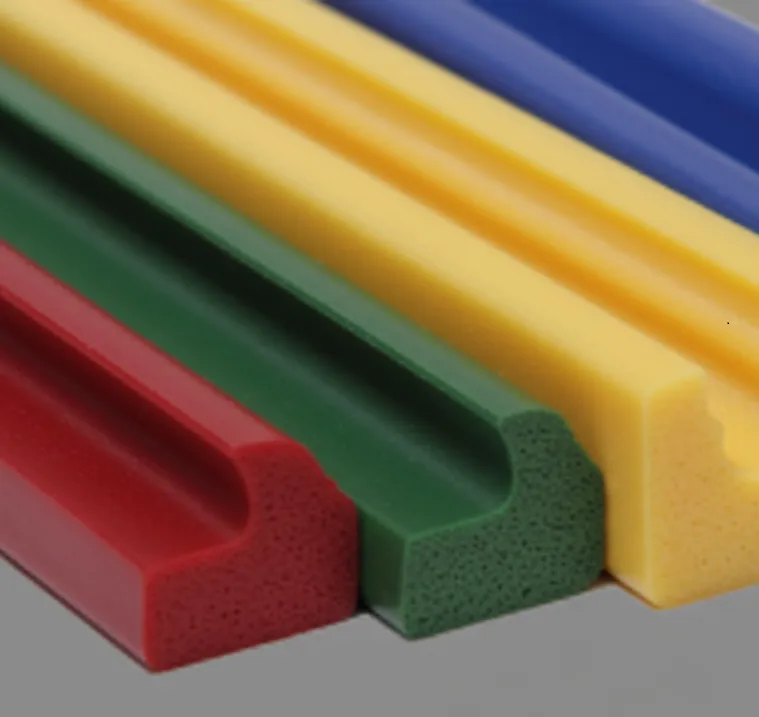
Los perfiles de silicona celular se fabrican mediante expansión controlada del material durante la vulcanización. La densidad resultante varía típicamente entre 0,4 y 0,8 g/cm³, frente a los 1,1-1,2 g/cm³ de la silicona compacta.
Las ventajas del perfil celular incluyen mayor compresibilidad, mejor aislamiento térmico y acústico, y menor fuerza de cierre requerida. Sin embargo, no son adecuados para aplicaciones con presión de fluido ni para contacto directo con líquidos.
- Juntas de estanqueidad de baja compresión
- Perfiles de aislamiento térmico
- Amortiguadores y absorbentes de vibración
- Juntas para aplicaciones ferroviarias (Serie 33, EN 45545-2)
Perfiles coextruidos
La coextrusión permite combinar dos o más materiales en un único perfil. Las combinaciones típicas incluyen silicona compacta + celular, diferentes durezas de silicona, o silicona + refuerzo textil o metálico.
Esto permite optimizar el perfil para funciones múltiples: por ejemplo, una zona de sellado compacta combinada con una zona de absorción celular, todo en una sola pieza sin ensamblaje posterior.
4.2 Tubos de silicona
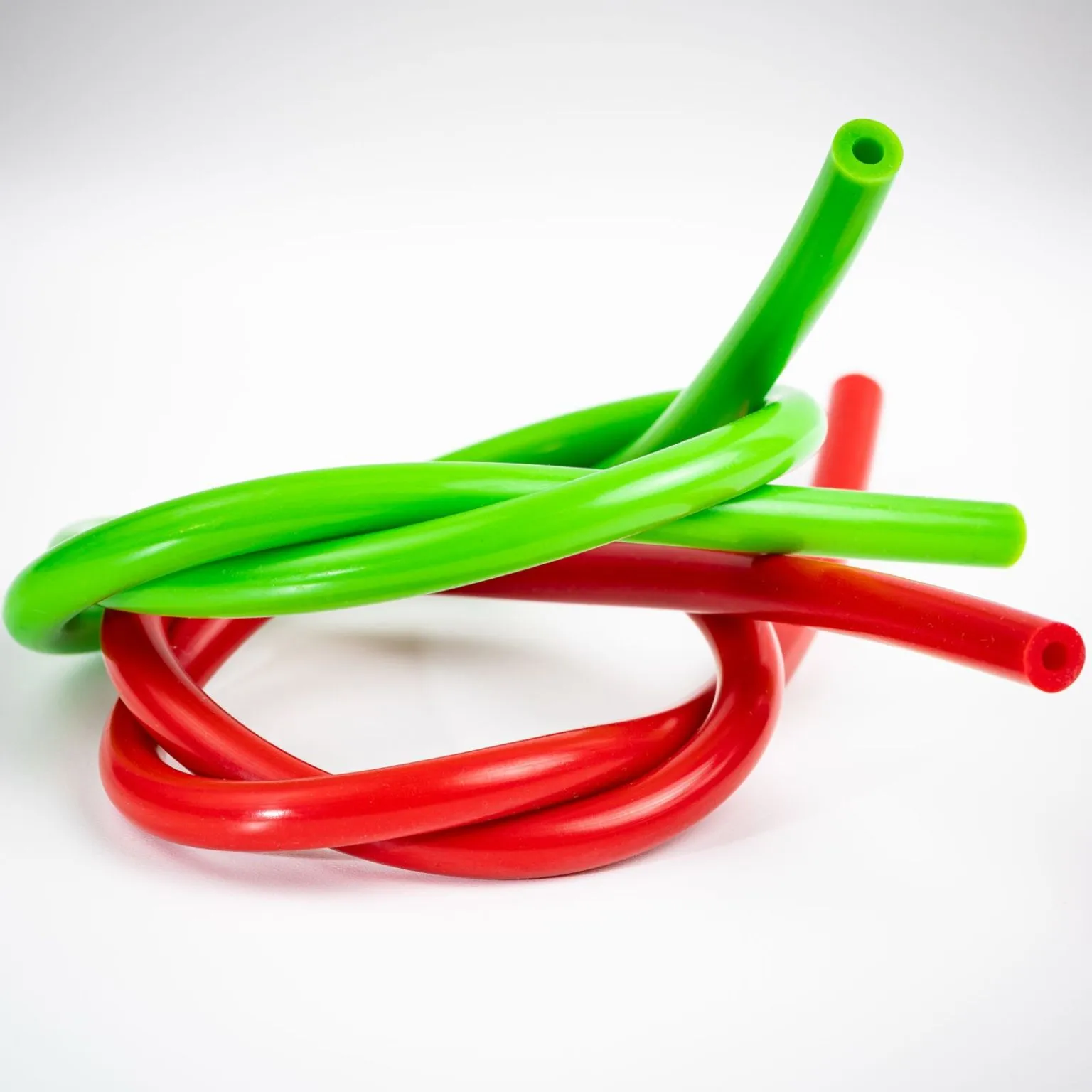
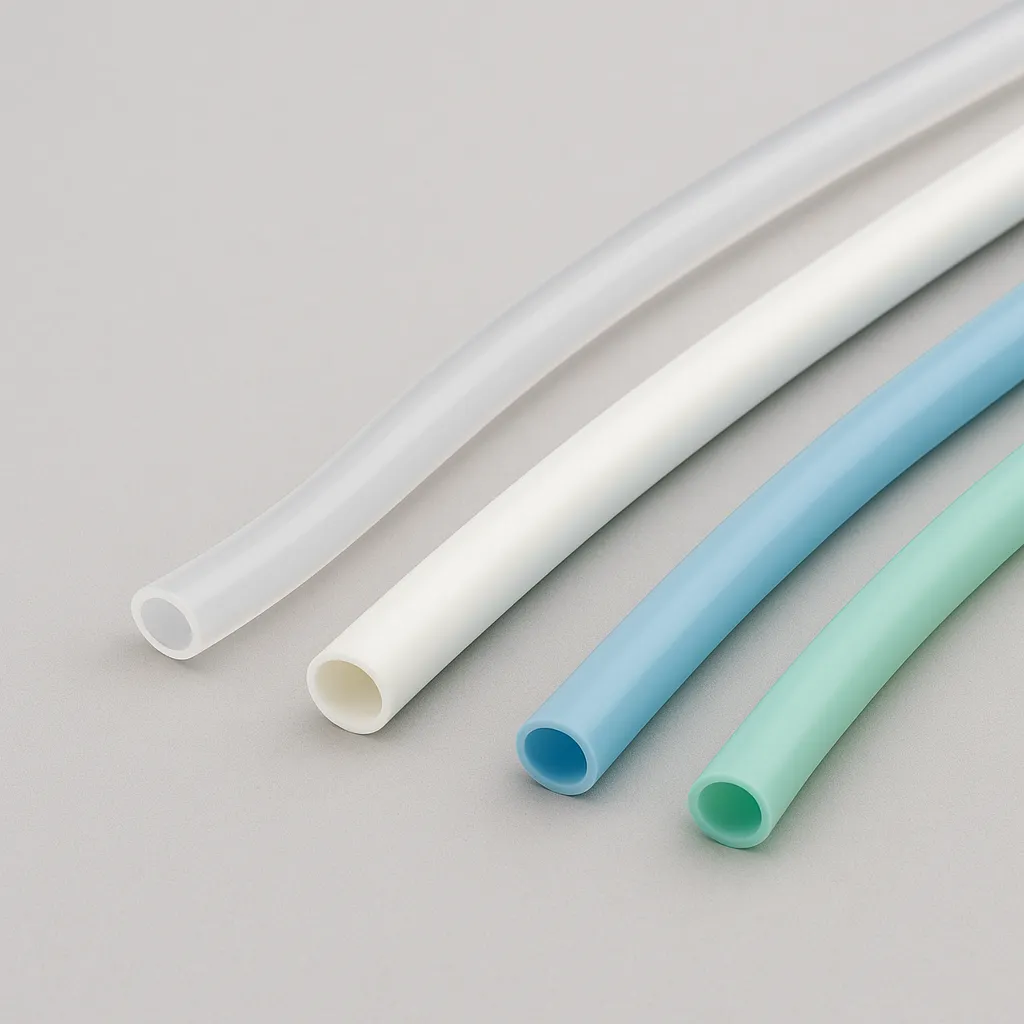
Los tubos de silicona son productos extruidos de sección anular, definidos por su diámetro interior, diámetro exterior (o espesor de pared) y longitud. El rango dimensional fabricable va desde microtubos de 0,5 mm de diámetro interior hasta tubos de gran sección con diámetros interiores superiores a 100 mm.
Tubería industrial estándar
Los tubos de silicona industrial se utilizan para conducción de fluidos, aire, vacío y aplicaciones de transferencia. Las formulaciones estándar (Series 2, 12) ofrecen buena resistencia química, flexibilidad en amplio rango de temperatura (-60 a +200 °C) y conformidad FDA para aplicaciones alimentarias.
Tubería para aplicaciones médicas
Los tubos de grado médico se fabrican con formulaciones específicas (Serie 17) que cumplen USP Class VI e ISO 10993 para biocompatibilidad. Se utilizan en dispositivos médicos, equipos de laboratorio, sistemas de administración de fármacos y aplicaciones de contacto con el paciente.
Las tolerancias dimensionales en tubería médica son más estrictas que en industrial, y la trazabilidad de lote es obligatoria para cumplir con los requisitos de los sistemas de gestión de calidad médicos.
Tubos reforzados
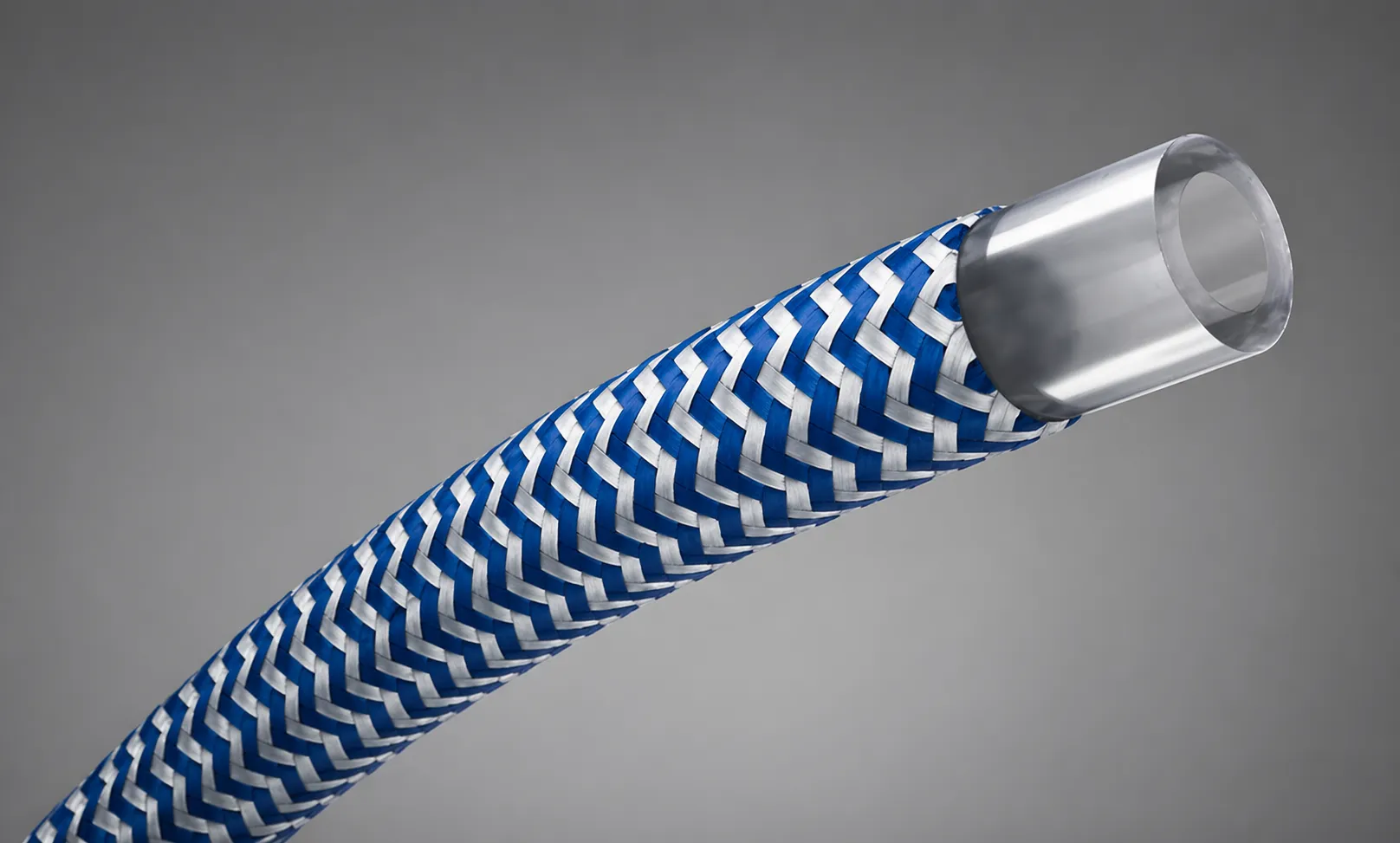
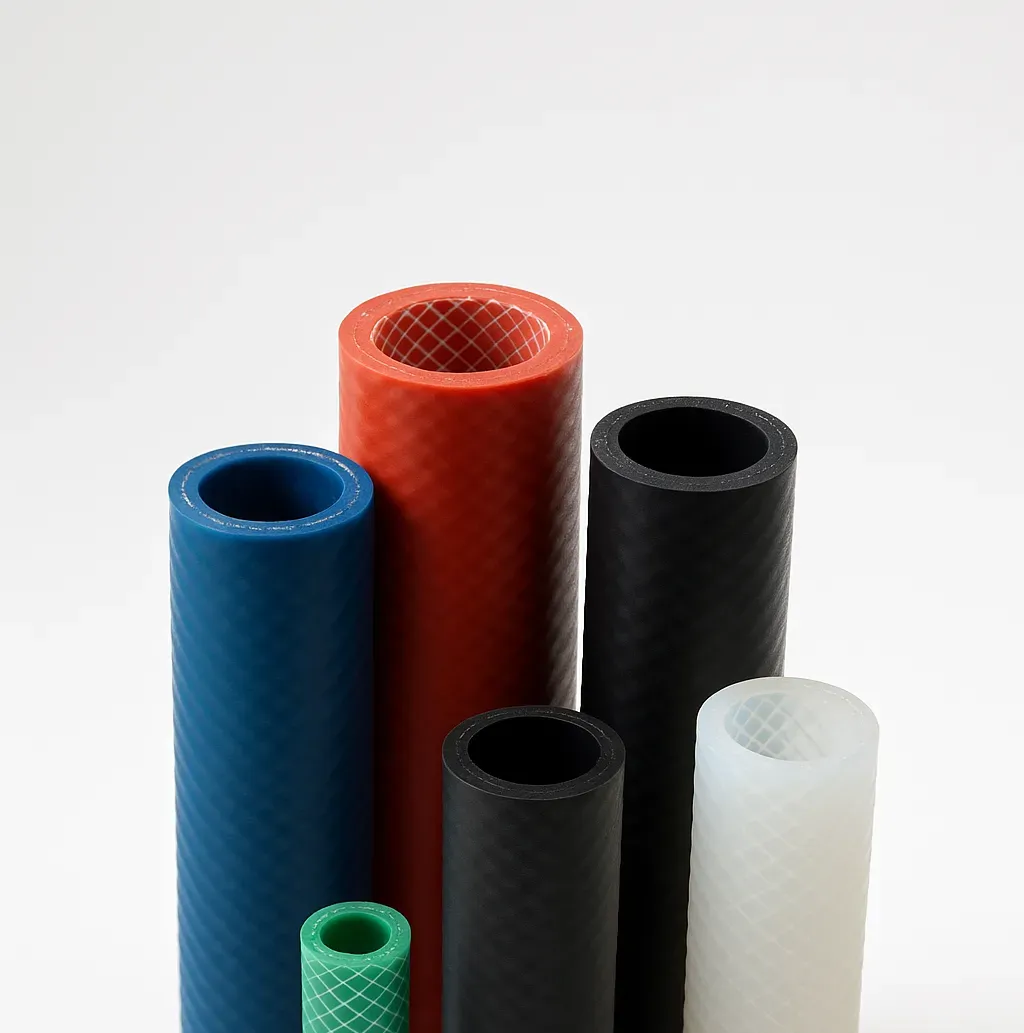
Para aplicaciones que requieren resistencia a la presión interna, colapso por vacío o esfuerzos mecánicos, se fabrican tubos con refuerzo integrado. Los tipos de refuerzo incluyen malla textil (poliéster, aramida), espiral metálica o trenzado de acero inoxidable.
El refuerzo se incorpora durante el proceso de extrusión, quedando embebido entre dos capas de silicona. Esto mantiene la flexibilidad del tubo mientras aumenta significativamente su resistencia a presión y vacío.
4.3 Cordones y perfiles macizos
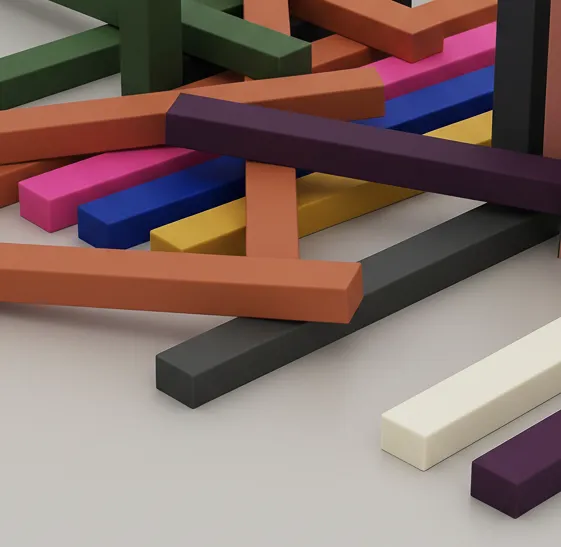
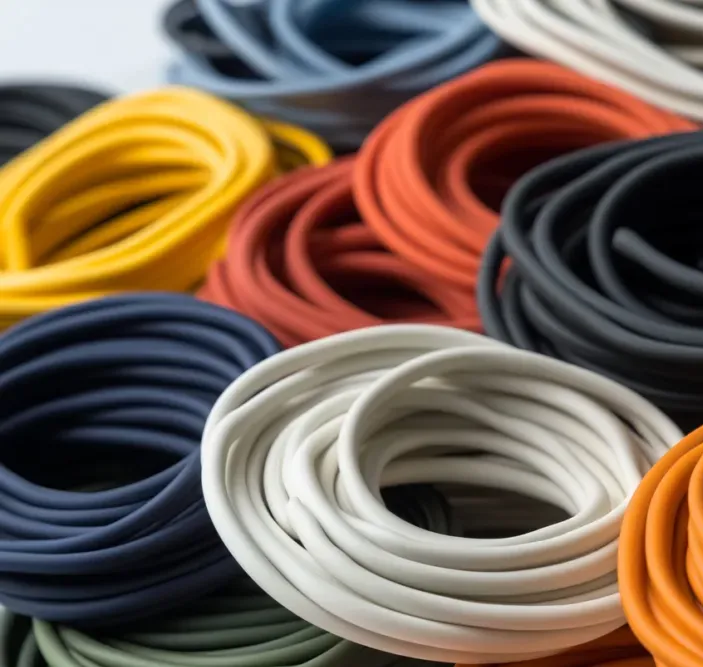
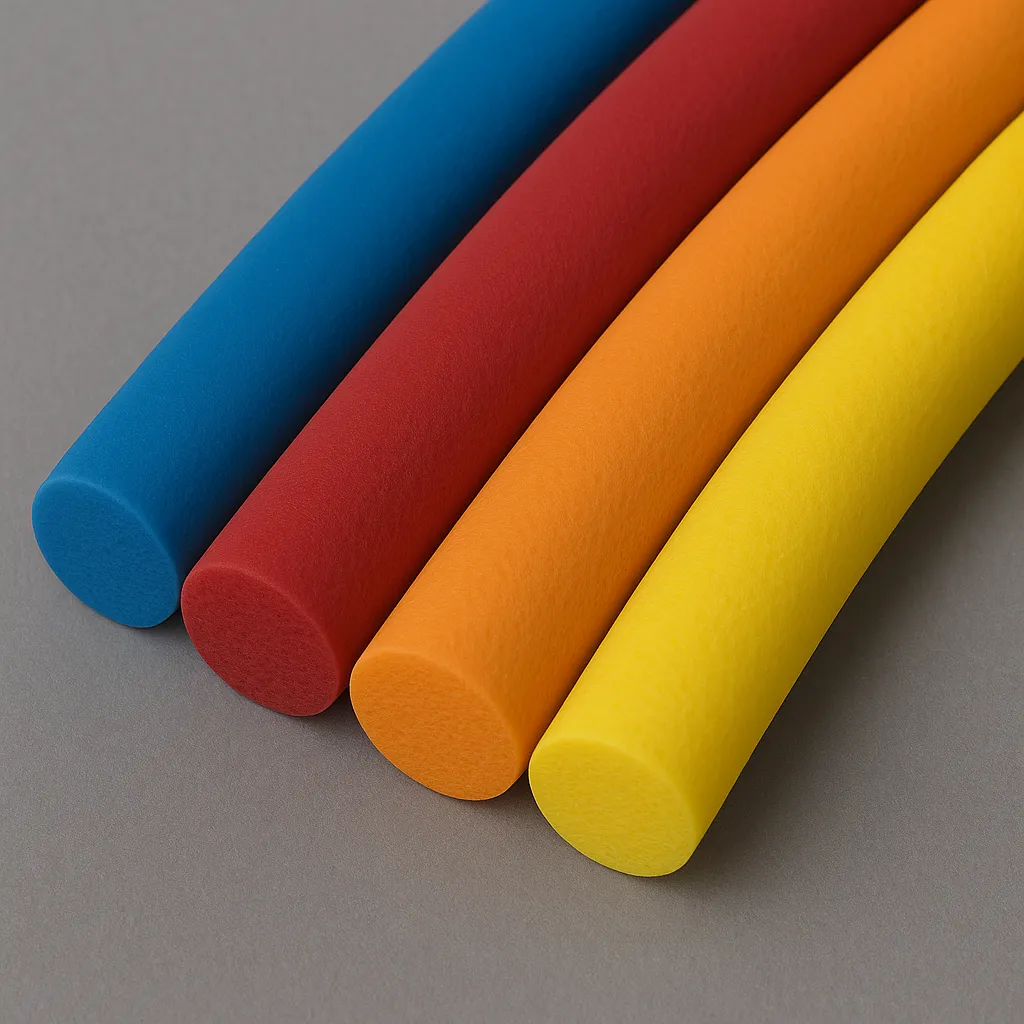
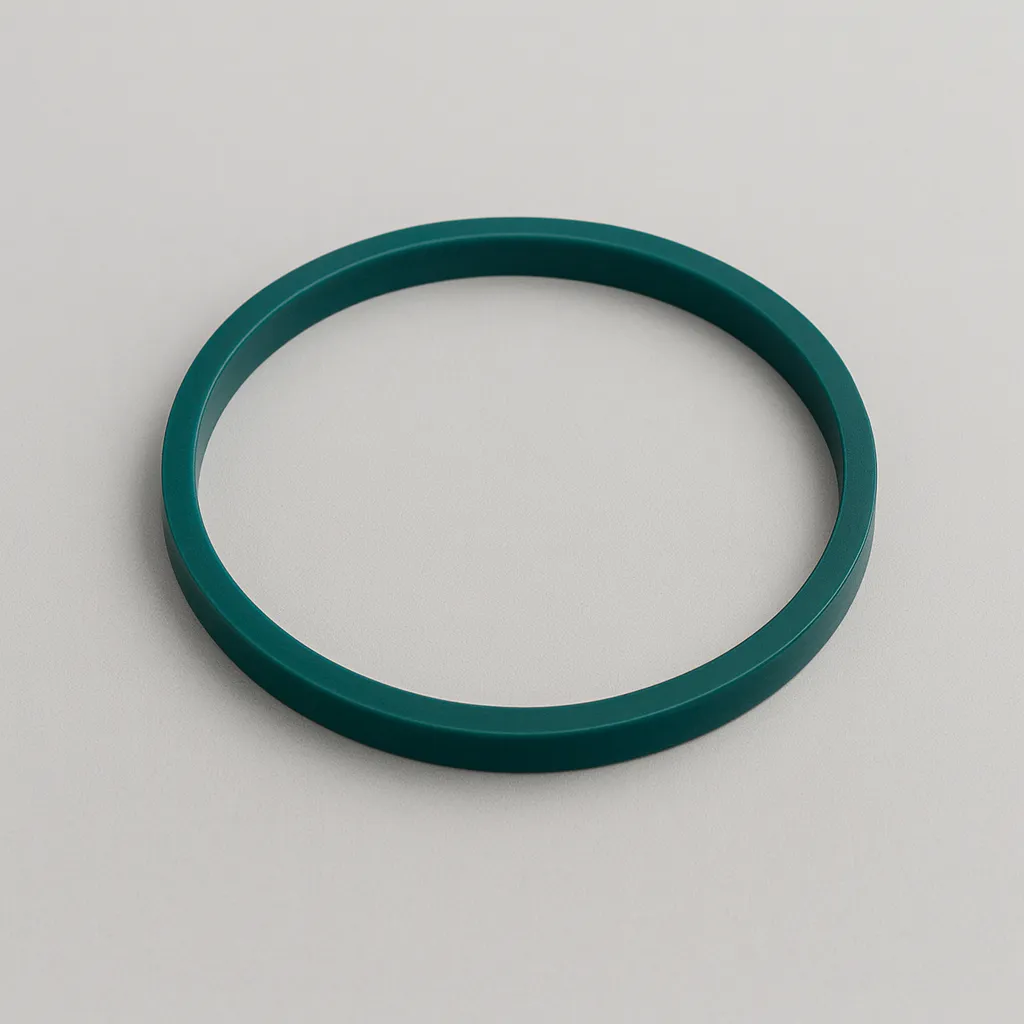
Los cordones son la forma más simple de producto extruido: secciones macizas de geometría circular, cuadrada o rectangular. A pesar de su simplicidad geométrica, son componentes críticos en muchas aplicaciones de sellado y amortiguación.
Cordones circulares
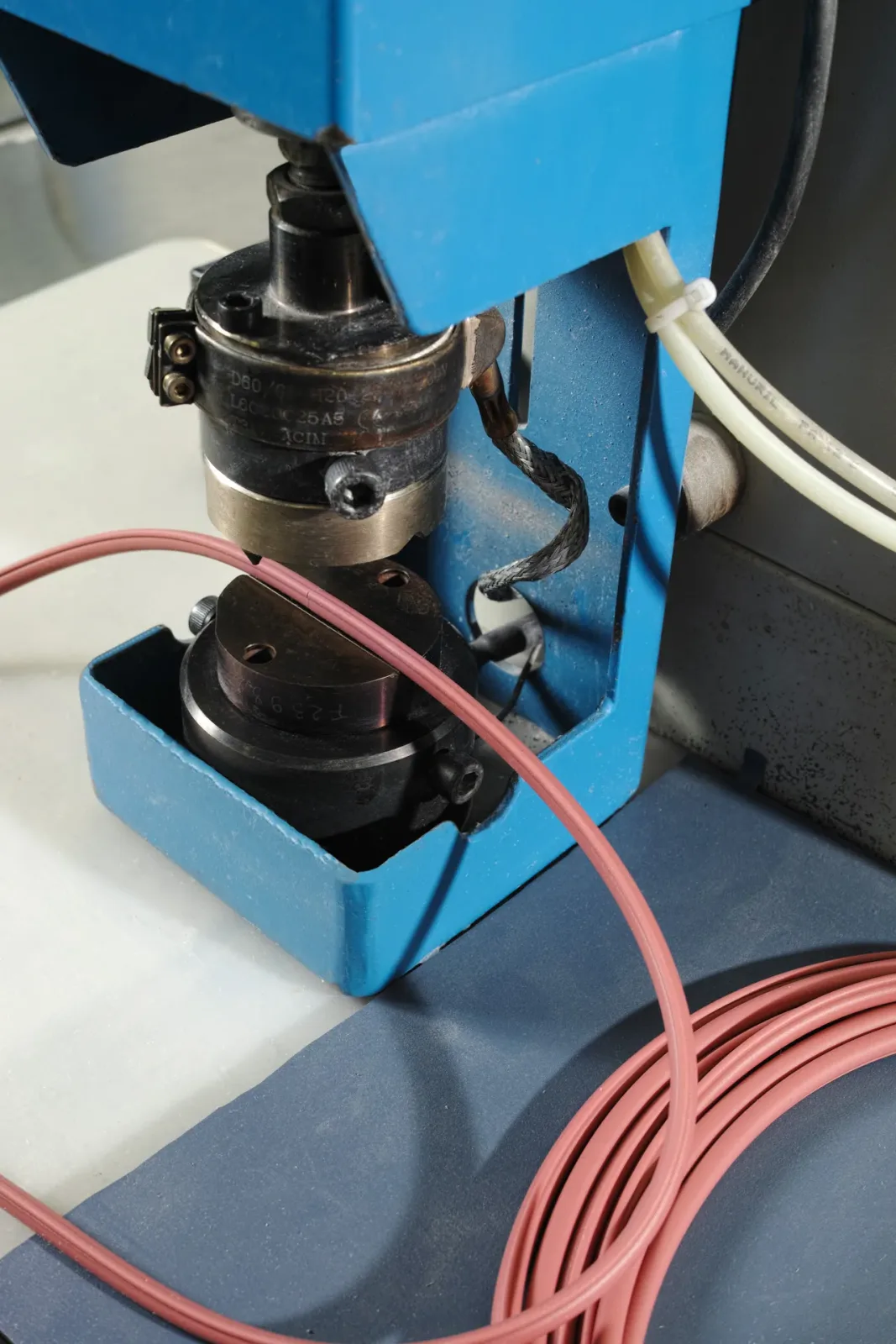
Los cordones de sección circular se utilizan principalmente para fabricar juntas tóricas por vulcanización de los extremos, o como material de relleno en ranuras de sellado. Los diámetros disponibles van desde 1 mm hasta más de 50 mm.
Perfiles cuadrados y rectangulares
Los perfiles de sección cuadrada o rectangular se utilizan como juntas planas, tiras de sellado o elementos de amortiguación. La relación entre lados puede variar ampliamente, desde secciones cuadradas hasta tiras muy planas.
4.4 Juntas inflables extruidas
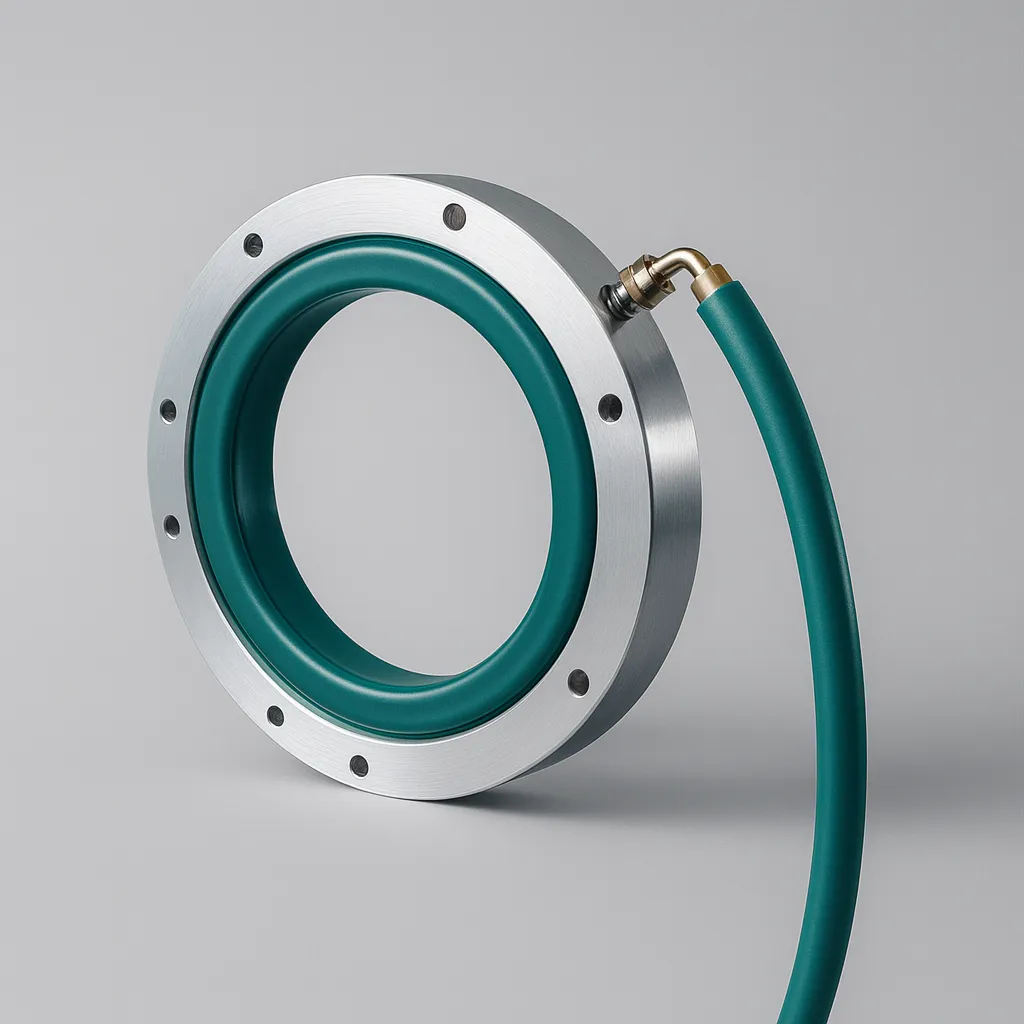
Las juntas inflables son perfiles huecos diseñados para expandirse radialmente cuando se presurizan con aire. Esta expansión permite sellar contra superficies irregulares o crear cierres herméticos que pueden liberarse a voluntad.
El diseño de una junta inflable requiere considerar múltiples factores: presión de trabajo, expansión requerida, geometría de la cavidad donde se instala, frecuencia de ciclos de inflado/desinflado y requisitos de estanqueidad.
- Cierres de puertas de autoclaves y cámaras de vacío
- Sellado de escotillas y compuertas industriales
- Fijación temporal de piezas en procesos de mecanizado
- Compensación de tolerancias en ensamblajes
Las formulaciones para juntas inflables deben tener alta resistencia al desgarro (Series 1, 7, 10) para soportar la fatiga de ciclos repetidos de inflado. La dureza típica está en el rango 50-70 Shore A.
5. Errores frecuentes en la especificación de productos extruidos
La experiencia acumulada en proyectos de extrusión permite identificar errores recurrentes que generan problemas en producción o en servicio. Conocerlos ayuda a evitarlos en la fase de especificación.
5.1 Dureza incorrecta para la aplicación
Especificar una dureza Shore A sin considerar las condiciones reales de trabajo es uno de los errores más comunes. La dureza no es solo un número: determina la fuerza de cierre necesaria, la capacidad de sellado, el comportamiento a fatiga y la respuesta a la temperatura.
- Dureza demasiado baja: Deformación excesiva bajo carga, pérdida de geometría
- Dureza demasiado alta: Fuerza de cierre excesiva, pérdida de estanqueidad en superficies irregulares
- Sin considerar variación térmica: +3 a +5 Shore A por cada 50 °C de aumento de temperatura
5.2 Geometría mal pensada para extrusión
No todas las geometrías son extruibles. Algunas limitaciones son físicas (el material debe fluir de forma estable), otras son económicas (geometrías muy complejas requieren hileras costosas y difíciles de mantener).
- Paredes muy finas: Dificultad de llenado y riesgo de rotura. Mínimo recomendado 0,5-1 mm según dureza
- Grandes diferencias de espesor: Vulcanización desigual, tensiones internas
- Geometrías cerradas complejas: Requieren mandriles especiales y aumentan el coste
- Ángulos muy agudos: Concentración de tensiones, desgaste prematuro de la hilera
5.3 Tolerancias irrealistas
Especificar tolerancias de moldeo en productos extruidos genera rechazos innecesarios o sobrecostes por selección de piezas. Los productos extruidos tienen tolerancias inherentes al proceso que deben respetarse.
Además, hay que considerar la contracción post-extrusión: los perfiles de silicona pueden contraer entre 2% y 4% tras la vulcanización. Este efecto debe compensarse en el diseño de la hilera.
5.4 Material mal especificado
Indicar simplemente "silicona" sin especificar la formulación requerida deja la decisión en manos del fabricante, que optimizará por coste de producción, no por rendimiento en la aplicación del cliente.
- Especificar: Tipo de catálisis (peróxido o platino)
- Especificar: Requisitos de certificación (FDA, EN 45545-2, USP, etc.)
- Especificar: Resistencias especiales (química, térmica, al desgarro)
- Especificar: Restricciones de color si las hay
6. Sectores donde la extrusión de silicona es crítica
La extrusión de silicona tiene presencia transversal en la industria, pero hay sectores donde es especialmente crítica por volumen, exigencia técnica o requisitos regulatorios.
6.1 Sector ferroviario
El sector ferroviario es uno de los principales consumidores de perfiles extruidos de silicona. Los requisitos de la norma EN 45545-2 para comportamiento al fuego, humo y toxicidad exigen formulaciones específicas que mantienen propiedades mecánicas bajo condiciones muy restrictivas.
- Perfiles de estanqueidad para puertas y ventanas
- Juntas de intercirculation entre coches
- Perfiles de protección de cables y pasacables
- Juntas de climatización y conductos de aire
6.2 Sector médico y farmacéutico
La tubería de silicona de grado médico es esencial en dispositivos de diagnóstico, sistemas de administración de fármacos, equipos de laboratorio y aplicaciones de contacto con el paciente. Los requisitos de biocompatibilidad, trazabilidad y control de proceso son máximos.
- Tubos para bombas peristálticas
- Conductos de aspiración médica
- Tubería para equipos de diálisis
- Componentes de dispositivos implantables de corta duración
6.3 Sector alimentario
La conformidad FDA y la certificación según Reglamento CE 1935/2004 permiten el uso de silicona en contacto con alimentos. Los productos extruidos típicos incluyen tubería para conducción de líquidos alimentarios, perfiles de sellado para equipos de procesado y juntas para maquinaria de envasado.
6.4 Industria general
Más allá de los sectores regulados, la extrusión de silicona tiene presencia en prácticamente todos los ámbitos industriales: automoción, electrodomésticos, iluminación, HVAC, equipos de laboratorio, maquinaria industrial y un largo etcétera.
La combinación de resistencia térmica, flexibilidad, durabilidad y facilidad de conformado hace de la silicona extruida una solución versátil para problemas de sellado, protección y conducción de fluidos en entornos exigentes.
7. Proceso de decisión: ¿es la extrusión adecuada para tu aplicación?
Para determinar si la extrusión es el proceso adecuado, responde a estas preguntas:
- ¿La pieza tiene sección transversal constante? Si no → considerar moldeo
- ¿Se requieren longitudes superiores a 100 mm? Si sí → extrusión es eficiente
- ¿El volumen anual justifica un utillaje dedicado? Si no → evaluar perfiles estándar
- ¿Las tolerancias requeridas son alcanzables por extrusión (ISO 3302-1 E1/E2)? Si no → considerar moldeo
- ¿Hay requisitos de certificación específicos? Si sí → verificar disponibilidad de formulaciones
Si las respuestas apuntan mayoritariamente hacia la extrusión, el siguiente paso es definir la especificación técnica completa: geometría, material, tolerancias, certificaciones y volúmenes.
¿Necesitas validar si la extrusión es el proceso adecuado?
Si tienes una aplicación en fase de diseño y no estás seguro de si la extrusión es la mejor opción, o si necesitas definir la especificación técnica de un perfil, nuestro equipo técnico puede ayudarte a tomar la decisión correcta antes de comprometer utillajes.
Trabajamos habitualmente con oficinas técnicas e ingenierías para optimizar diseños y evitar problemas que se manifiestan en producción o en servicio.
Consulta técnica de extrusión
Envíanos tu geometría o especificación preliminar y te ayudamos a validar el proceso y definir el material óptimo.
Contactar con ingeniería →La información contenida en este artículo tiene carácter orientativo. Las especificaciones finales de cualquier producto deben validarse con nuestro departamento técnico en función de los requisitos específicos de cada aplicación.