

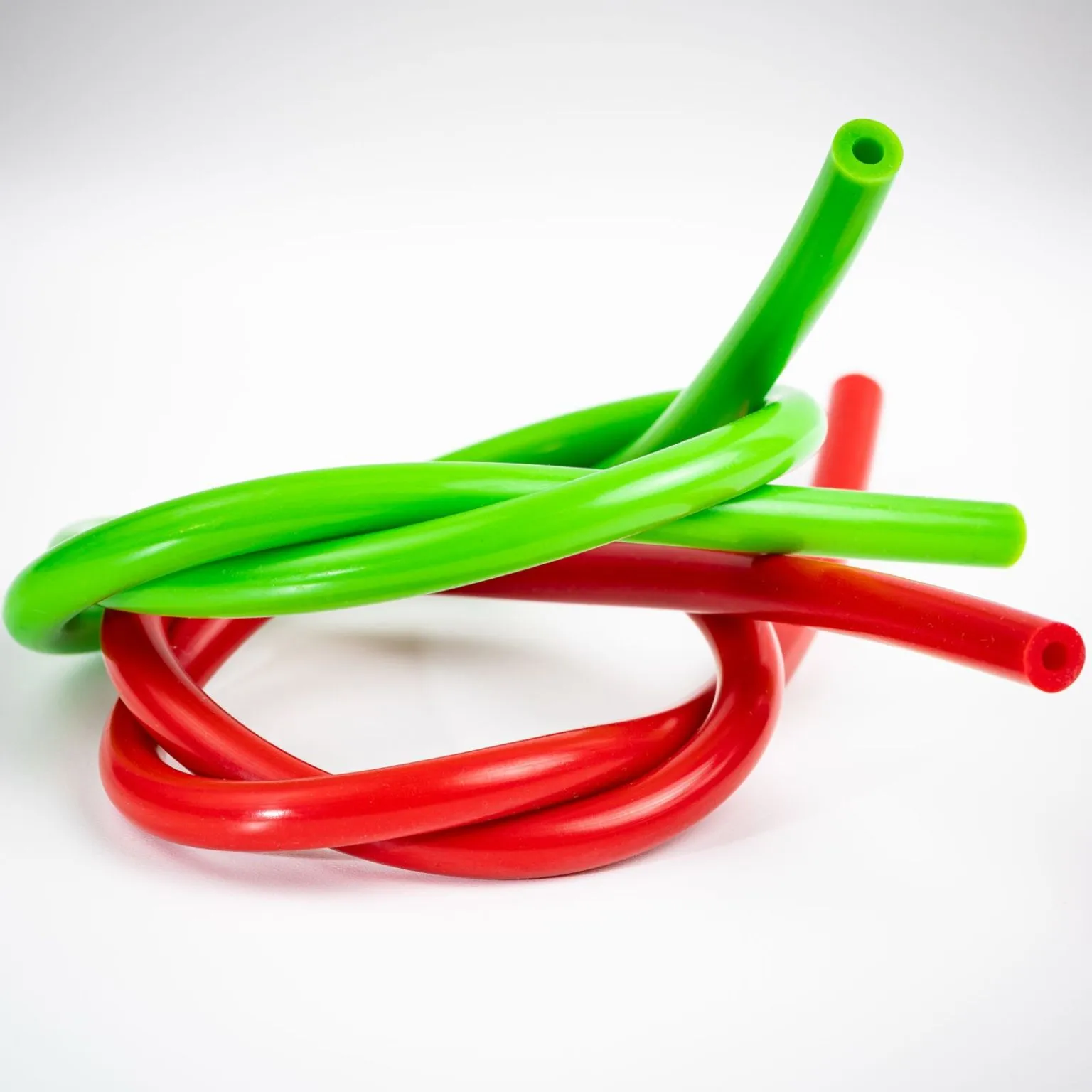
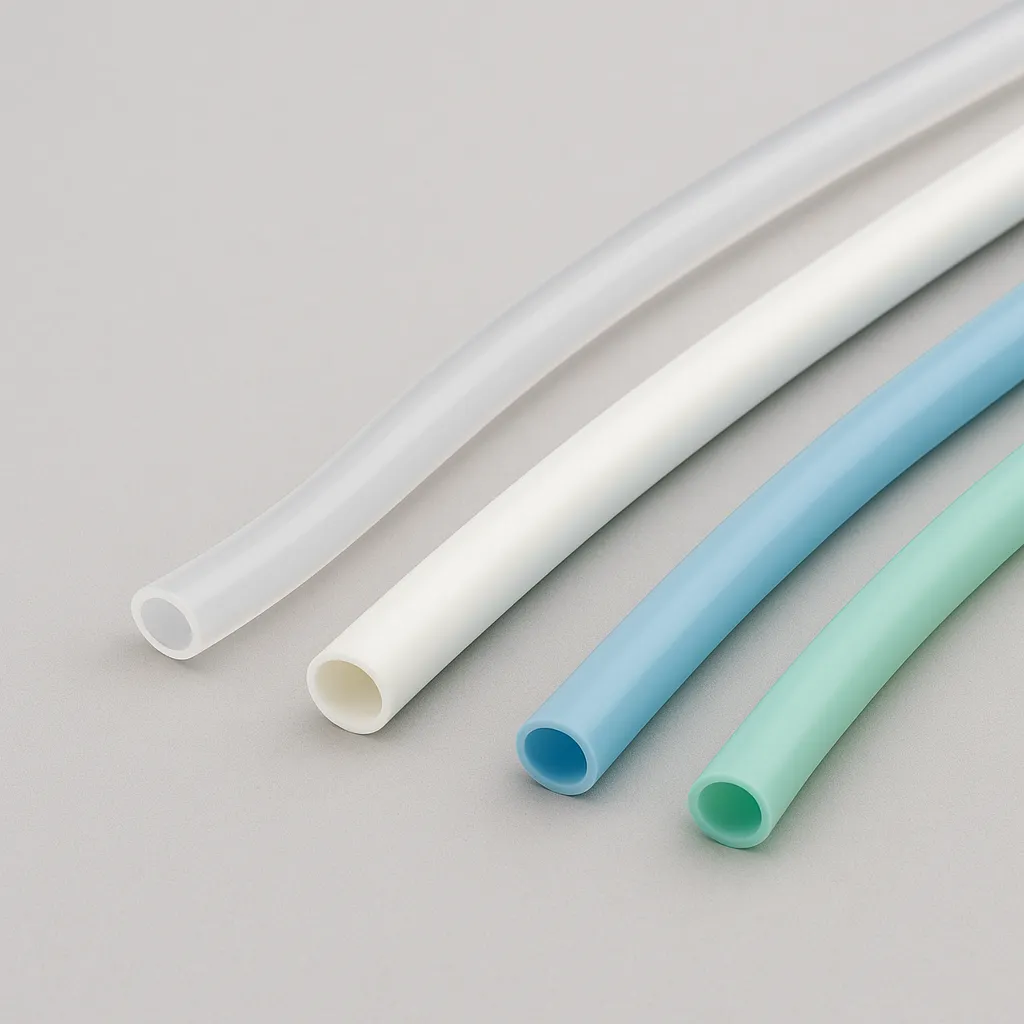


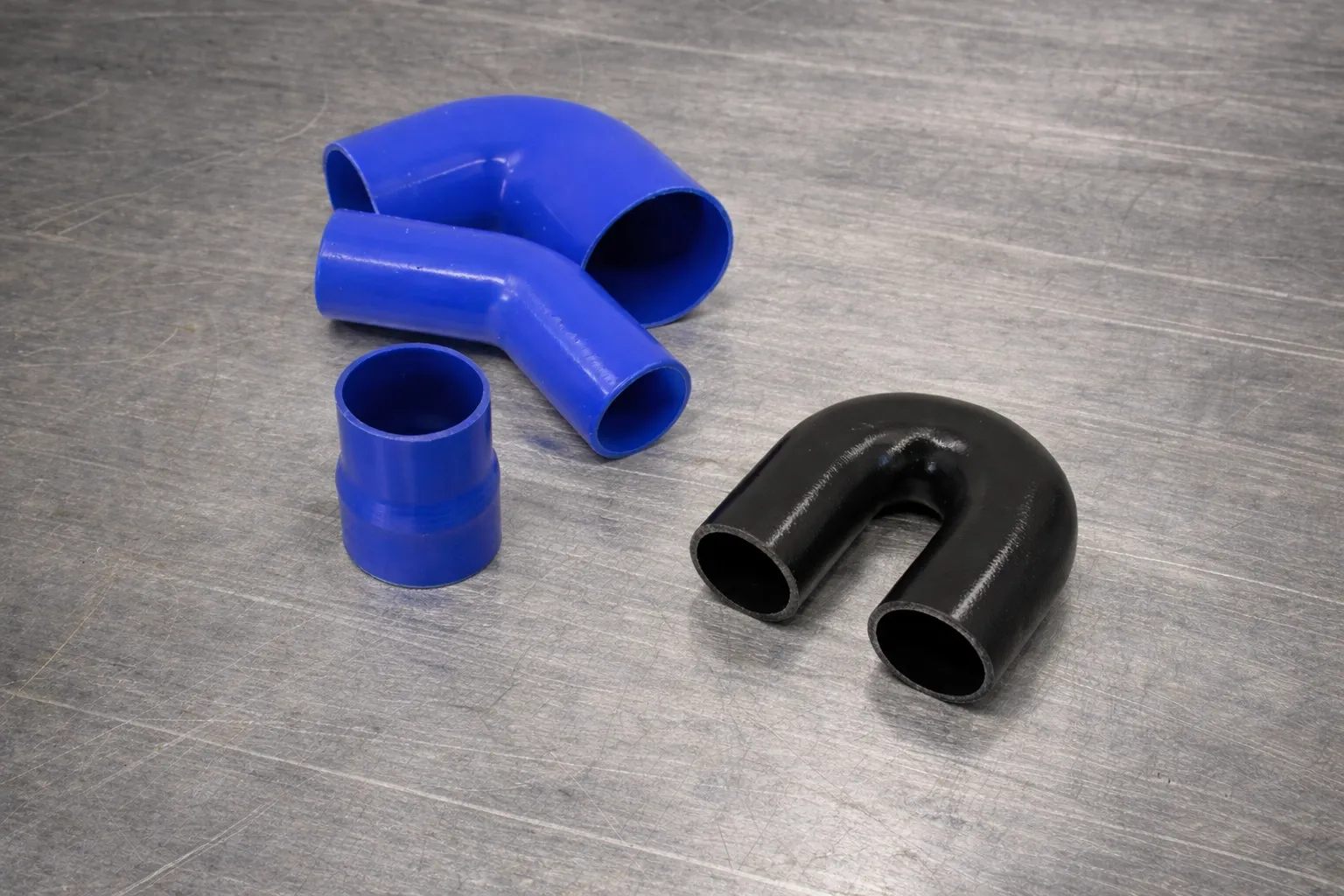














A silicone tube that conveys milk, beer, juice or drinking water is not an industrial tube with a certificate slapped on top. It is a formulation engineered from the compound level to transfer nothing to the fluid it carries: no taste, no odour, no substances that migrate into the food. The difference between a tube that meets food-contact regulations and one that also performs reliably on an actual production line comes down to three decisions: the curing system, the compound formulation and the tube construction.
This article covers the technical criteria behind those three decisions. It is not a catalogue of dimensions. It is the logic behind every food-grade silicone tube that runs trouble-free for years on a production line: which regulations apply in each market, why the curing system matters more than most people realise, which formulation solves each situation and which specification errors shorten tube service life.
Certification is not optional: which regulations apply and why
Before discussing diameters or hardness values, the regulatory question must be settled. A tube that conveys a food product must comply with the food-contact regulations of the market where that food will be sold — not the country where the tube is manufactured, but the country where the end product is consumed.
FDA 21 CFR 177.2600 is the reference standard for the United States. It defines the composition requirements that silicone must meet for food contact. It does not regulate the tube as a finished product, but the elastomer formulation. This is important: an FDA certificate refers to the compound, not the part.
EC 1935/2004 is the European framework. It establishes that materials in contact with food must not transfer substances in quantities that could endanger human health, cause an unacceptable change in the composition of the food or alter its organoleptic properties. Unlike the FDA, the European regulation also requires specific migration testing.
BfR (Bundesinstitut für Risikobewertung) are the German recommendations, which are more restrictive than the general European framework in certain respects. Recommendations IX (silicones) and XV (elastomers) are the applicable ones. In practice, meeting BfR usually means meeting EC 1935/2004 automatically, but not the other way around.
What does this mean for tube selection? You need to know which market the end product is destined for before specifying the formulation. A tube for a craft brewery that only sells in Spain needs EC 1935/2004. If that same brewery starts exporting to the United States, it also needs FDA. If it exports to Germany and wants to meet the most stringent recommendations, it needs BfR. High-end food-grade silicone formulations comply with all three standards simultaneously, but this must be verified and never assumed.
Platinum vs. peroxide curing: the decision nobody should skip
This is probably the most important technical point in the article and the one that generates the most confusion. Both curing types can obtain food-contact certification. Both comply with FDA and EC 1935/2004. But they are not equivalent, and the difference has real consequences on the production line.
Peroxide curing is the classic silicone vulcanisation process. Organic peroxides initiate the cross-linking of the polymer at high temperature. The problem is that the reaction generates volatile by-products — residual organic acids — that remain trapped in the elastomer matrix. These by-products are what can transfer taste and odour to the conveyed fluid. That is why peroxide-cured tubes require a post-cure in an oven (typically 4–8 hours at 200 °C) to volatilise those residues. Post-curing reduces the transfer but does not eliminate it entirely.
Platinum curing (also called addition curing) uses a platinum catalyst for cross-linking. The reaction does not generate volatile by-products. The result is a tube with no taste, no odour and no detectable migration of substances into the food. It does not require post-curing, which also shortens the manufacturing lead time.
When the tube conveys a liquid that will be drunk directly — milk, beer, juice, water, wine — platinum is not an upgrade, it is a functional requirement. A peroxide-cured tube on a craft beer line can alter the organoleptic profile of the product. Not in a toxic way (it meets regulations), but in a way that is detectable by a trained palate or by sensory quality control.
When contact is indirect — compressed air on a packaging line, cable protection in a production area, process water conveyance — peroxide curing offers the same regulatory compliance at lower cost, and organoleptic properties are not relevant.
There is a grey area: pasty products, sauces, purées, where contact is direct but the product itself has an intense flavour. In these cases the decision depends on the sensitivity of the food manufacturer's quality control. The technical recommendation remains platinum for direct contact, but there are plants that have been running post-cured peroxide for years with no detectable issues.
Formulation: four compounds for four situations
The curing system is the first filter. Within each curing type there are formulations optimised for different operating conditions.
Standard platinum VMQ
This is the reference formulation for direct food contact. Available hardnesses range from 40 to 70 Shore A, with tensile strength between 7 and 9 MPa and tear strength of 20 to 30 kN/m. Temperature range from –60 to +200 °C, extendable to +300 °C with a high-temperature additive. It is the correct choice for most food-contact applications: beverage dispensing, milk transfer, filling circuits and equipment connections. Hardnesses of 50 and 60 Shore A are the most common because they offer the best balance between flexibility for fitting over connectors and sufficient rigidity to maintain a circular cross-section without collapsing.
High tear-strength platinum VMQ
This formulation doubles the tear strength of the standard version — up to 50–55 kN/m at certain hardnesses. That translates directly into service life when the tube is frequently fitted and removed from connectors, when it works with high-pressure clamps, or when the installation bend radius is tight. On a packaging line where format changes happen several times per shift and each changeover involves disconnecting and reconnecting hoses, the difference between 20 kN/m and 50 kN/m of tear strength is the difference between replacing tubes every two months and replacing them once a year.
Peroxide VMQ
This is the economical alternative with full food-contact certification. It requires post-curing. Mechanical properties are somewhat lower than platinum formulations — tear strength of 17 to 23 kN/m — but perfectly adequate for indirect contact, air conveyance, cable protection and prototypes. Hardnesses of 60–70 Shore A are the most common in this formulation.
Steam-resistant VMQ
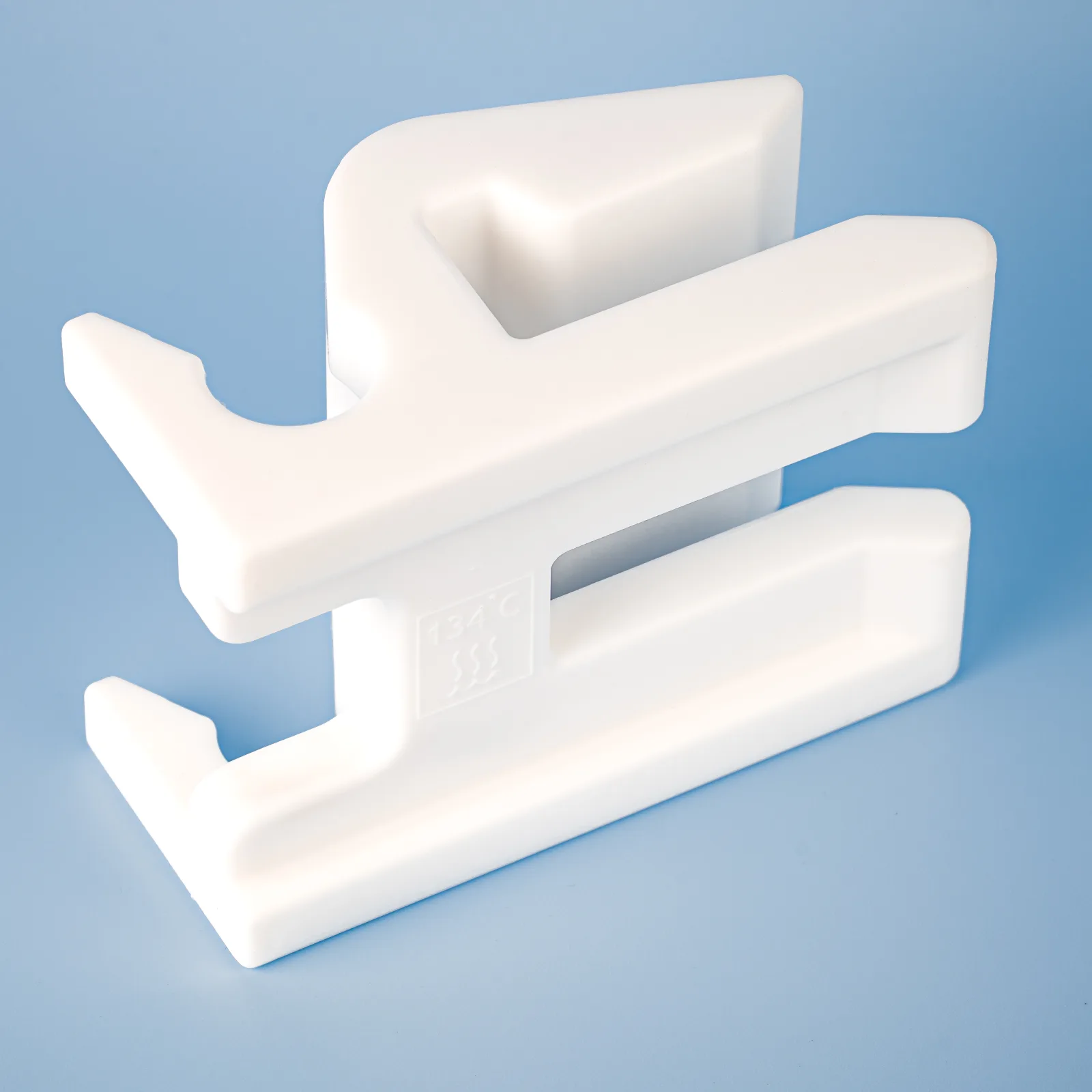
This is the formulation that solves a specific and frequent problem in the food industry: degradation caused by repeated CIP cleaning and SIP sterilisation cycles. Saturated steam at +134 °C attacks the polymer chain of standard silicone, causing loss of elasticity, progressive hardening and eventually cracking. This formulation minimises that degradation whilst maintaining mechanical properties after hundreds of cycles. It is the correct choice for dairy plants with daily CIP protocols, breweries and any facility where the tube is regularly exposed to steam.
Quick selection by application
| Your situation | Recommended formulation |
|---|---|
| Direct contact with beverages or dairy | Standard Platinum VMQ |
| Direct contact + frequent fitting/removal | High tear-strength Platinum VMQ |
| Indirect contact, air, process water | Peroxide VMQ |
| Daily CIP/SIP, frequent autoclaving | Steam-resistant VMQ |
| Food-grade peristaltic pump | Dedicated cyclic-fatigue formulation |
| Not sure which to choose | Standard Platinum VMQ (the safe option) |
Construction: four ways to build a food-grade tube
The formulation defines the chemical and thermal behaviour. The construction defines the mechanical and hydraulic behaviour.
Smooth single-layer tube
A homogeneous wall in a single formulation. This is the standard and most economical construction. It works for unpressurised conveyance or low pressure (below 1 bar). The smooth bore minimises bacterial build-up. Translucent or coloured. It is the default option unless there is pressure, vacuum or a specific technical reason to choose something else.
Textile-reinforced tube
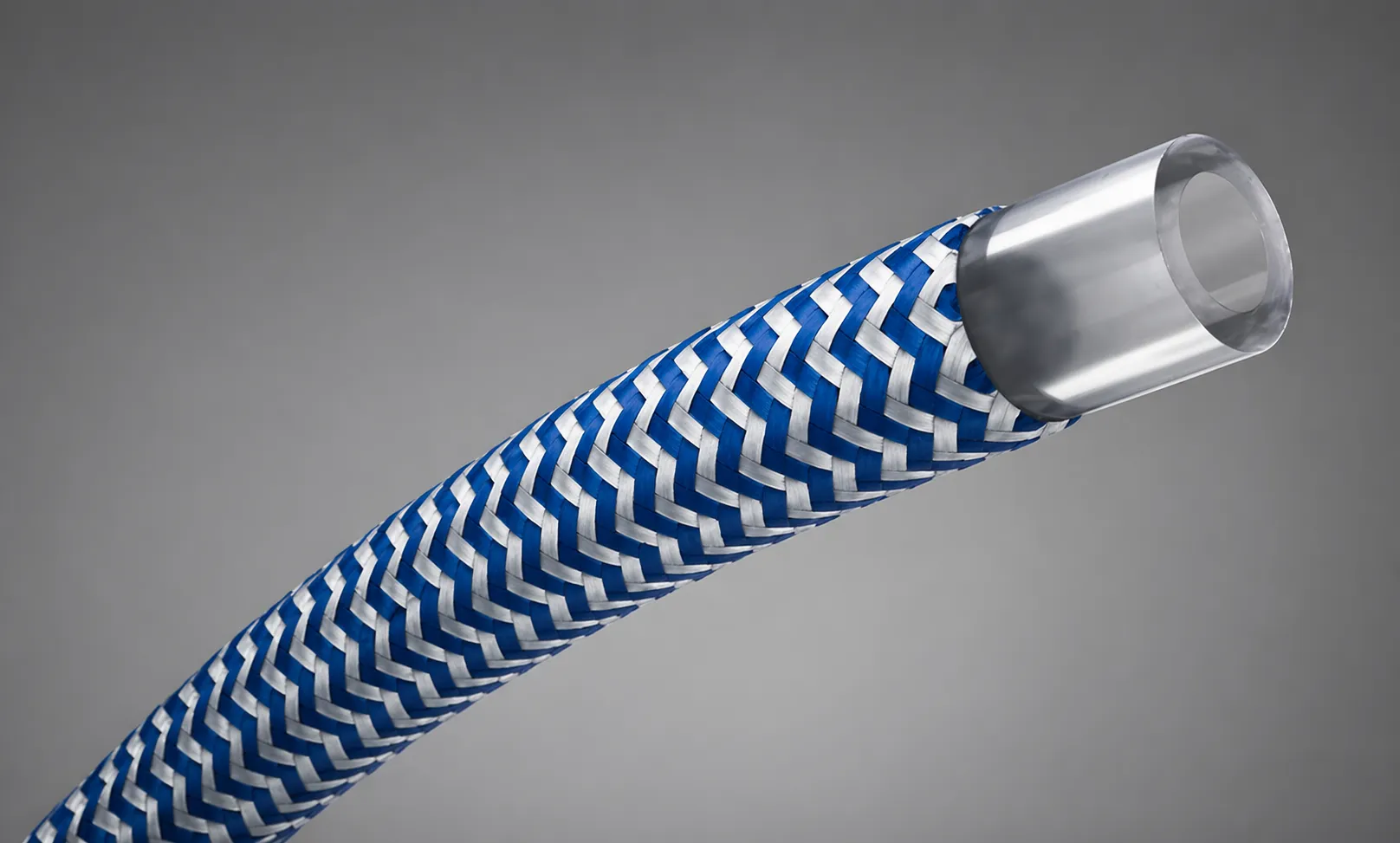
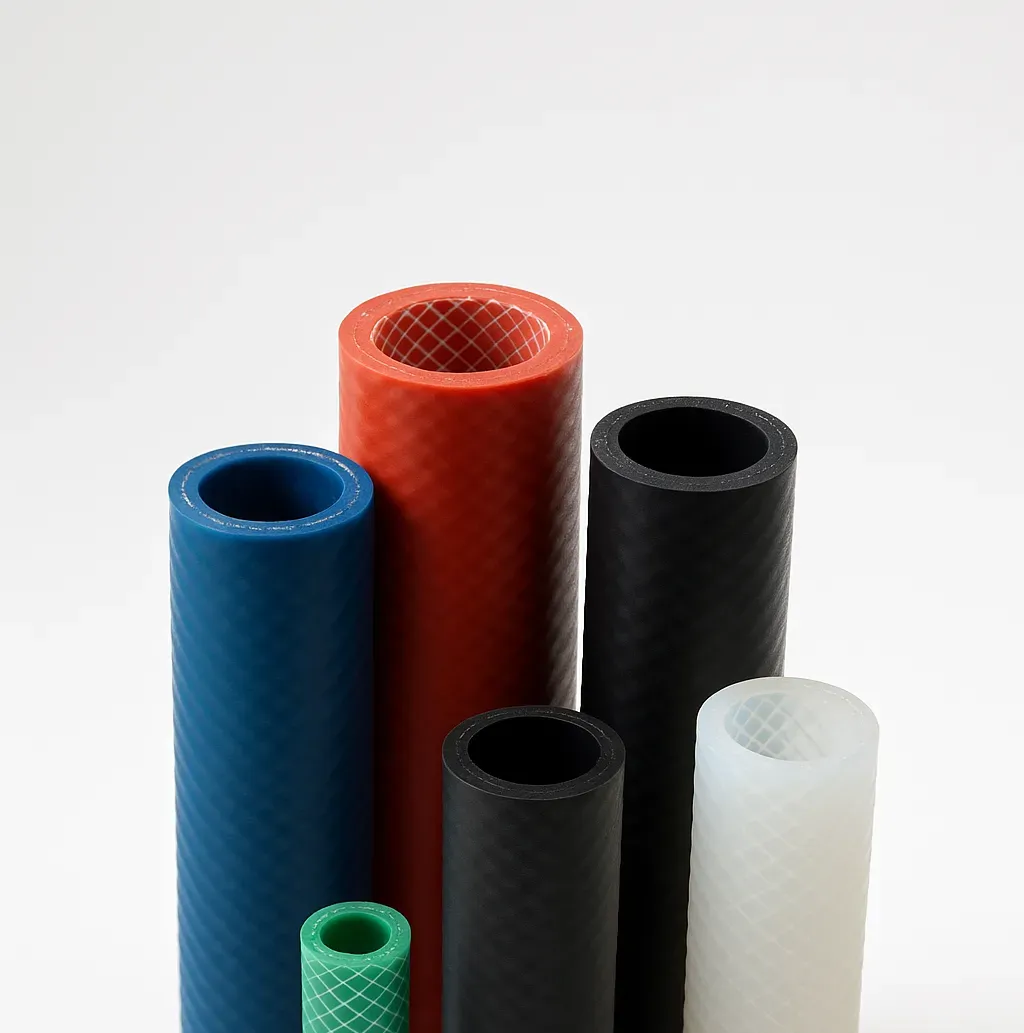
Two layers of silicone with a braided polyester mesh embedded between them. The reinforcement increases working pressure without sacrificing flexibility and prevents collapse under vacuum. The inner layer maintains full food-contact certification; the mesh only provides structural strength. This is the mandatory construction for pressurised process lines, CIP circuits where the cleaning fluid pressure exceeds 1 bar, and any application where the tube may be subjected to partial vacuum (pump suction, tank discharge).
Peristaltic pump tube
Although the construction is single-layer, the formulation is specific: optimised to withstand the cyclic deformation of peristaltic occlusion. High resistance to repeated flexural fatigue and low residual deformation after thousands of cycles. The difference compared with a standard tube fitted in a peristaltic pump is stark: the standard tube collapses or cracks within weeks; the peristaltic tube lasts months or years.
Co-extruded bicolour tube
Two layers of food-grade silicone in different colours extruded simultaneously. This is not a painted or coated tube: both layers are integral silicone with food-contact certification. The purpose is visual line identification according to HACCP protocols — cold water blue, hot water red, product green, cleaning yellow. In plants with multiple fluid lines, visual identification reduces connection errors that could cause cross-contamination.
Sizing: what determines the diameter
The tube bore is determined by the required flow rate and the allowable flow velocity. For most food-grade fluids, the recommended velocity is between 1 and 2 m/s. Above 2 m/s, excessive pressure drops and water-hammer risk appear during rapid shutoffs; below 0.5 m/s, stagnation zones may form where product accumulates and bacteria proliferate.
Wall thickness is determined by working pressure and the need to maintain a circular cross-section. A tube with too thin a wall collapses when bent or under partial vacuum; a tube with too thick a wall loses flexibility and is difficult to fit over connectors. For a standard unpressurised food-grade silicone tube, typical wall thickness is 20–30 % of the bore diameter, with a practical minimum of 1 mm.
Diameters group naturally by application: 0.5 to 4 mm for micro-dosing and laboratory work, 5 to 12 mm for dispensing and connections, 13 to 25 mm for dairy and brewery processing (compatible with tri-clamp and DIN couplings), 25 to 50 mm for high-flow industrial transfer, and above 50 mm for special applications made to drawing. Tooling for the standard dimensions within these ranges is usually available from stock — over 5,000 tools in a manufacturer with a mature catalogue — enabling lead times of 2–3 weeks. For out-of-range dimensions, new tooling is manufactured with an additional lead time of 2–4 weeks.
A detail that affects cost and is worth knowing: the dimensional tolerance of silicone tubes is governed by ISO 3302-1, class E1 or E2. Class E1 is tighter and allows less variation in diameter and wall thickness. For applications where the tube is fitted over connectors with close tolerances (tri-clamp, sanitary couplings), class E1 is necessary. For general conveyance, class E2 is sufficient and can reduce production rejects.
CIP, SIP and autoclaving: what steam does to silicone
This section deserves specific attention because it is where the most premature failures occur in the food industry, and where correct formulation selection has the greatest economic impact.
A typical CIP (Clean-In-Place) cycle in a dairy or brewery involves alternating cycles of caustic soda at 70–85 °C, rinse, nitric or phosphoric acid, rinse, and optionally steam or hot-water sanitisation at +130–134 °C. A daily CIP protocol means the tube sees at least 300 cycles per year.
Standard silicone (both platinum and conventional peroxide) tolerates the chemical agents used in CIP well — caustic soda and acids at the usual concentrations do not attack silicone significantly. The problem is steam. Saturated steam at +134 °C causes hydrolysis of the siloxane chains, a process that accumulates cycle after cycle. The tube progressively hardens, loses elongation, and after a few months micro-cracks appear in the flexion zones (bends, connector mounting points).
If the plant only performs chemical CIP without a steam phase (caustic soda + acid at moderate temperatures only), the standard platinum formulation is sufficient. The differentiating factor is steam, not the chemicals.
Common specification errors
Four errors that keep recurring and have direct consequences in production.
The first is using peroxide curing for direct contact with delicate-flavoured beverages. Craft beer, wine, mineral water, premium juices. The tube meets regulations, but the peroxide by-products can be detectable in a sensory analysis or even by an attentive consumer. Post-curing reduces the problem but does not eliminate it entirely. For these products, platinum is not a luxury but a functional requirement.
The second is failing to consider CIP cycles when choosing the formulation. A standard platinum tube in a plant with daily CIP + steam can last six months. The same tube in a steam-resistant formulation can last three years. The price difference of the tube itself is marginal compared with the cost of downtime for replacement — especially if the tubes are in hard-to-reach areas or if each changeover requires a hygiene revalidation.
The third is specifying a single-layer tube for a pressurised line. An unreinforced smooth silicone tube expands under pressure. At 2–3 bar it can increase its outside diameter by 10–15 %, which loosens clamps and can cause leaks or connector blow-off. If the line operates under pressure — even moderate pressure from a positive-displacement pump — the textile-reinforced tube is the correct construction.
The fourth is failing to verify that the colour is compatible with food-contact certification. Not all pigments are suitable for food contact. Specifying a colour for HACCP identification purposes without verifying that the specific pigment maintains FDA or EC 1935/2004 certification can invalidate the entire compliance chain. The manufacturer's standard colours are validated; special colours require case-by-case verification.
Need advice on food-grade tubing?
Our engineering team will help you select the optimum formulation and construction for your food-contact application.
Speak to engineering →