


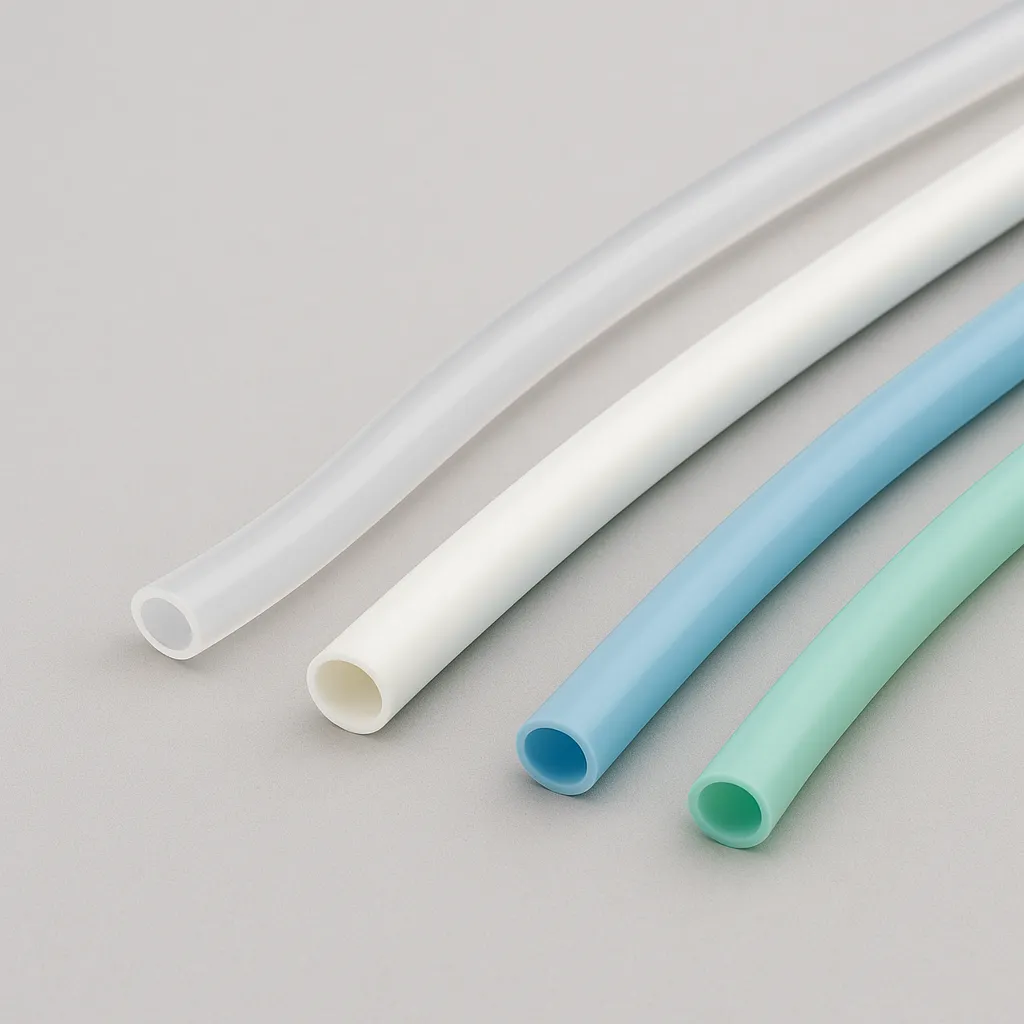


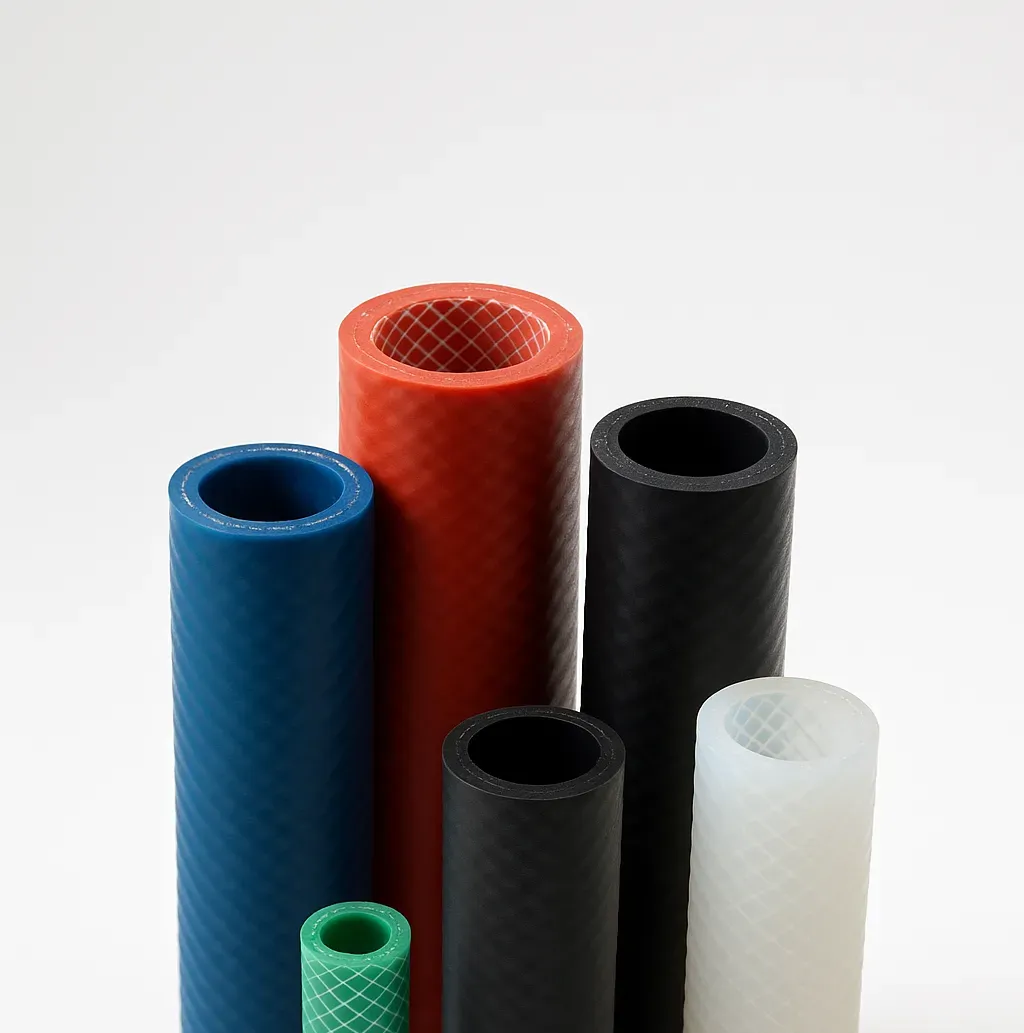
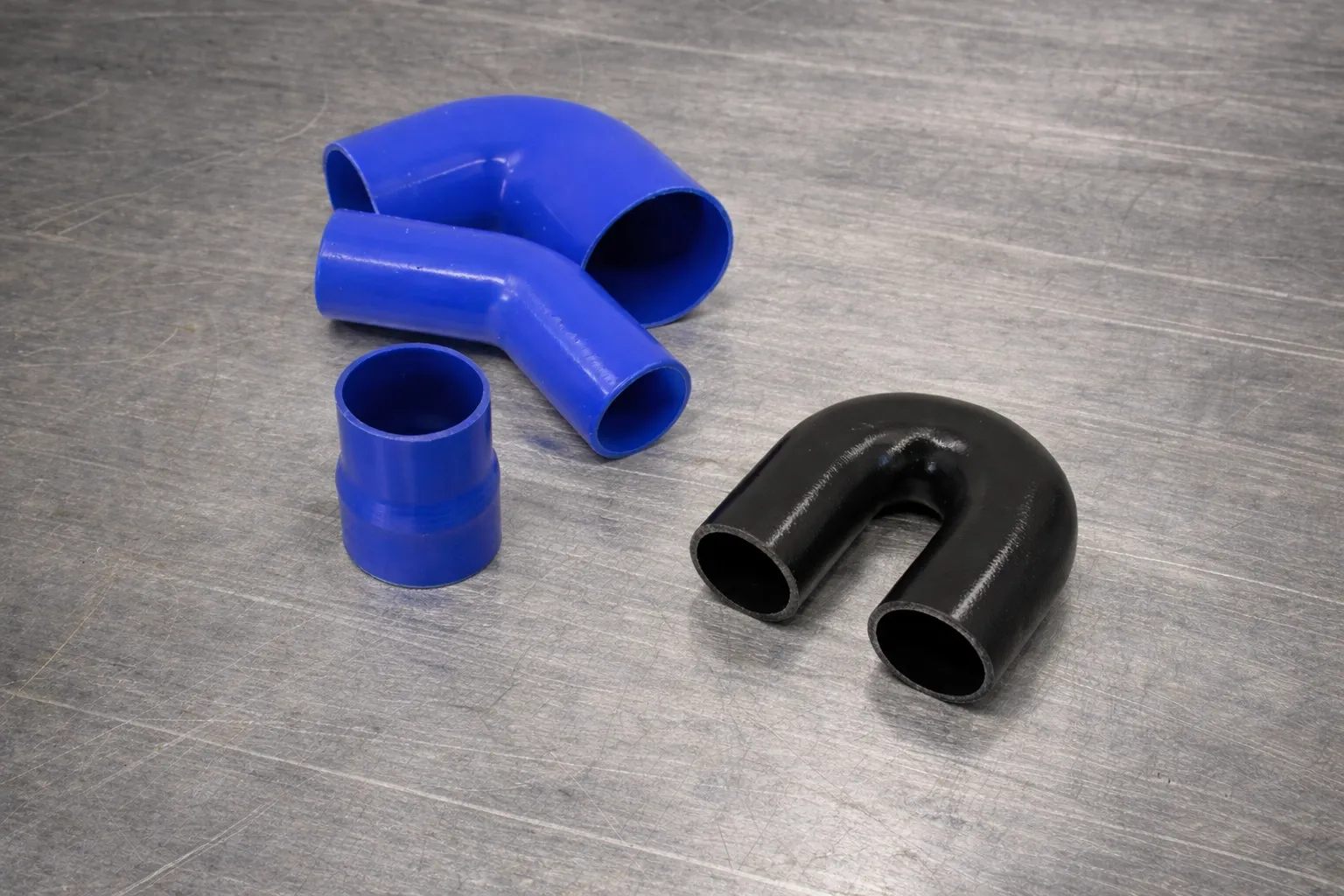
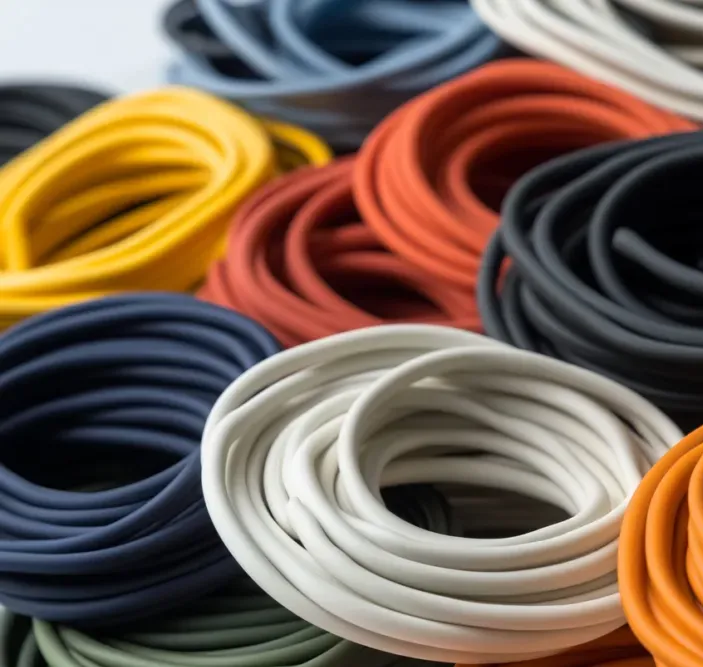
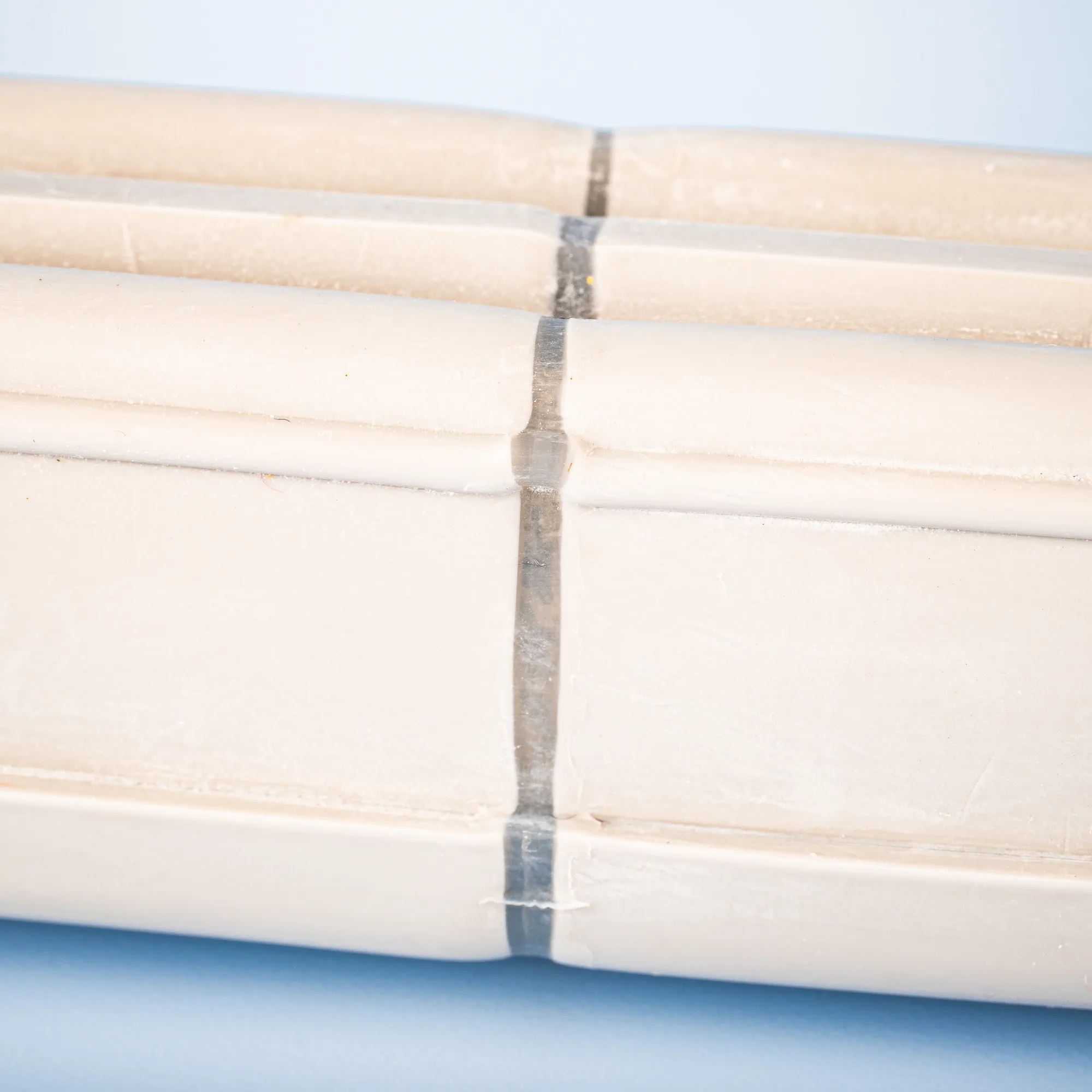

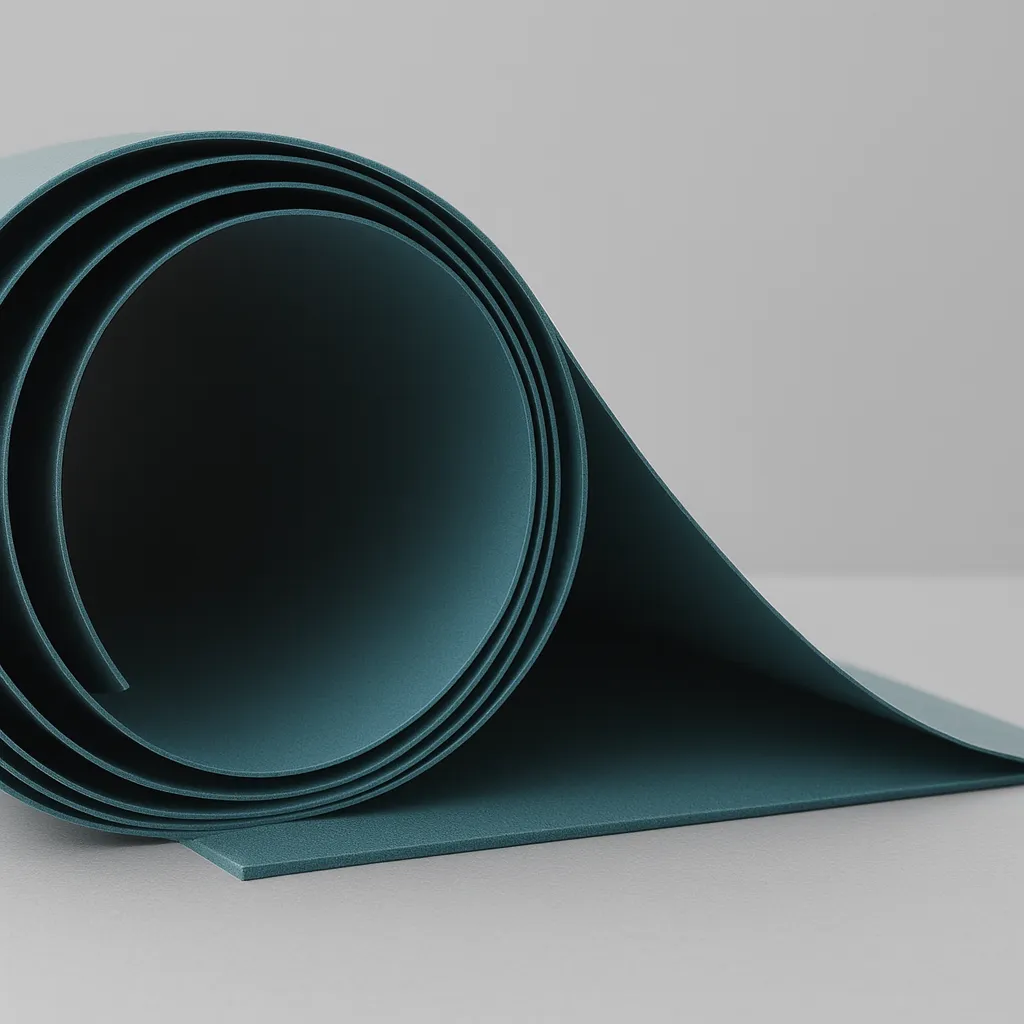


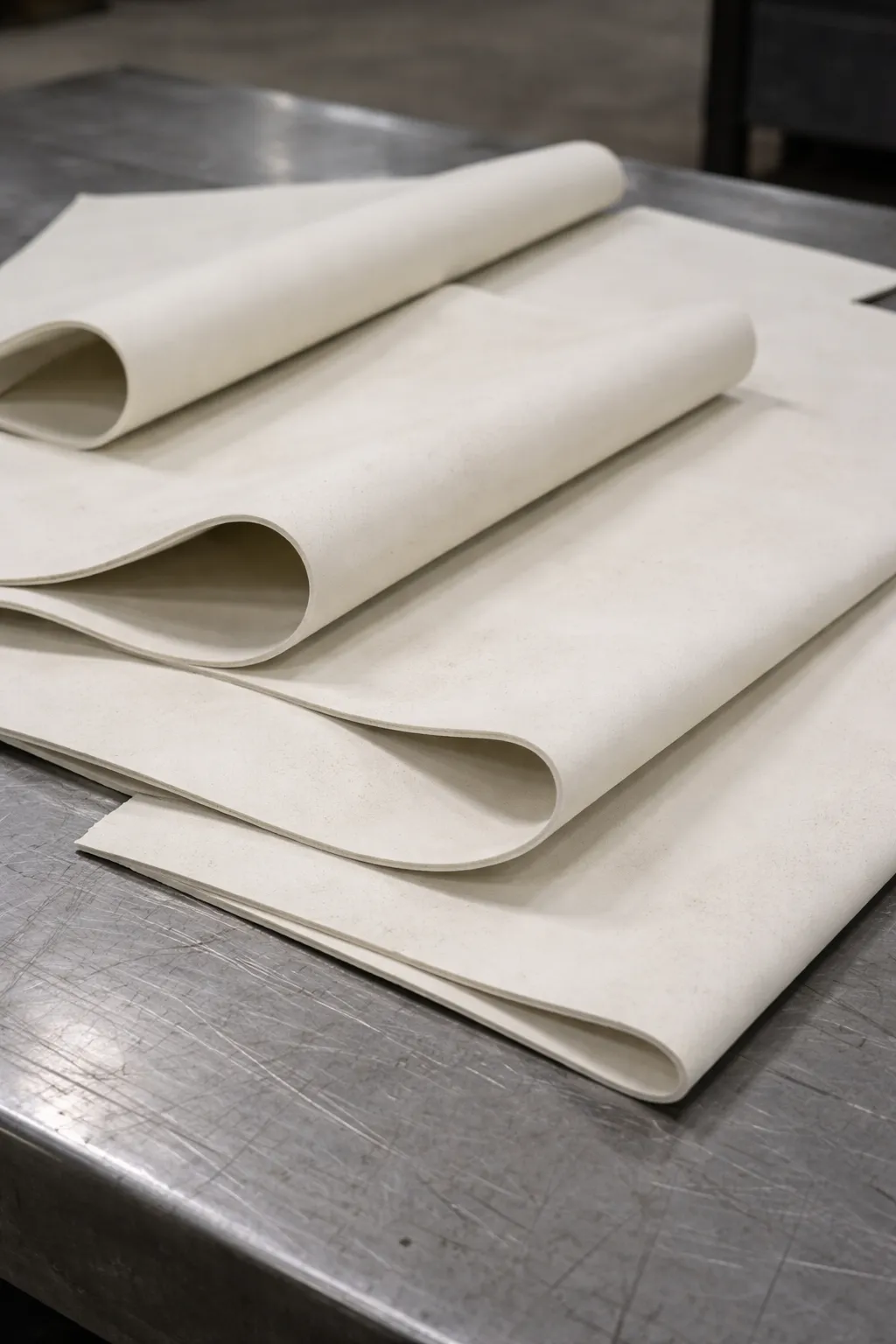


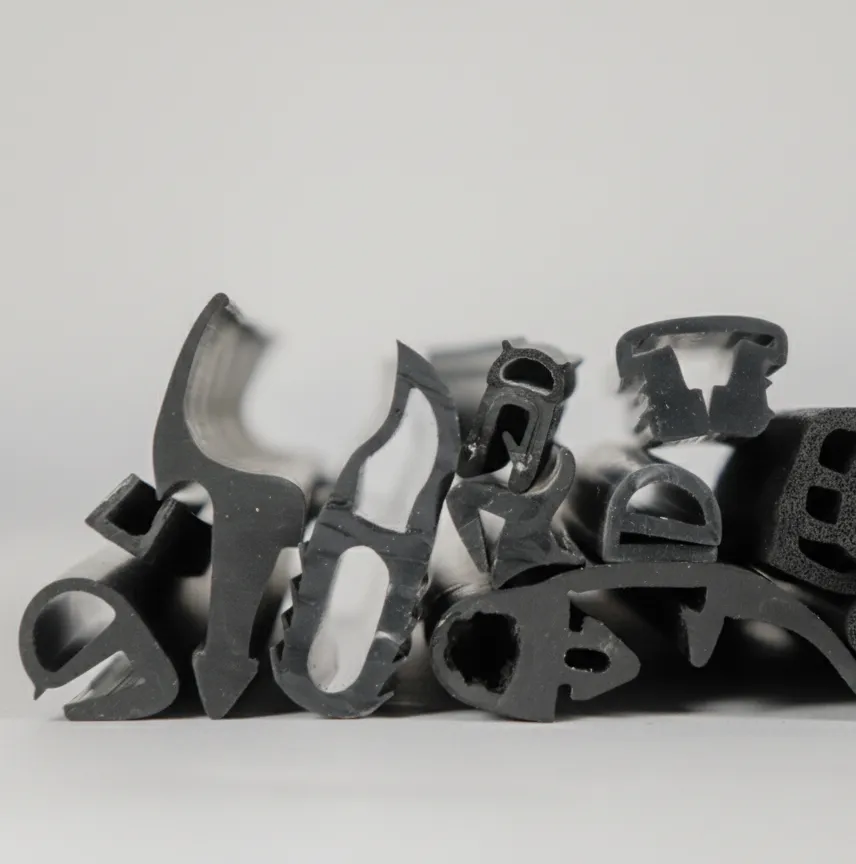
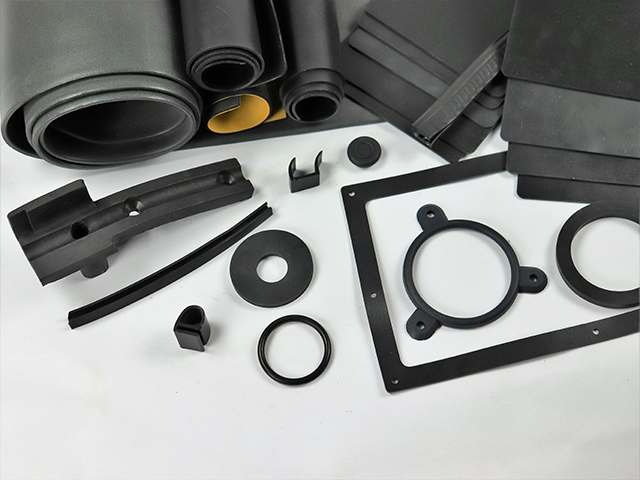
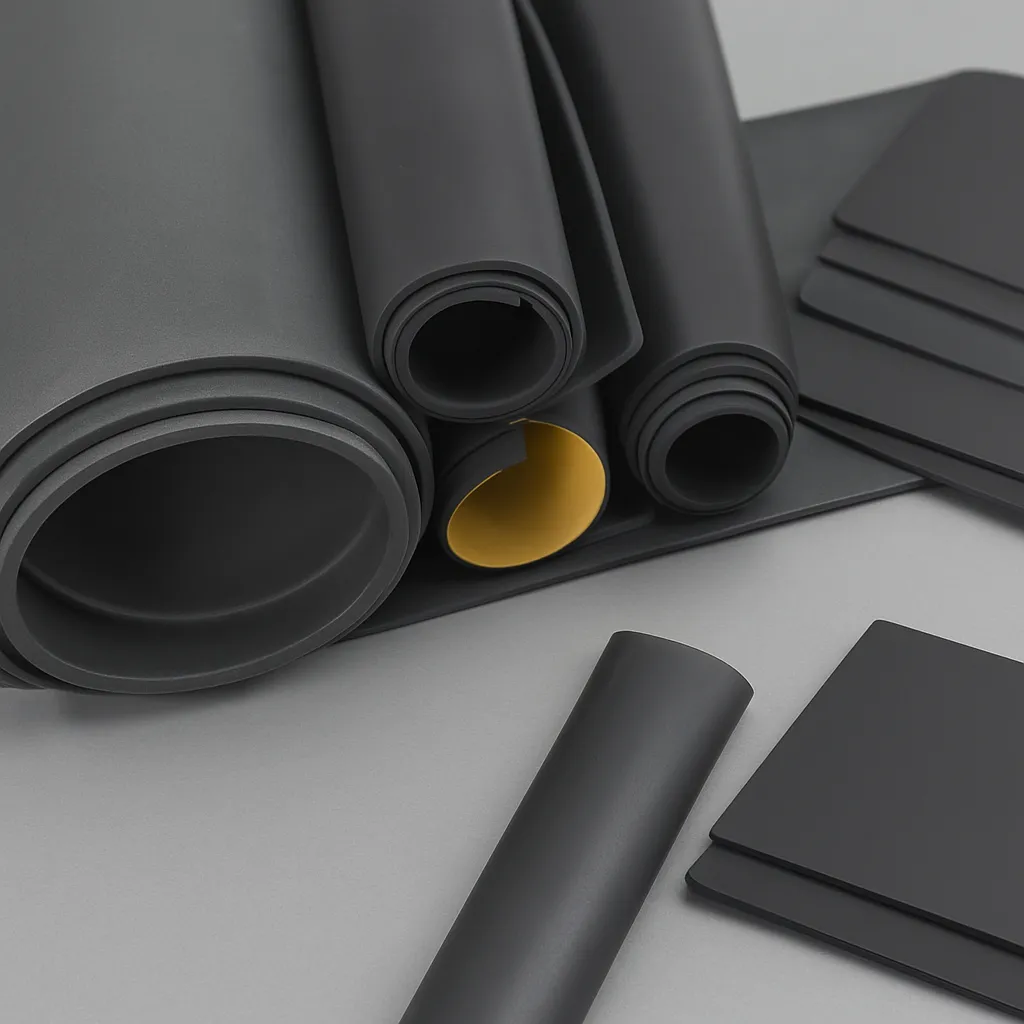
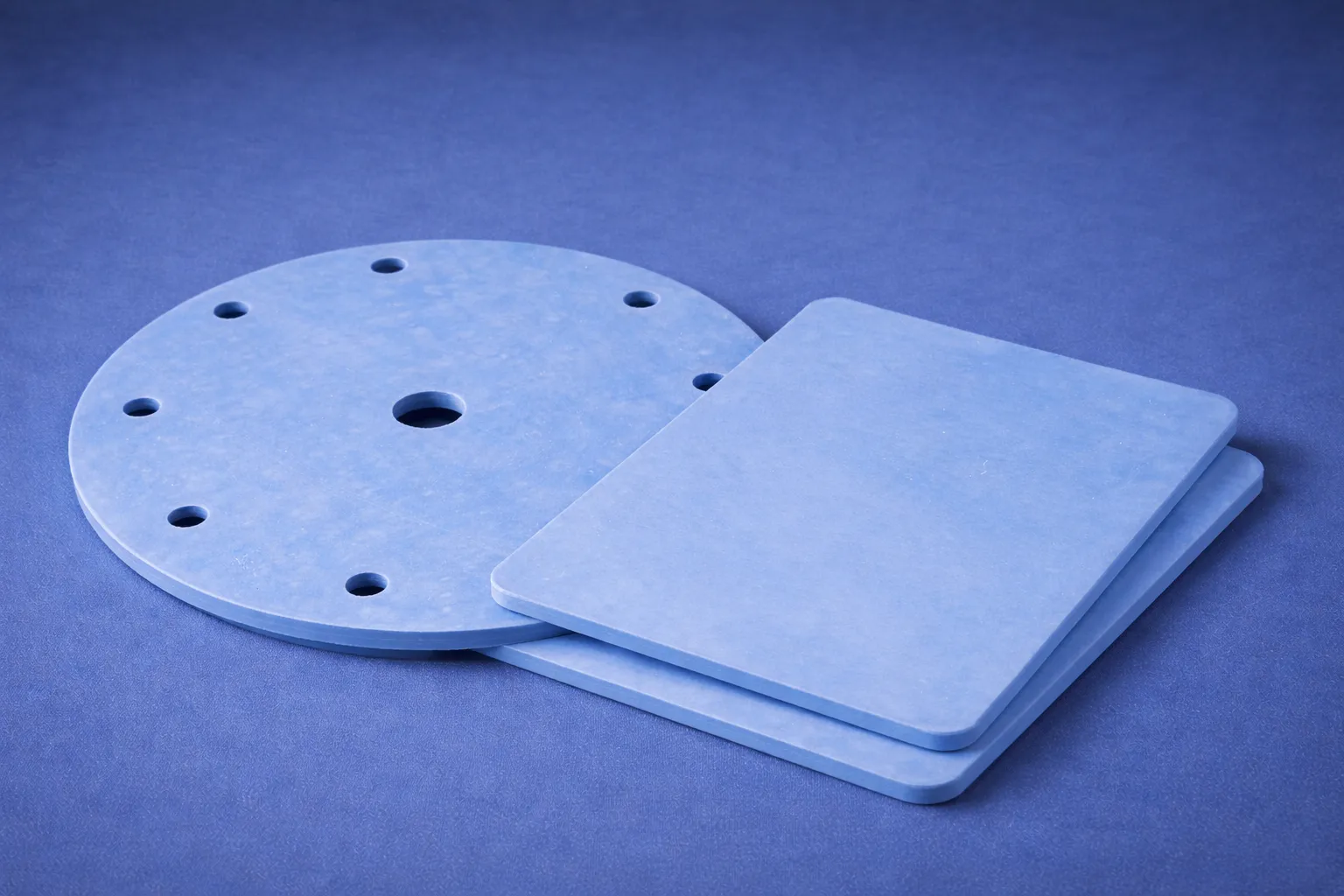
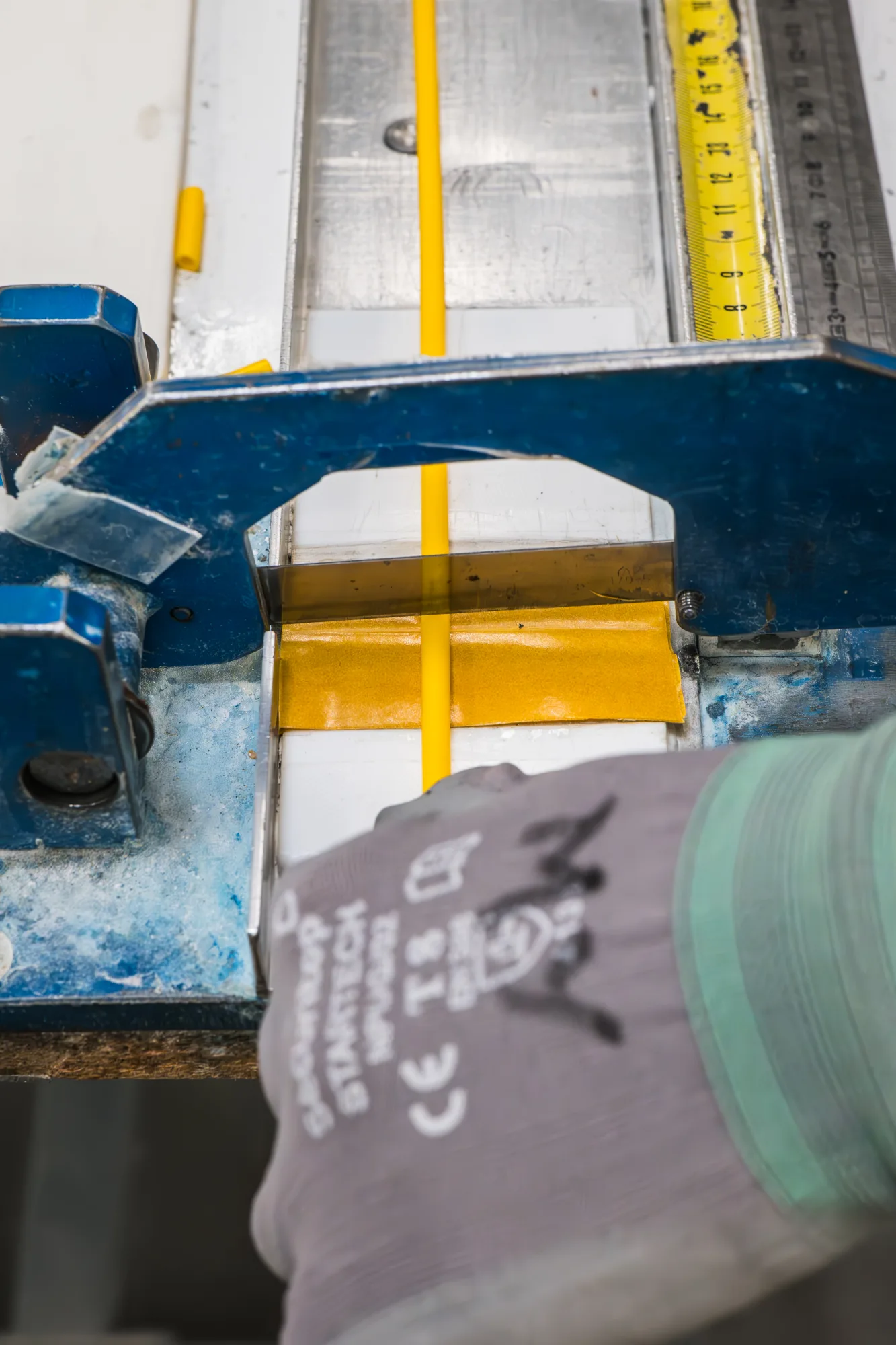
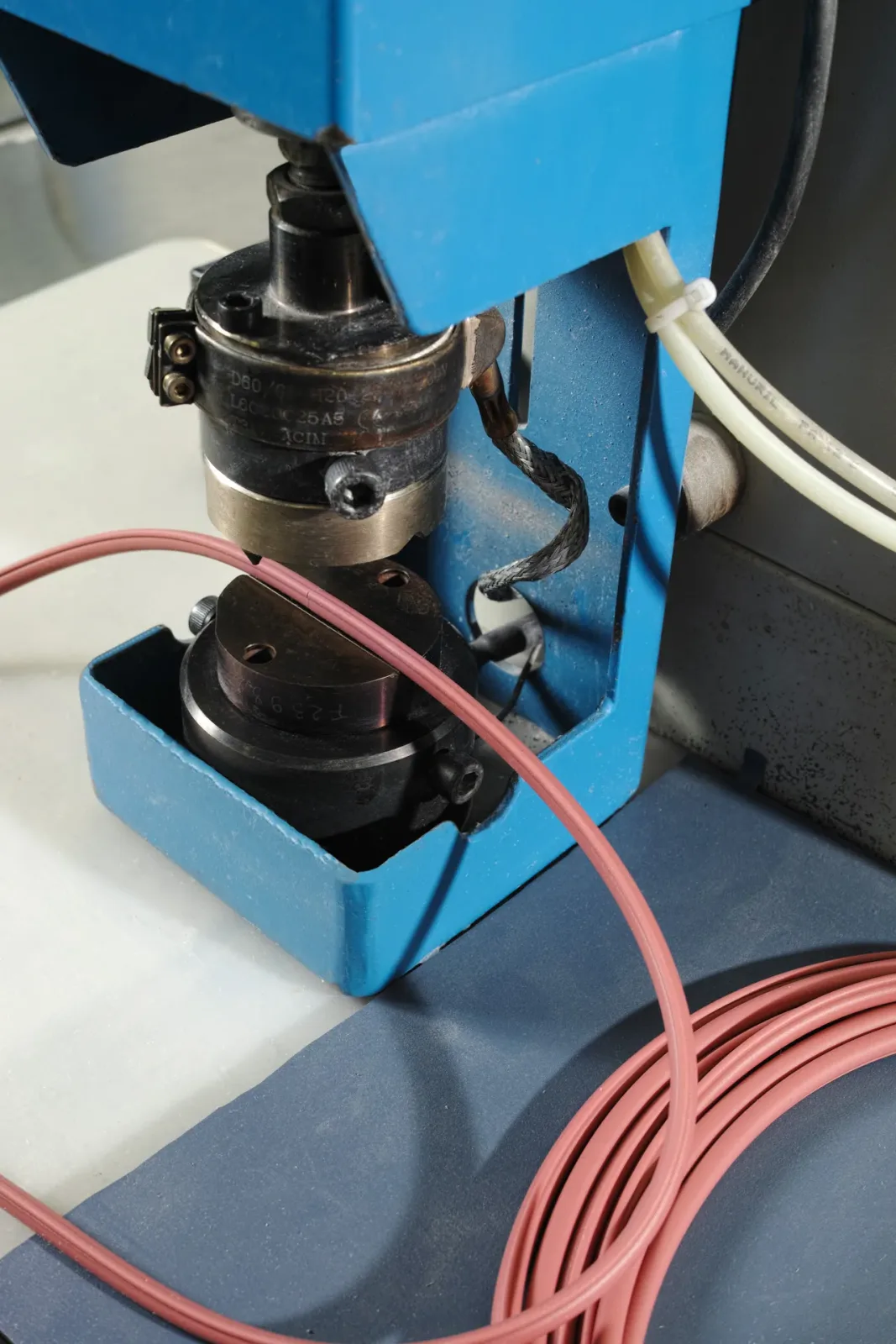












A silicone sheet is a semi-finished product. A rectangle of elastomer that can have radically different properties depending on how it was compounded, how it was manufactured and what it was designed to do. A platinum-cured food-grade solid sheet at 60 Shore A and a flame-retardant EN 45545-2 closed-cell sponge share a chemical family — both are VMQ — but in practice they are materials with behaviors, certifications and applications that do not overlap.
The problem is that many specifications simply write "silicone sheet" as if that were a complete definition. It is not. There are five technical decisions that determine whether the sheet you install will perform or cause problems, and each one eliminates options.
Solid or cellular: the first decision
This is where everything starts. The engineer who needs a silicone sheet must decide, before anything else, whether the application calls for a solid structure (compact, cell-free) or a cellular structure (sponge, closed-cell). The difference is not one of quality — it is one of mechanical behavior.
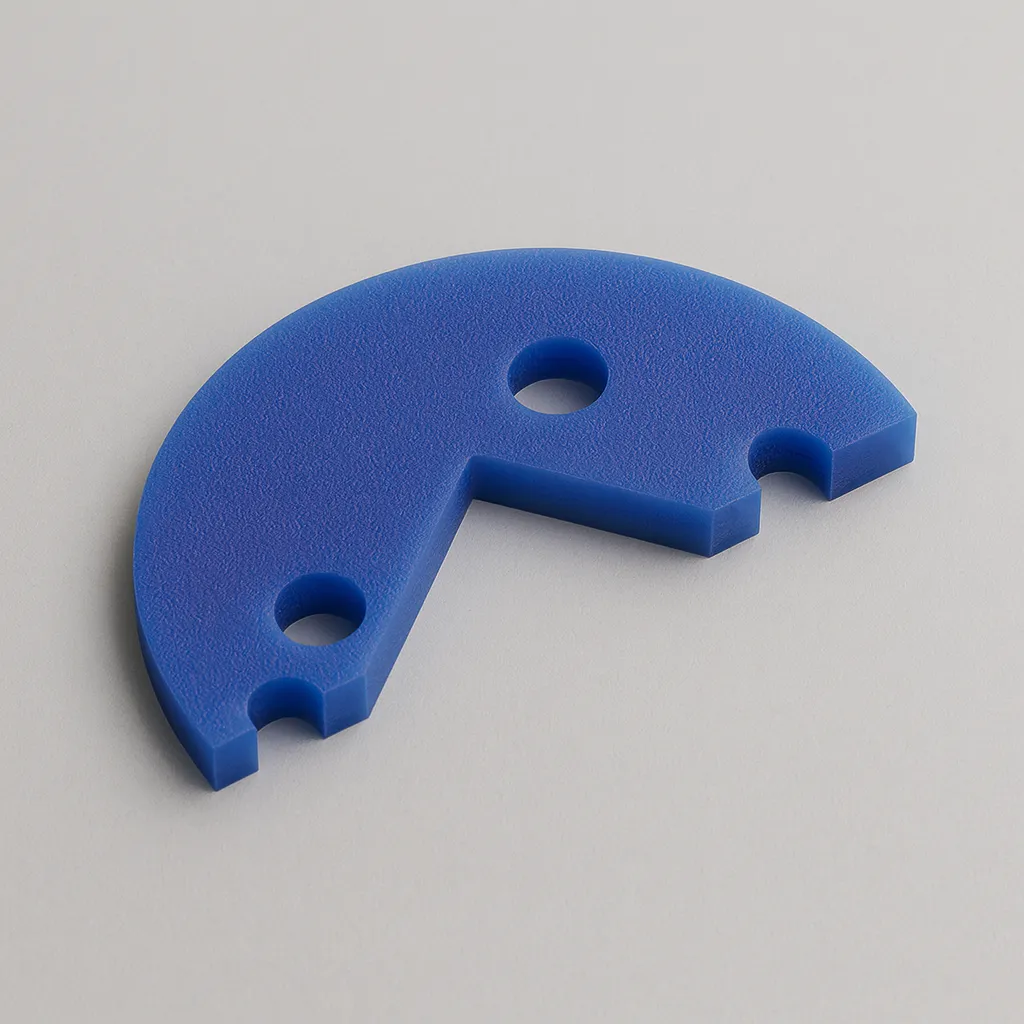
Solid silicone is a homogeneous, continuous elastomer. Hardness is measured in Shore A (from 10 to 90) and determines how much force is required to compress it and achieve a seal. At 60 Shore A — the industrial standard for flat gaskets — the compression needed to reach leak-tightness is moderate, but it requires machined mating surfaces and controlled clamp loads. If the mating surfaces have irregularities or the clamp load is insufficient, the solid gasket will not conform and the seal will fail.
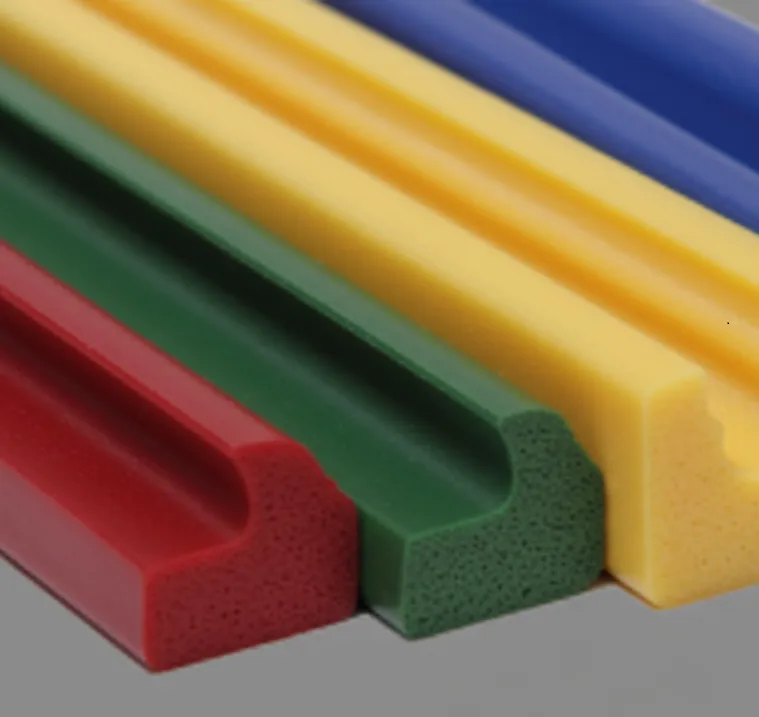
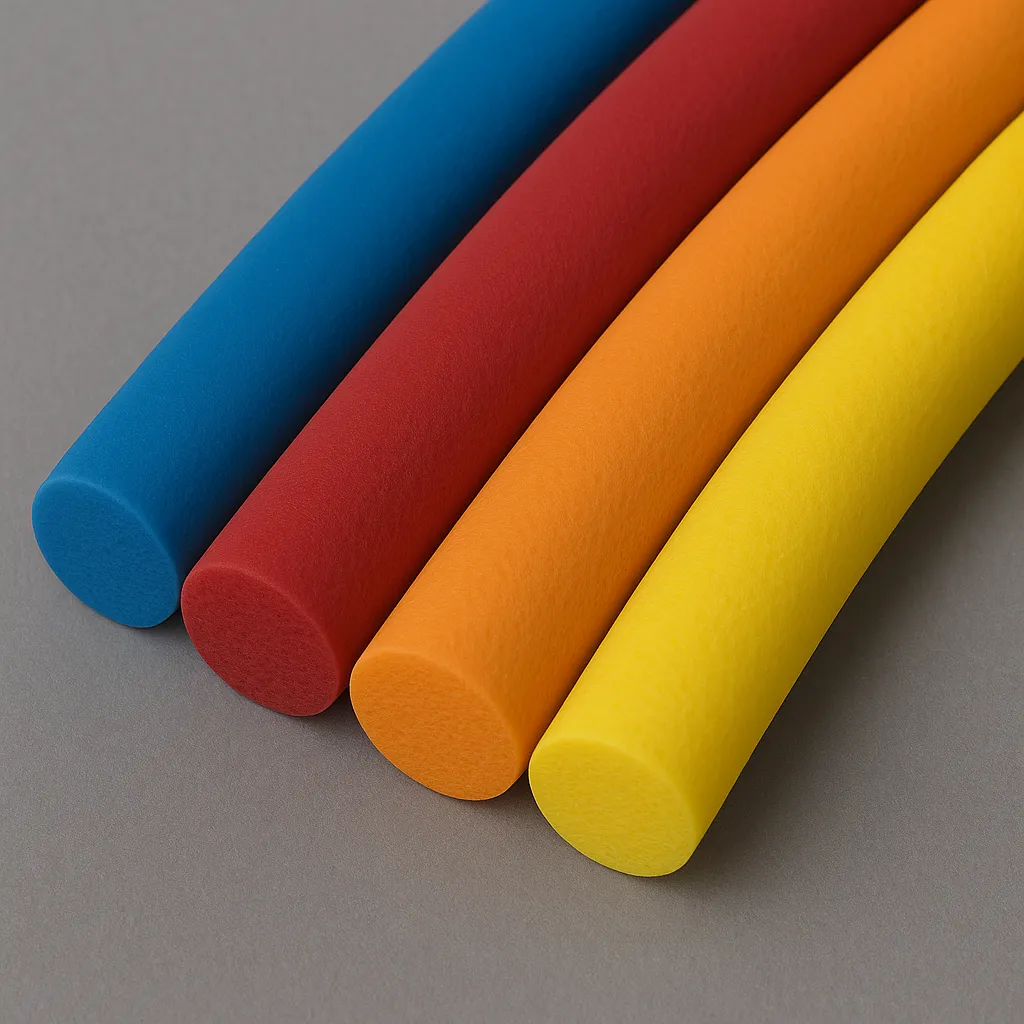
Closed-cell silicone sponge has an internal structure of non-interconnected gas cells. It does not absorb water, does not allow air passage and compresses to 50–70% of its thickness under very low forces. Where a 60 Shore A solid sheet requires mechanically engineered bolt loading, a medium-density sponge seals with a manual clip or hinge closure. It also provides thermal insulation — the gas cells act as a barrier — something solid sheet does not offer.
Calendered or cast: how the solid sheet is manufactured
For solid silicone there are two manufacturing processes, and the choice is not arbitrary.
Calendering produces sheet in continuous roll form: the silicone compound passes between rolls that form it to a constant thickness and it exits as a continuous roll. This is the economical process for large surface areas. Typical thicknesses range from 0.3 to 10 mm, roll widths up to 1,200 mm. Thickness tolerance is good (±0.2 mm on thin gauges, ±0.5 mm on heavier gauges), but flatness depends on roll tension during storage — a sheet stored for an extended period in roll form may exhibit residual curl.
Cast sheet is manufactured by pouring silicone compound into a flat mold and vulcanizing under controlled conditions. It produces individual slabs, not rolls. Thicknesses from 0.5 to 30 mm, dimensions up to 1,000 × 1,000 mm. Flatness is perfect — there is no residual winding stress. This is the option for precision die-cutting, diaphragms, membranes and applications where thickness uniformity and planarity are critical functional requirements. Unit cost is higher than calendered, but justified when geometry or tolerance demands it.
For the majority of industrial gaskets, calendered sheet is sufficient and more cost-effective. Cast is reserved for thicknesses above 10 mm, precision applications and parts where perfect flatness is a functional requirement.
Cellular silicone is manufactured by calendering of foamable compound or by controlled oven expansion. Dimensional tolerances are wider than for solid sheet (±10% in thickness for calendered rolls) — expected for a material that depends on a cellular expansion process.
Formulation: what determines where the sheet can operate
Structure (solid or cellular) defines mechanical behavior. Formulation defines where that material can legally be installed. This is where the product range branches.
Industrial standard
VMQ silicone without sector-specific certification. Thermal range –60 to +200 °C, good UV/ozone resistance, general chemical inertness. Hardnesses from 10 to 90 Shore A in solid form, densities from 200 to 500 kg/m³ in cellular. This is the baseline for industrial sealing, HVAC, electrical enclosures, lighting, construction. When no regulatory requirement mandates a specific formulation, this is the default choice — and the most economical.
Food-grade
Raw materials approved for food contact. Three main regulatory frameworks: FDA 21 CFR 177.2600 (United States), BfR IX and XV (Germany) and EC 1935/2004 (European Union). The material is post-cured in an oven to remove residual vulcanization volatiles.
Here an additional decision arises: the curing system. Peroxide-cured food-grade silicone is the industry standard — good mechanical properties, a wide range of hardnesses and colors, controlled cost. The cure reaction generates acidic by-products that are removed by post-curing, but trace residues can remain. For general food-contact use (equipment gaskets, lid seals, work surfaces) it is perfectly adequate.
Platinum-cured silicone produces a higher-purity material: the reaction generates inert by-products and residual volatiles are minimal. This is the choice when plant protocol or regulations demand minimum material-product interaction — pharmaceutical, baby food, flavor-sensitive beverages (wine, craft beer, spirits), cosmetics, GMP environments. It is also the path to medical certifications (ISO 10993, USP Class VI) when the application requires them.
Available in solid and cellular form. Food-grade cellular sheet (Series 15, platinum) is specific to compressible sealing in food-processing equipment: refrigeration chamber doors, hopper lids, access panels.
Flame-retardant — EN 45545-2
Formulation with enhanced fire resistance, low smoke emission and low toxicity. The reference standard is EN 45545-2 for rail rolling stock, metro, tram and station applications. Classification is by requirement sets (R22, R23) and hazard levels (HL1, HL2, HL3).
In solid form, Series 16 (peroxide) achieves HL3 — the most demanding level — with an oxygen index of 32.7%, optical smoke density Ds max 36.3 and toxicity index 0.05. These values are well below the regulatory limits. Available in hardnesses from 30 to 85 Shore A.
In cellular form, Series 33 (platinum) achieves HL2 with an oxygen index of 29% and Ds max 62.1. Suitable for compressible sealing of doors, windows and interior panels where the combination of compressibility and fire resistance is required.
For applications requiring UL 94 V-0 classification but not full railway certification, a self-extinguishing UL sponge is available — more accessible in lead time and cost.
ESD conductive
Carbon-particle-loaded silicone that reduces surface electrical resistivity to values on the order of 10² Ω/sq. For electrostatic discharge protection, low-demand grounding and ATEX environments. Fixed hardness 65 Shore A, black color (inherent to the carbon loading). Conductivity is volumetric — it does not degrade with cutting, compression or wear.
Not suitable for serious EMI shielding (which requires metallic fillers) or as a power conductor.
Metal-detectable
Food-grade silicone with ferrite particles compounded into the bulk. The material is detectable by the metal inspection equipment operating on food production lines. If a gasket fragment breaks off and falls into the product, the detector identifies it and rejects the contaminated piece.
Available in solid and cellular form. Blue color — the food industry standard for components that must not be confused with food product. Combines FDA/EC 1935/2004 certification with the safety of detectability.
Ultra-thin — diaphragms and membranes
Precision sheet in thicknesses from 0.2 to 1.5 mm, manufactured by controlled calendering or high-flatness casting. For diaphragm pumps, valve membranes, pressure regulators and medical devices. Thickness tolerance is critical — variations of ±0.05 mm affect the dynamic behavior of a diaphragm. Available in standard, food-grade, medical (ISO 10993) and fluid-resistant formulations.
| Sheet type | Structure | Hardness / Density | Thickness range | Temperature | Main certifications |
|---|---|---|---|---|---|
| Standard solid (calendered) | Solid | 10–90 Shore A | 0.3–10 mm | –60 to +200 °C | REACH · RoHS |
| Standard solid (cast) | Solid | 10–90 Shore A | 0.5–30 mm | –60 to +200 °C | REACH · RoHS |
| Food-grade peroxide (Series 2) | Solid | 30–80 Shore A | 0.5–12 mm | –60 to +200 °C | FDA · BfR IX/XV · EC 1935/2004 |
| Food-grade platinum (Series 12) | Solid | 10–90 Shore A | 0.5–12 mm | –60 to +200 °C | FDA · BfR · EC 1935/2004 · ISO 10993 |
| Standard sponge | Cellular closed-cell | 200–500 kg/m³ | 1.5–25 mm | –60 to +200 °C | REACH · RoHS · ASTM D1056 |
| Food-grade sponge (Series 15) | Cellular closed-cell | 500–800 kg/m³ | 1.5–25 mm | –60 to +200 °C | FDA · BfR IX/XV · EC 1935/2004 |
| Flame-retardant sponge (Series 33) | Cellular closed-cell | — | 1.5–25 mm | –60 to +200 °C | EN 45545-2 R22/R23 HL1–HL2 |
| Flame-retardant solid (Series 16) | Solid | 30–85 Shore A | 0.5–12 mm | –60 to +200 °C | EN 45545-2 R22/R23 HL1–HL3 |
| ESD conductive | Solid | 65 Shore A | 0.3–10 mm | –40 to +200 °C | REACH · RoHS |
| Metal-detectable | Solid + cellular | 60 Shore A (solid) | 0.5–12 mm | –45 to +200 °C | FDA · EC 1935/2004 · Detectable |
| Ultra-thin / Diaphragms | Solid (precision) | 10–90 Shore A | 0.2–1.5 mm | –60 to +200 °C | FDA · ISO 10993 (formulation-dependent) |
Five errors that keep recurring
Using solid where cellular is needed. If the mating surface has irregularities greater than 0.1–0.2 mm and there is insufficient clamp load to deform a solid gasket, the seal will leak. Cellular sponge accommodates those irregularities at a fraction of the force.
Specifying "food-grade silicone" without stating the target regulation. FDA and EC 1935/2004 are not equivalent — they cover different markets and migration test requirements can differ. A sheet with FDA certification may not have the migration tests required by EC 1935/2004 for the European market, and vice versa. The regulation of the end product's destination market must be specified, not the market where the machine is built.
Selecting cellular sponge at too low a density for pressurized sealing. A 200 kg/m³ sponge seals effectively against dust and splash, but it will not hold hydrostatic or pneumatic pressure. If the seal will operate against a differential pressure — even a low one — a firm density (400–500 kg/m³) or solid sheet is required.
Not accounting for the curing system when the sheet contacts flavor-sensitive beverages. Post-cured peroxide silicone meets food-contact regulations without issue. But trace curing by-products can be detectable in sensory analysis of delicate beverages. If the brewer or winemaker detects something off, the problem is not a regulatory failure — it is a specification that did not account for the sensitivity of the product.
Confusing fire resistance with self-extinguishing behavior. Standard silicone is already self-extinguishing — it does not propagate flame. But self-extinguishing is not the same as complying with EN 45545-2 — the railway standard also measures smoke emission, gas toxicity and flame spread rate. Writing "flame-retardant silicone" without specifying the standard and required hazard level (HL1, HL2, HL3) is not a specification — it is an intention.
What needs to be specified
Five data points close a silicone sheet specification:
- Structure: solid or cellular. If cellular, approximate required density.
- Formulation / regulation: standard, food-grade (FDA, EC 1935/2004, BfR — specify which), flame-retardant (EN 45545-2 with HL level, or UL 94), conductive, metal-detectable. If food-grade, specify peroxide or platinum, or describe the application so the correct cure system can be determined.
- Hardness or density: Shore A for solid (or acceptable range), kg/m³ for cellular.
- Thickness and format: thickness in mm, supply format (roll, slab, die-cut part to drawing). If die-cut, provide a drawing with dimensions.
- Operating environment: continuous temperature, peak temperatures, chemical agents in contact, differential pressure, frequency of opening/closing cycles (for cellular), IP requirements (for enclosures).
The rest is series selection and verification against the datasheet.
Need solid sheet, cellular sponge or a custom-cut part?
Tell us the application, the applicable standard and the dimensions.
Request a quote →