

















Rubber sheets in EPDM, NBR, CR and NR
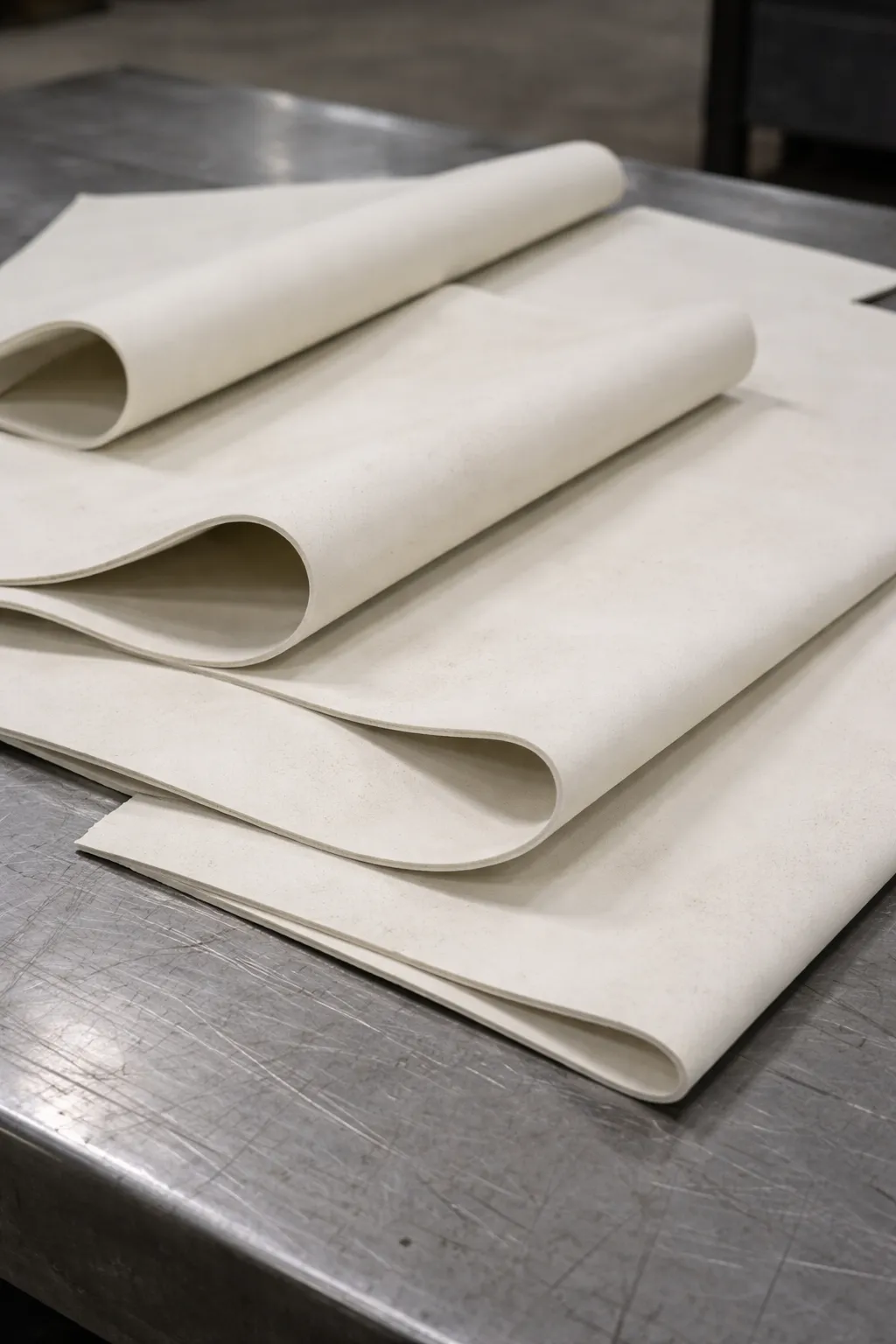
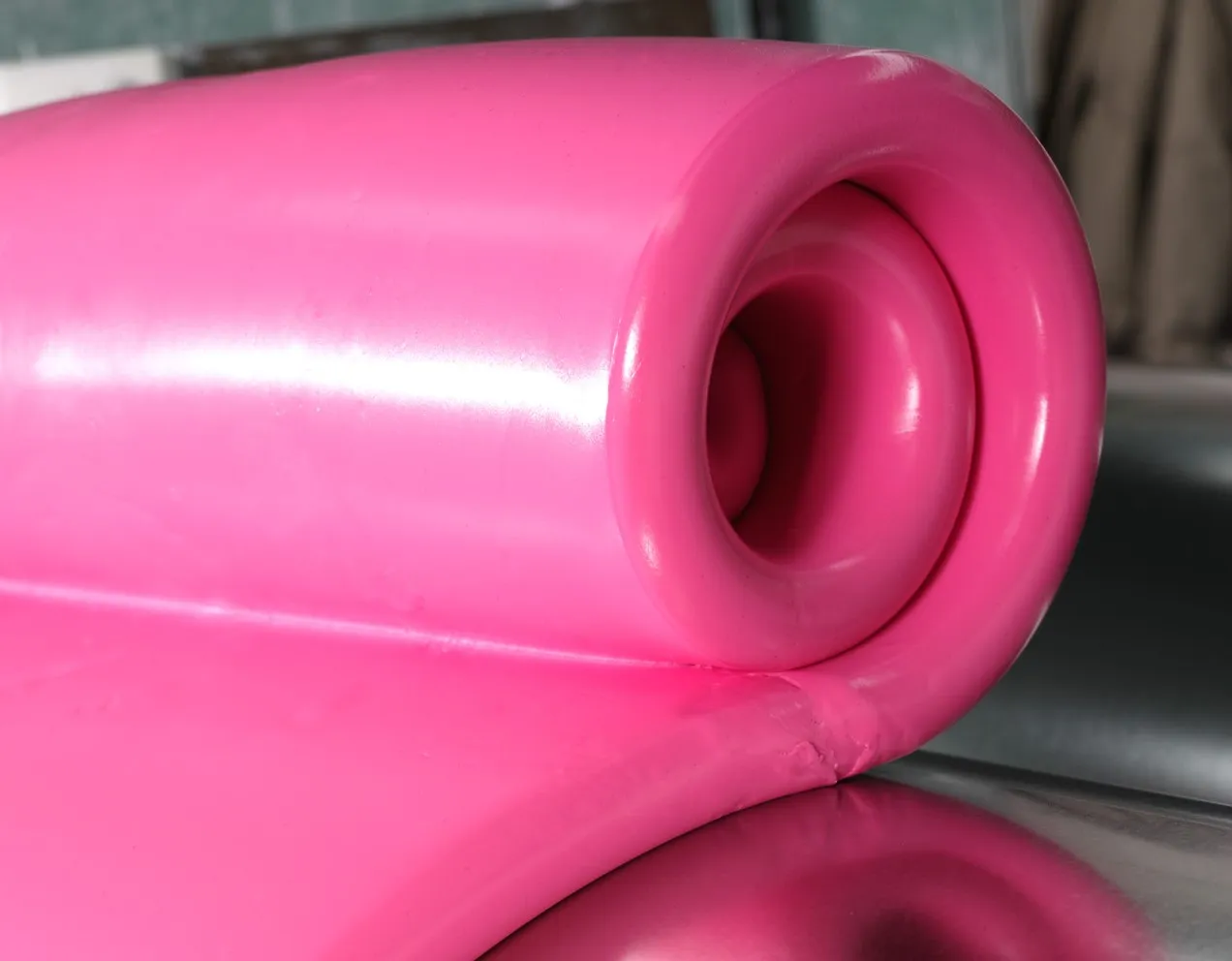
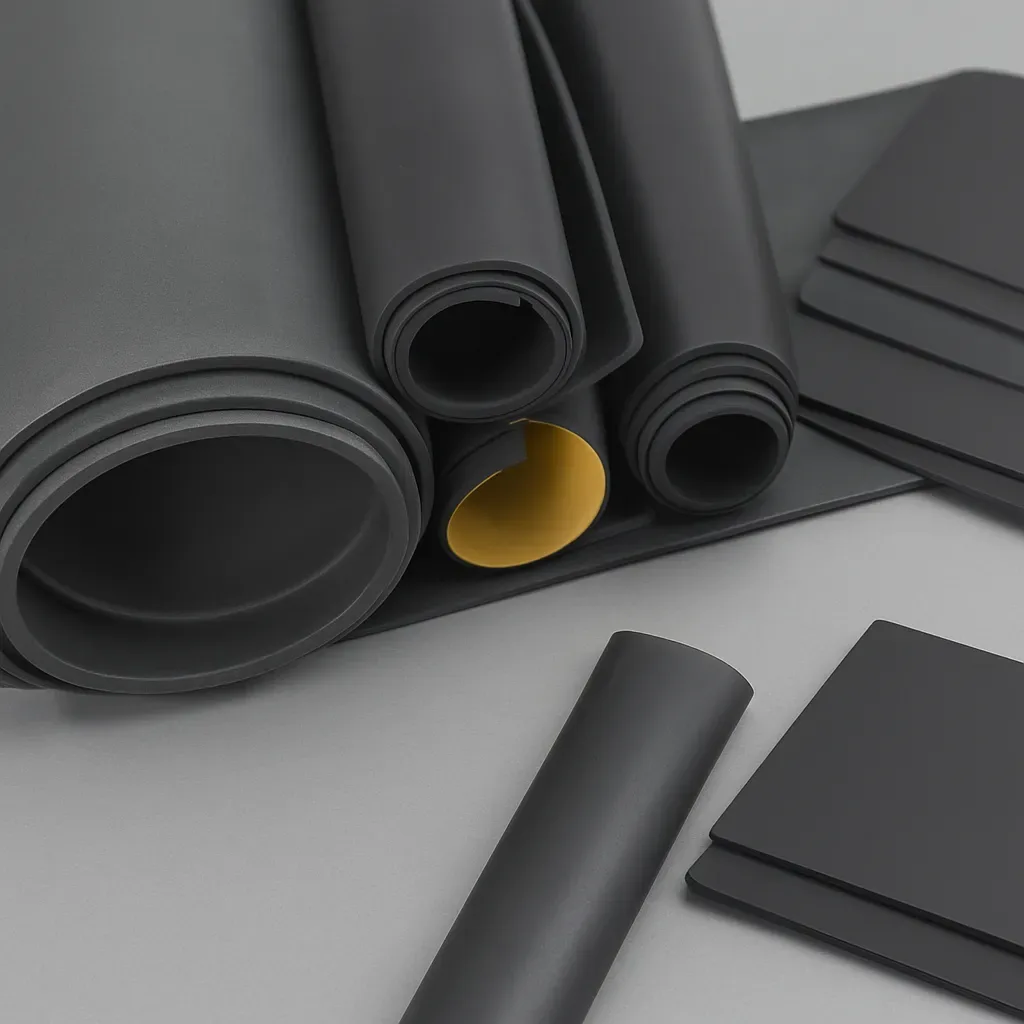
Calibrated rubber sheets in EPDM, NBR, CR (neoprene) and NR (natural). Thick sheet format for gasket cutting, technical flooring and insulation.
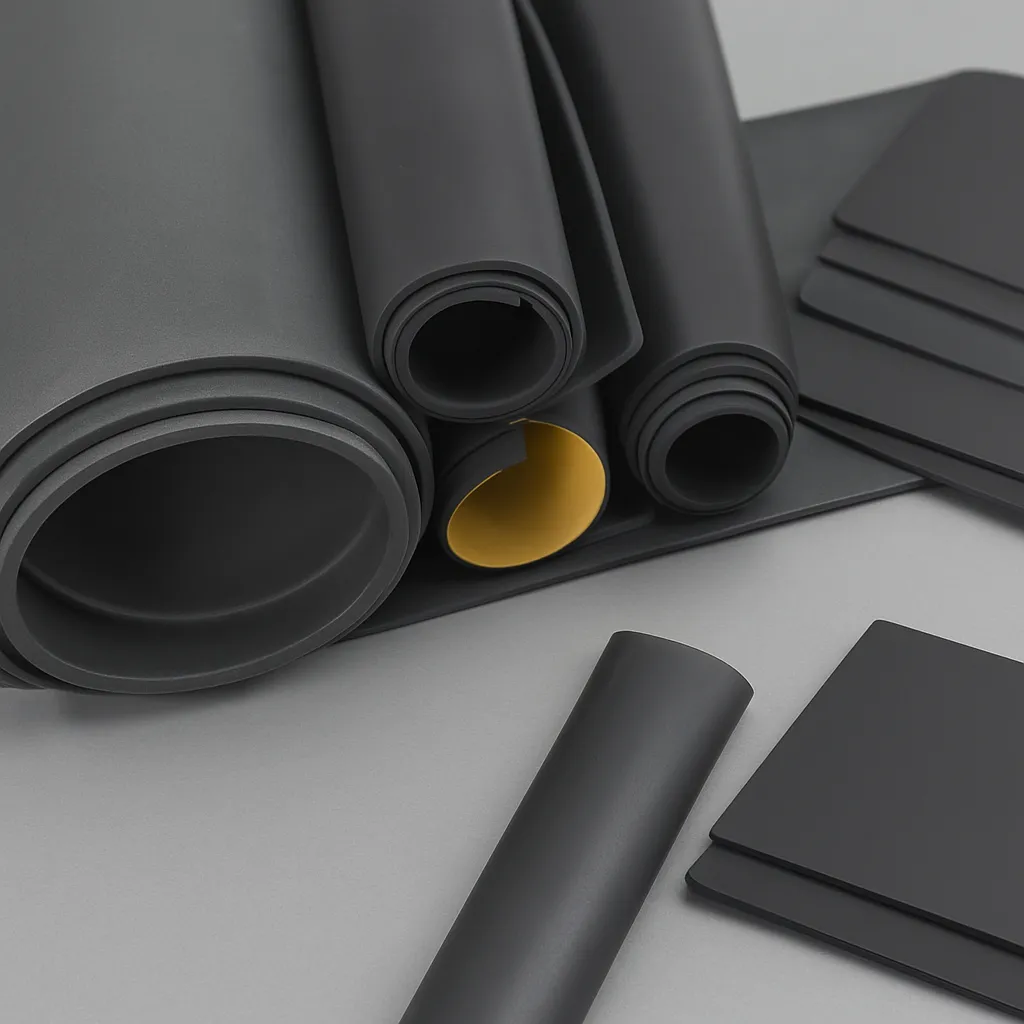
Standard black colour · colour on request depending on material (check pigment if certification required). Optional textile reinforcement (canvas) for technical flooring, mats, high-load gaskets. High-temperature adhesive backing available.
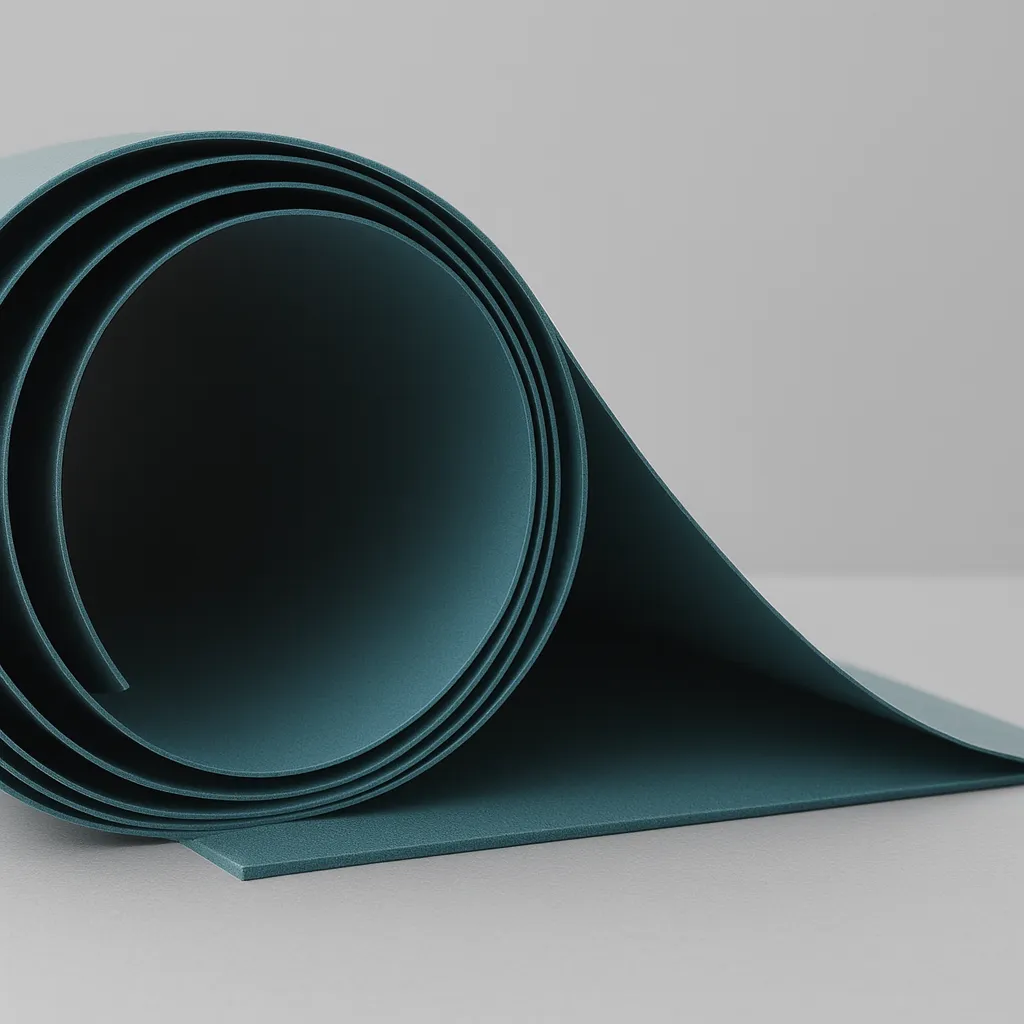
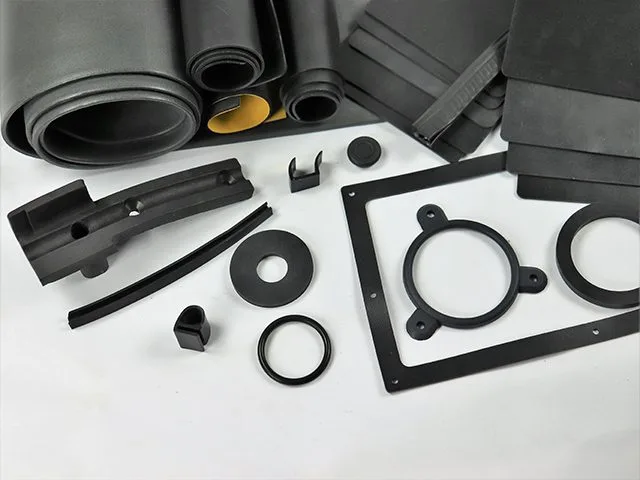
Rubber sheet in roll or calibrated for cutting gaskets, flooring and insulation.
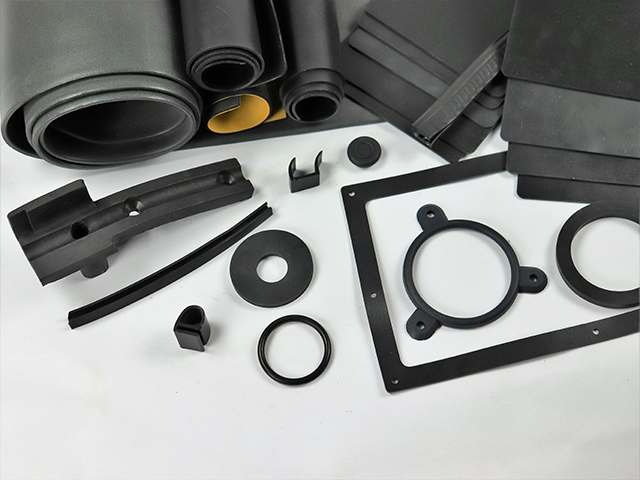
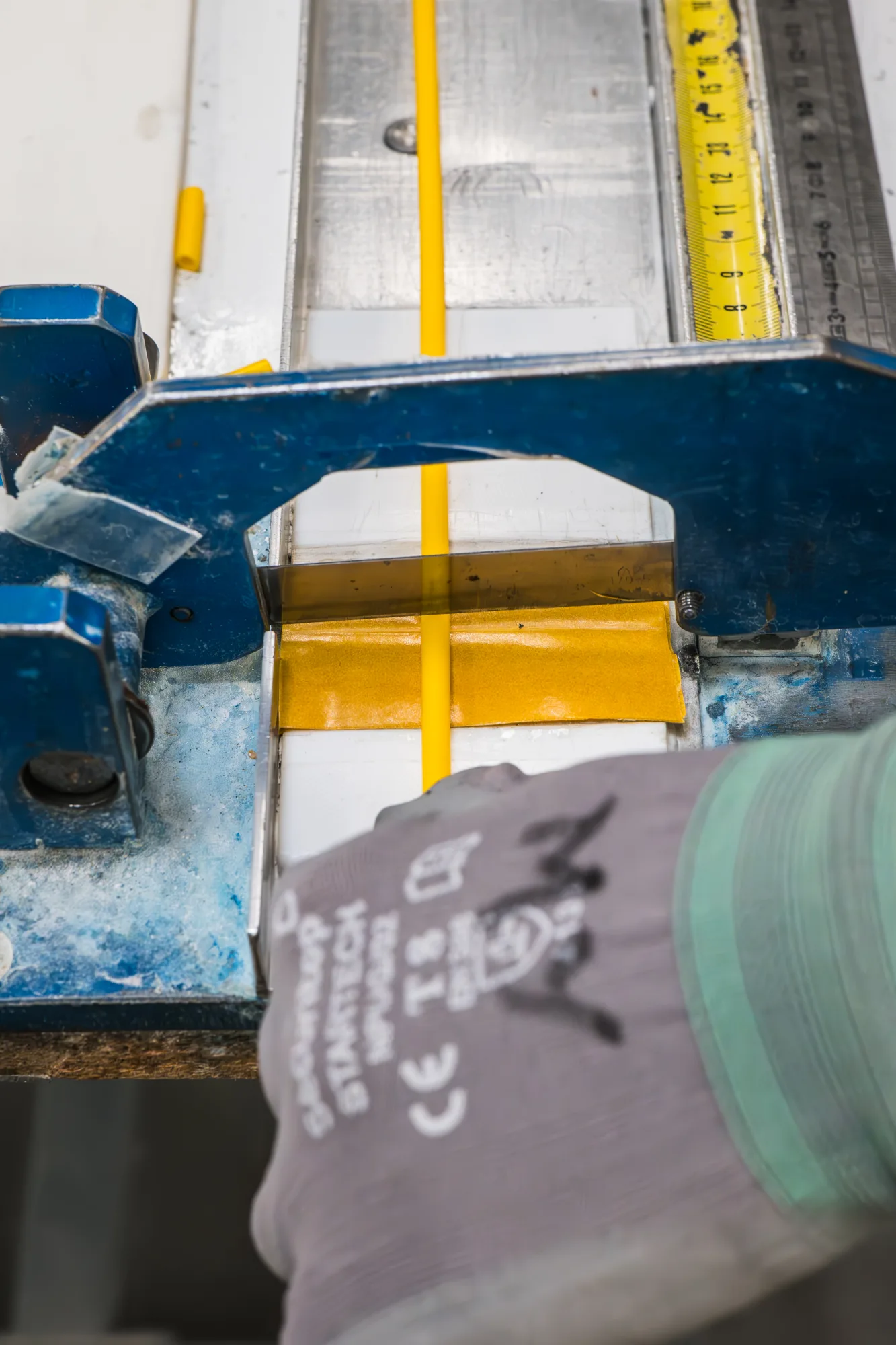
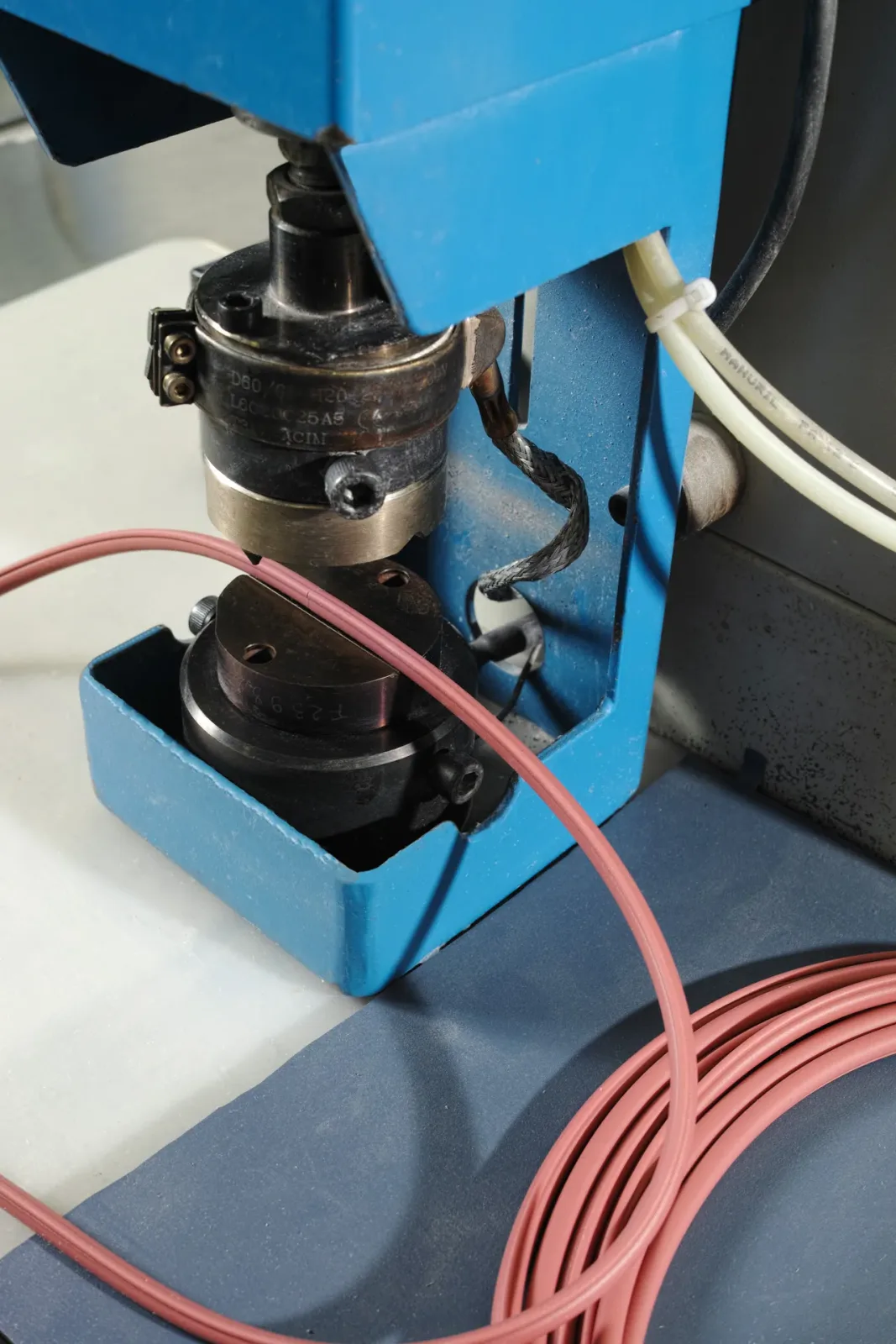
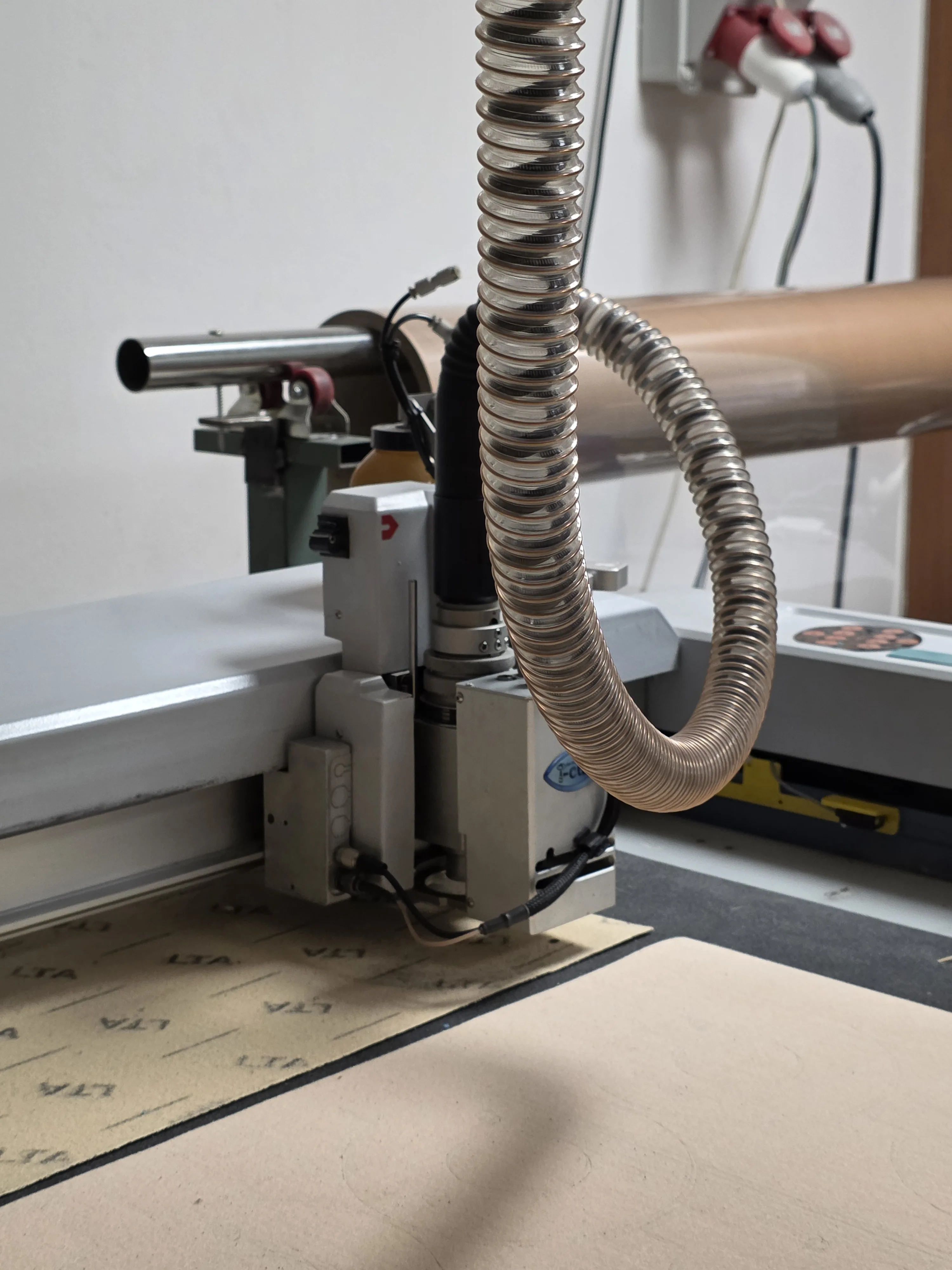
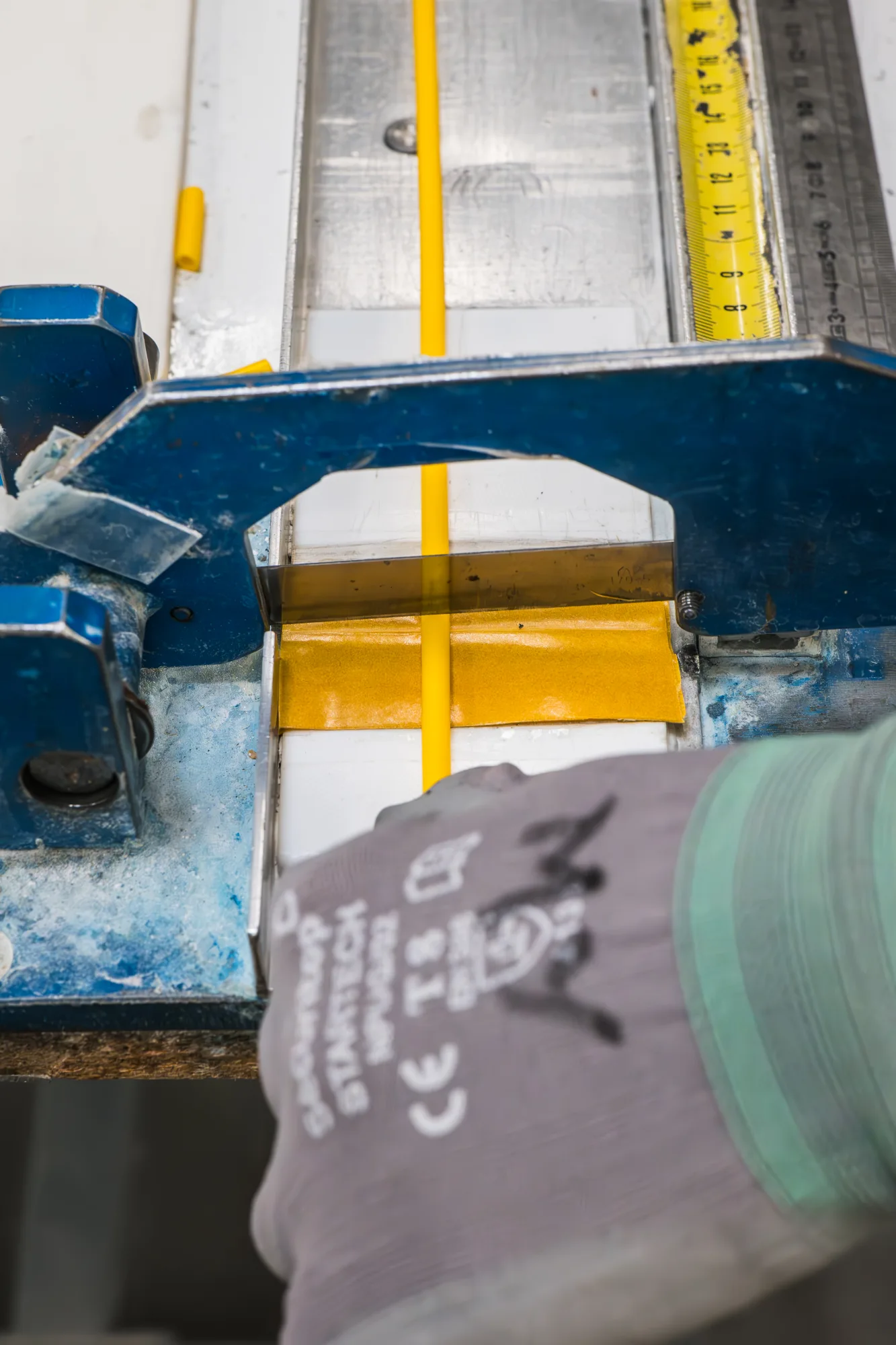
The rubber sheet is the base format for manufacturing flat gaskets, washers, seals, technical flooring and custom-cut linings. It is produced by two processes: calendering for smaller thicknesses in continuous roll, or press moulding for larger thicknesses in calibrated sheet (minimum size 500×500 mm). Cutting is carried out at the converting workshop in Spain by CNC oscillating-knife for parts with specific geometry and by die-cutting with a dedicated die for repeat series.
Specifications
Sheet catalogue: die-cut gaskets, technical flooring and reinforced sheets
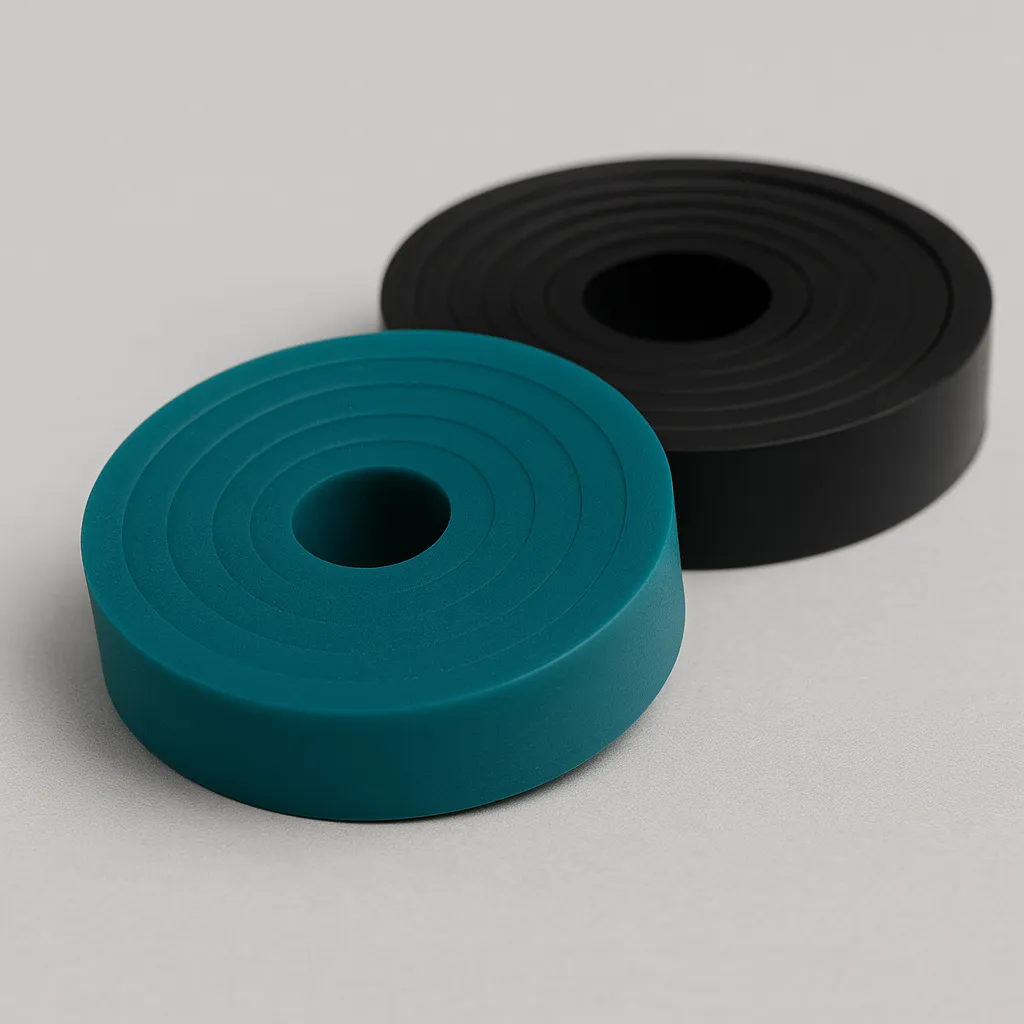
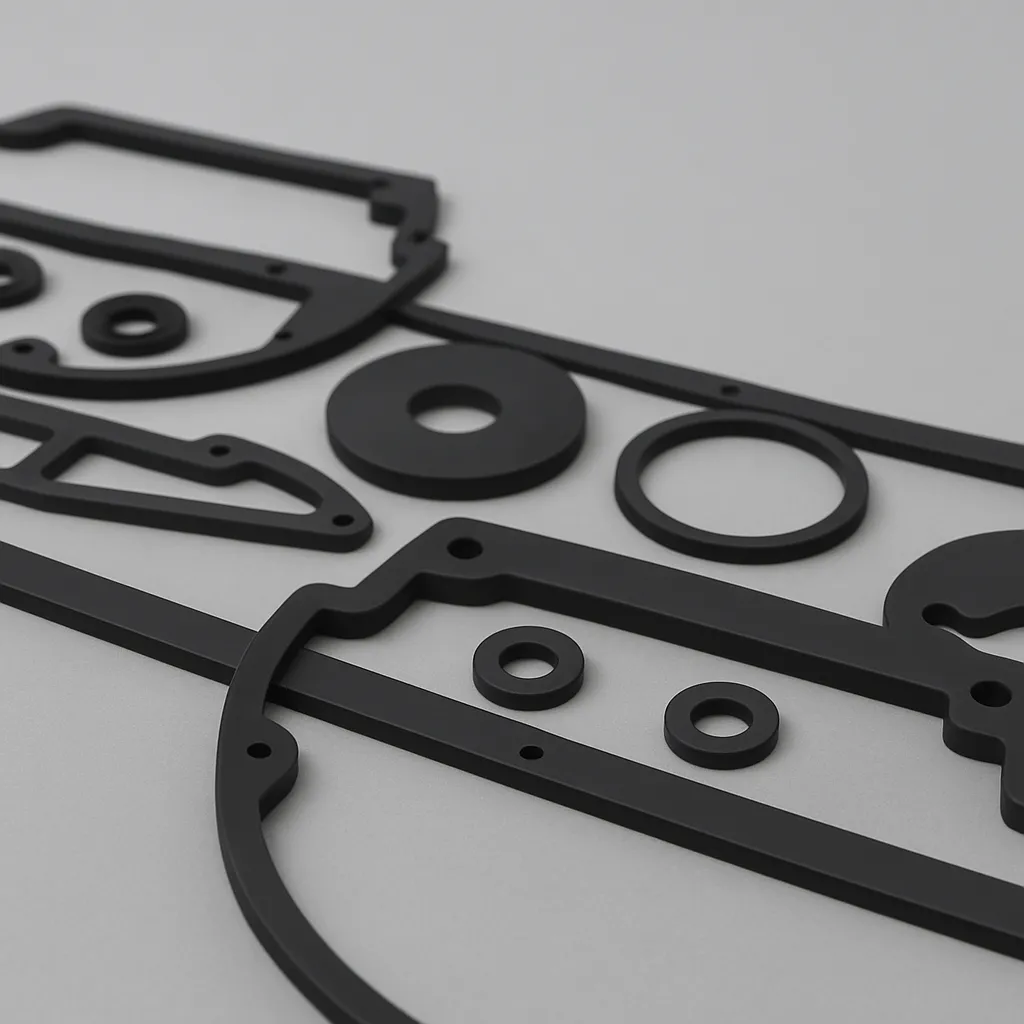
Die-cut gaskets and washers
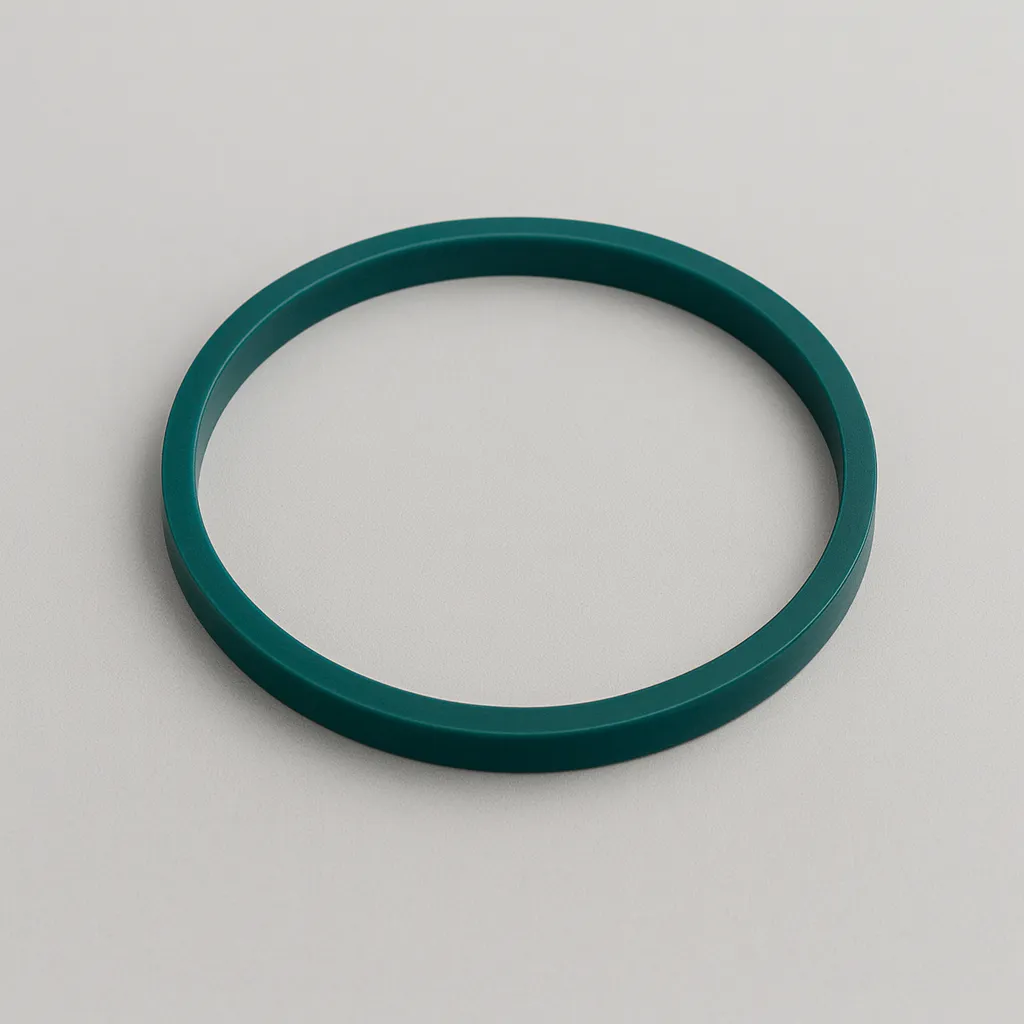
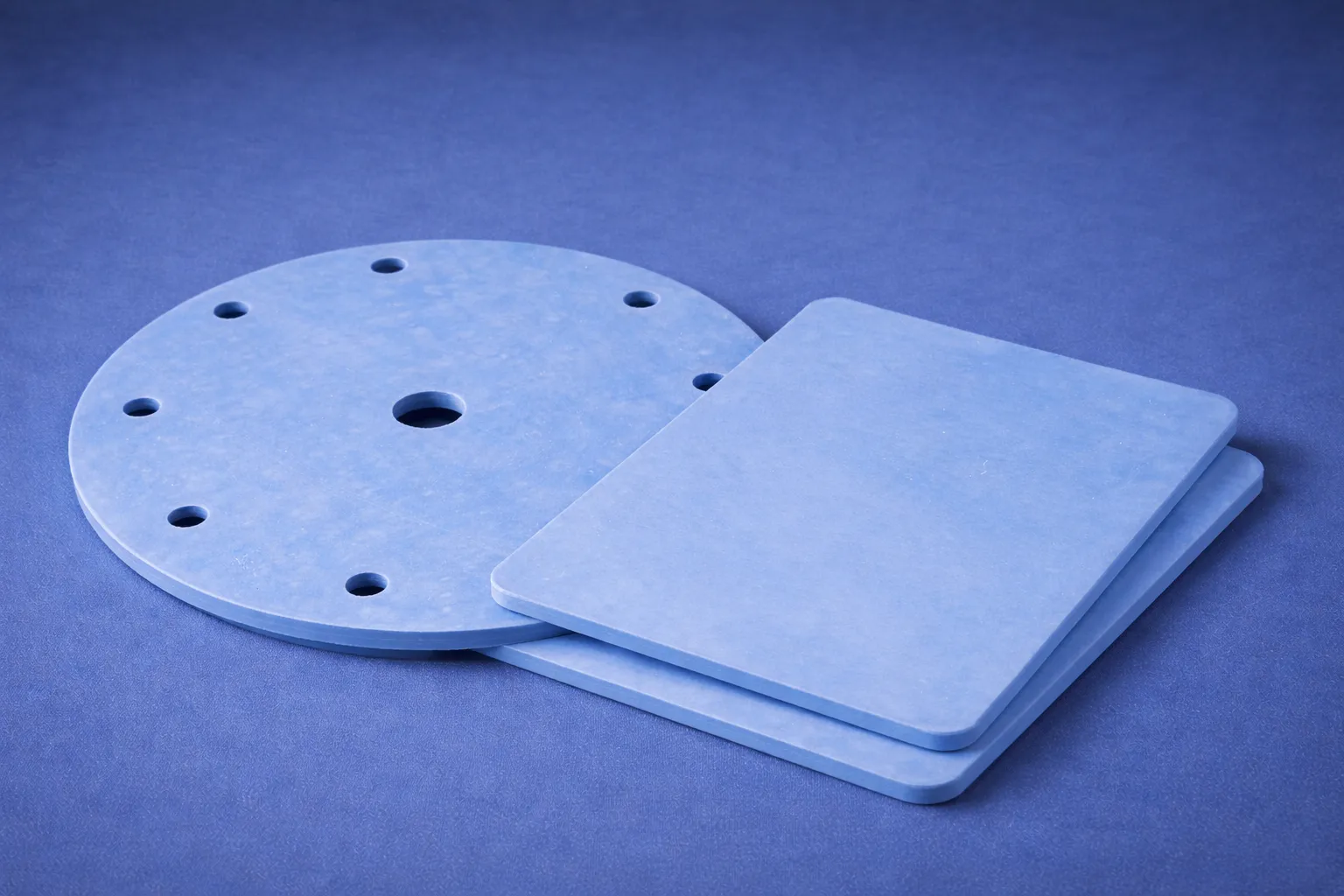
- 01Rectangular and square gasket
- 02Interior wagon fixing washer
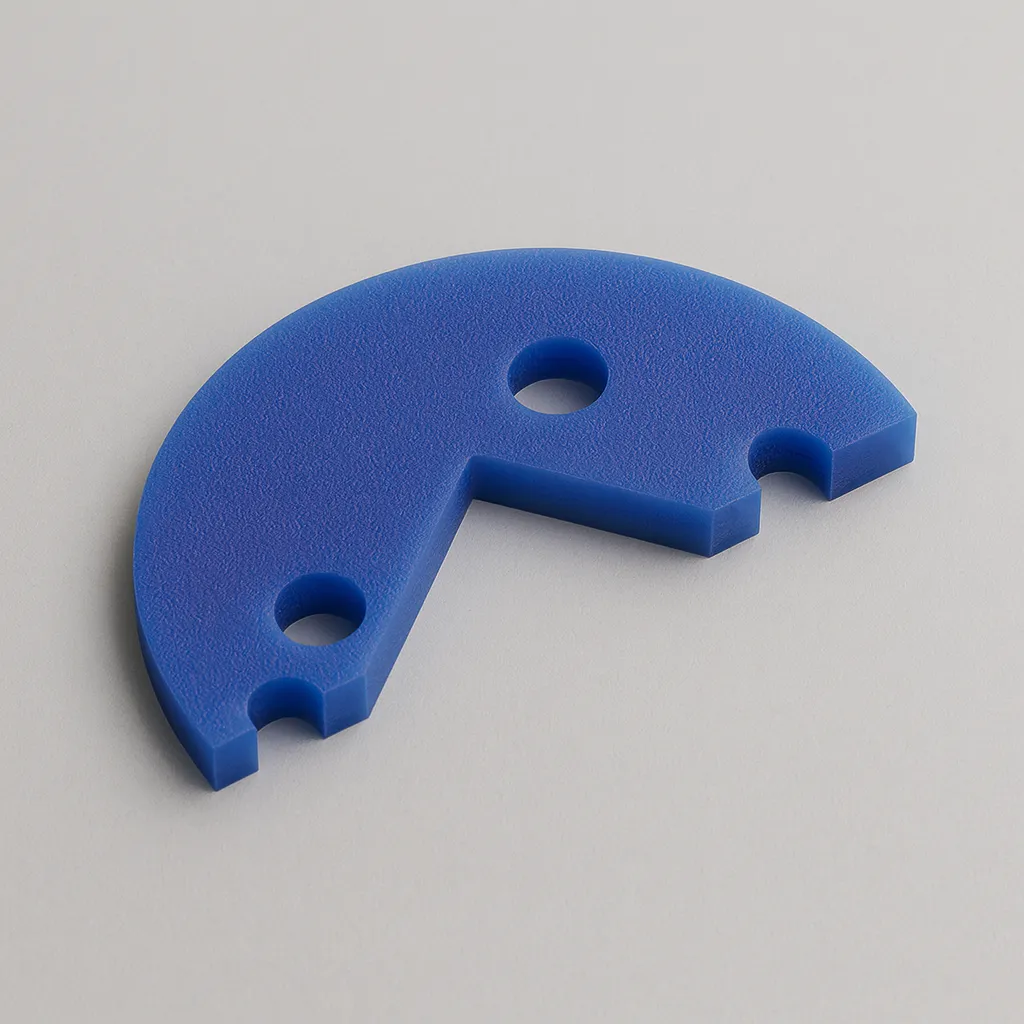
- 03Gasket with multiple holes
Technical flooring and surfaces
- 01Anti-slip floor
- 02Electrical insulation mat
- 03Food-grade work table
Insulation and reinforced sheet
- 01Anti-vibration insulator
- 02Rubber canvas with textile reinforcement
- 03Sheet with adhesive backing
Quick material comparison
Each family covers a different thermal range and chemical resistance. The table guides selection by contact medium and service temperature.
| Property | EPDM | NBR | CR (neoprene) | NR (natural rubber) |
|---|---|---|---|---|
| Continuous temperature | –50 to +150 °C | –30 to +120 °C | –40 to +110 °C | –50 to +80 °C |
| Oils and fuels | ✗ degrades | ✓✓ excellent | ✓ moderate | ✗ degrades |
| Ozone and UV (outdoor) | ✓✓ excellent | ✗ degrades | ✓ moderate | ✗ degrades |
| Pressurised steam | ✓✓ excellent | ✗ degrades | △ limited | △ limited |
| Elasticity and tear | ✓ good | ✓ good | ✓ good | ✓✓ excellent |
| Self-extinguishing | ✗ no | ✗ no | ✓ partial | ✗ no |
| Typical application | Rail, outdoor, steam | Oils, engine, fuels | General sealing, electrical | Anti-vibration, mechanical stops |
- Indicative comparison based on standard tests (ASTM D471 / ISO 1817 swelling, ASTM D1149 ozone). Real-world behaviour depends on the specific formulation, hardness and service conditions.
- For aromatic fuels, synthetic oils at high temperature, aliphatic solvents or dilute acids where the four materials fall short, consider FKM / Viton™ B on the dedicated page.
Calendered sheet in roll, press-moulded sheet or sheet with textile reinforcement
The **calendered** sheet is obtained by passing the compound between heated rolls and curing it in continuous line. It is the option for smaller thicknesses (up to 6 mm) and continuous roll format, with widths up to 1,200 mm. It is delivered rolled for in-house cutting at the customer's plant or for conversion at our workshop.
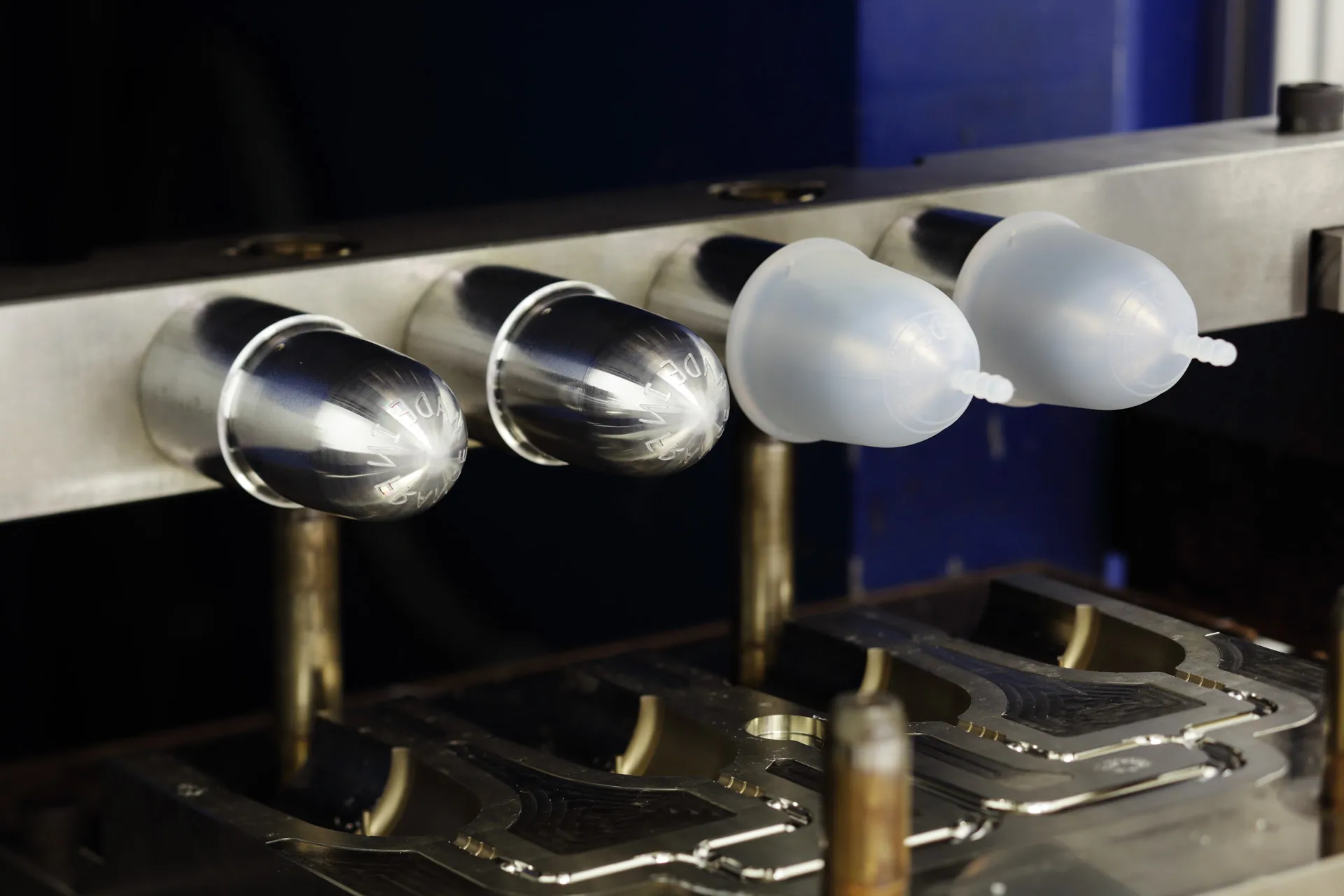
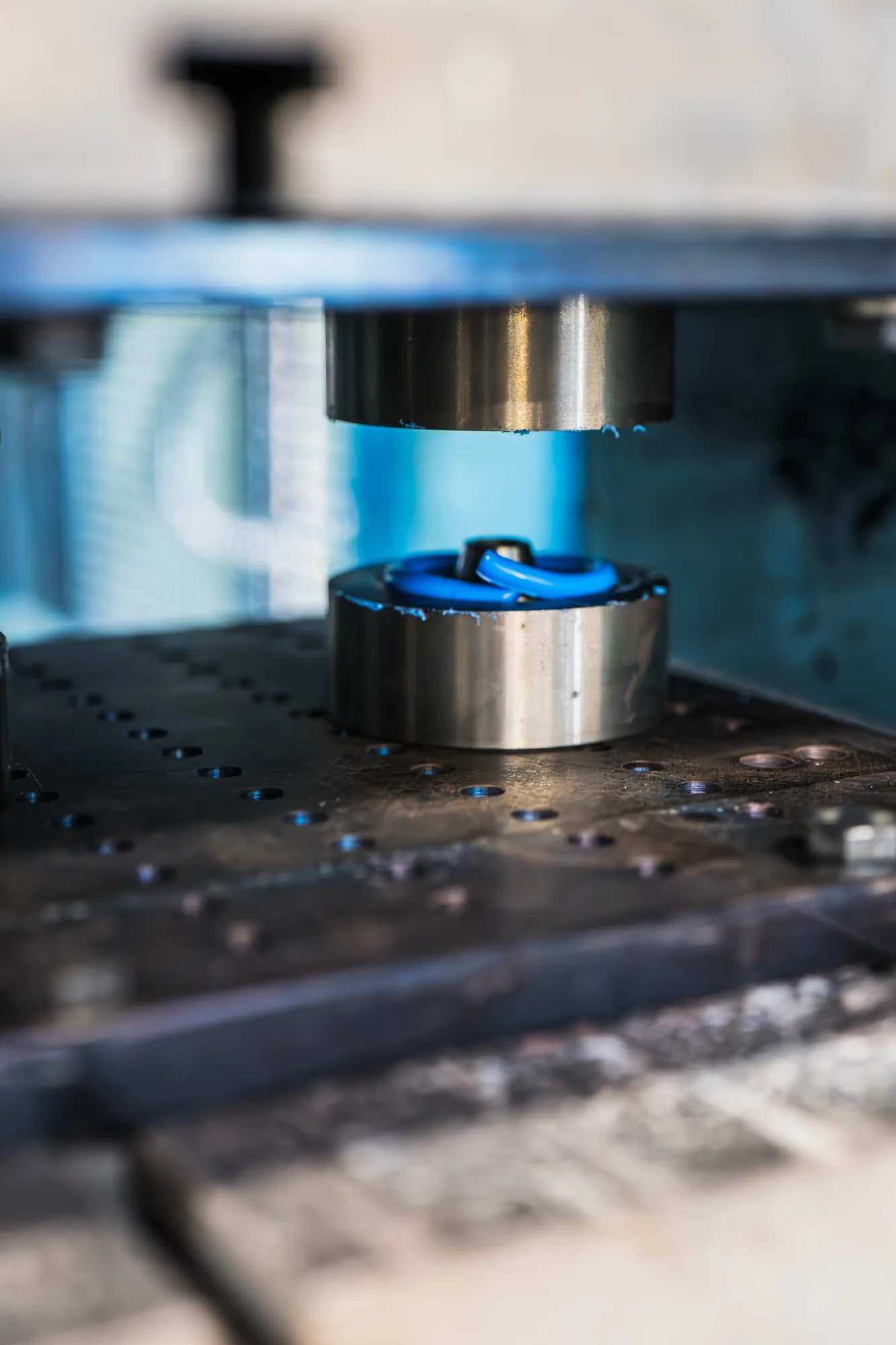
The **press-moulded** sheet is obtained by placing the compound in a flat closed mould under heat and pressure. It is the option for high thicknesses (up to 25 mm) and calibrated format with controlled thickness tolerance. Minimum size 500×500 mm; widths up to 1,400 mm. Ready for die-cutting or CNC oscillating-knife cutting.
The sheet with **textile reinforcement** (polyester or cotton canvas inserted between two rubber layers during curing) is the option for high-load technical flooring, gaskets with reinforced dimensional stability and large formats requiring extra tensile strength. Typical thicknesses 3 to 15 mm with canvas.
Cutting services and related processes

Products related to rubber sheet
Send us the drawing (DXF, PDF) or cutting dimensions, the required material (EPDM, NBR, CR or NR), the target thickness, the medium in contact, the service temperature, the certifications required (EN 45545-2, UL 94, FDA…) and the volume. We confirm the manufacturing process (calendering in roll or press moulding depending on thickness), the cutting (CNC with oscillating knife or die-cutting) and quotation with lead time.